

An expert on the battle between root-knot nematodes and cowpeas will present a seminar hosted by the UC Davis Department of Entomology and Nematology on Wednesday, May 20.
Plant breeder, geneticist and nematologist Bao-Lam Huynh of UC Riverside will speak on "Genetic Analysis and Marker-Assisted Breeding for Host Plant Resistance to Root-Knot Nematodes and other Stresses in Cowpea" at the seminar at 12:10 p.m. Wednesday, May 20 in 122 Briggs Hall, UC Davis.
The seminar also will be on Zoom. The Zoom link: https://ucdavis.zoom.us/j/95882849672.
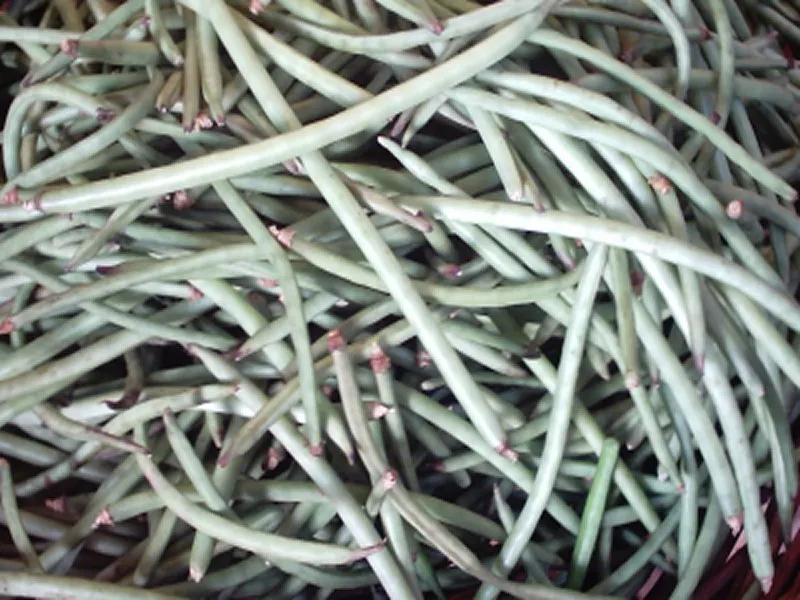
"Cowpea is a hardy, nutritious warm-season legume crop that is vitally important for food security in Africa, where it provides a primary source of protein that complements cereals in the diets," Huynh, an assistant professor of nematology, says in his abstract. "However, in the Sudano-Sahel legion of Africa typical cowpea grain yields of smallholder farmers are far below known yield potential due to biotic and abiotic stresses. Many of these problems also affect cowpea production in the United States. In the Central Valley of California, the blackeye-type cowpea is grown as grain and/or cover crops in cropping systems to disrupt pests and fix nitrogen for the soil. Root-knot nematodes (RKN), aphid, lygus, and Fusarium wilt diseases are prevalent in this region, causing significant reductions in yield and seed quality of standard cultivars; RKN and aphids also affect the vegetable-type cowpea (Asian long bean) grown on diversified farms by disadvantaged Hmong farmers."
"Development of improved resistant varieties is enabled by the rich collection of resources at UC Riverside," Huynh points out. "They include RKN biotype collections, field- and lab-based resistance bioassays, genetic markers and germplasm collections of host crop genetic diversity. Quantitative trait loci (QTL) with major effects on resistance to RKN, aphid and other stresses have been identified. Favorable QTL haplotypes from African covvpea germplasm are stacked into new generations using bi-parental and multi-parental marker-assisted breeding strategies. New improved varieties have been developed and released in Africa and the USA, along with outreach activities to enable adoption. QTL near-isogenic lines also enable map-based cloning and functional analysis of candidate genes underlying RKN resistance."
Huynh strongly in the sustainability benefits of resistant crops. "They reduce reliance on pesticides, thus contributing to cleaner air, cheaper production, safer food, and increased demand and consumption," he says on his website. His research group focuses on genetic improvement and host plant resistance of cowpea plus other legumes and vegetables against root-knot nematodes and other biotic and abiotic stresses. The research includes germplasm diversity analysis and selection, resistance phenotyping, genetic mapping, gene discovery, marker-assisted breeding and release of new varieties.
His lab aims to develop and deliver innovative varieties to growers "as soon as possible, but also seeks to discover why certain African cowpea lines are highly resistant to root-knot nematodes and how to use resistance genes from cowpea to help other crops that lack adequate sources of resistance."
Statistics show that most cowpeas are grown on the African continent, particularly in Nigeria and Niger, accounting for 66 percent of the world production. "The crop is mainly grown for its seeds, which are high in protein, although the leaves and immature seed pods can also be consumed," according to Wikipedia. "The seeds are usually cooked and made into stews and curries, or ground into flour or paste. The whole plant is also used as forage for animals, with its use as cattle feed likely responsible for its name."
Doctorate from Australia
Huynh received his bachelor of science degree in agriculture (agronomy) in 1996 from Tay Nguyen University, Vietnam; his master's degree in plant science in 2004 from the University of Adelaide, Australia; and his doctorate in 2009 in plant science from the University of Adelaide.
He received a 2023 Meritorious Achievement Award, presented by the Legume Systems Innovation Lab's Technical Management Advisory Committee for outstanding work in global legume systems research.
Huynh is the lead author of these recent publications
- "Registration of Four Pest-Resistant Long Bean Germplasm Lines." Journal of Plant Registrations 18:415-425. https://doi.org/10.1002/plr2.20361
- "Quantitative Trait Loci and Genomic Prediction for Grain Sugar and Mineral Concentrations of Cowpea [Vigna unguiculata (L.) Walp.]." Scientific Reports 14:4567. https://doi.org/10.1038/s41598-024-55214-2
- "Registration of Aphid-Resistant ‘California Blackeye 77’ Cowpea." Journal of Plant Registrations 16:13-20 https://doi.org/10.1002/plr2.20176
Seminar coordinator Marshall McMunn may be reached at msmcmunn@ucdavis.edu for technical assistance.
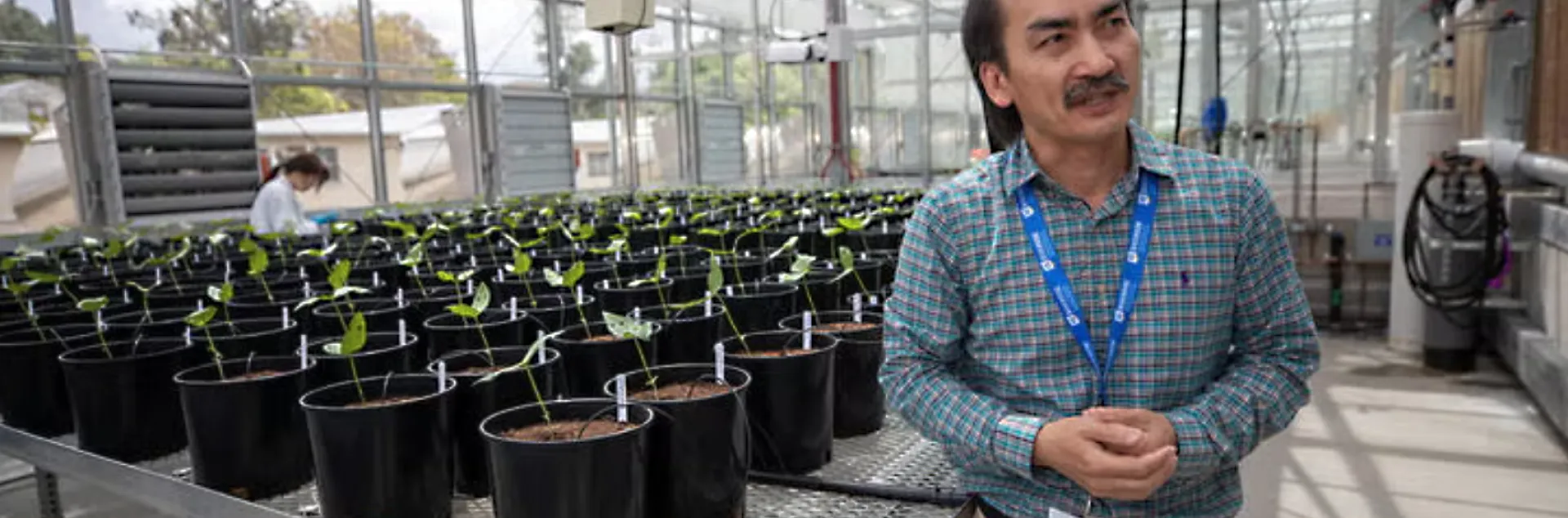
Cover image: Bao-Lam Huynh talks about his research at UC Riverside. (Photo courtesy of UC Riverside/Stan Lim).