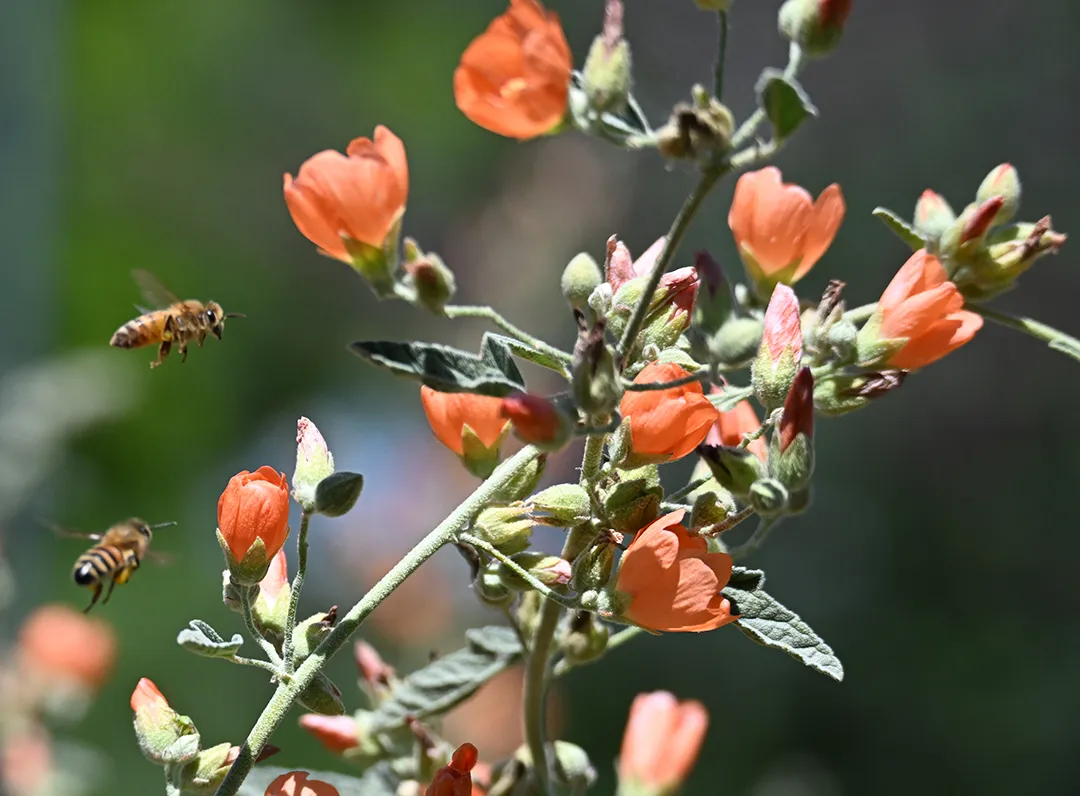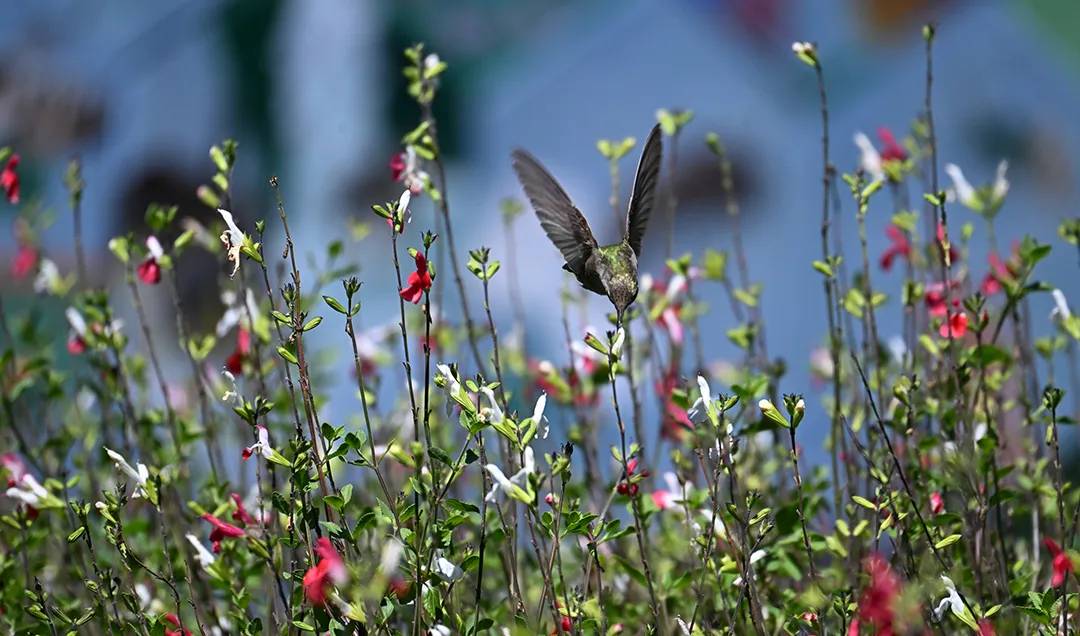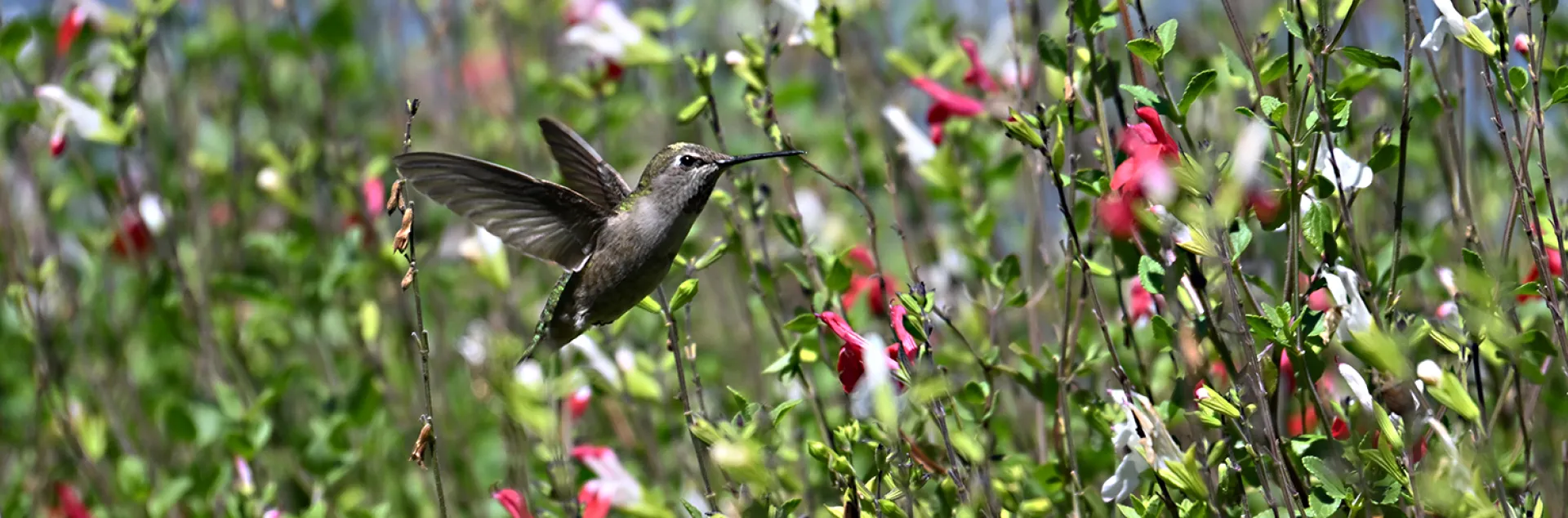
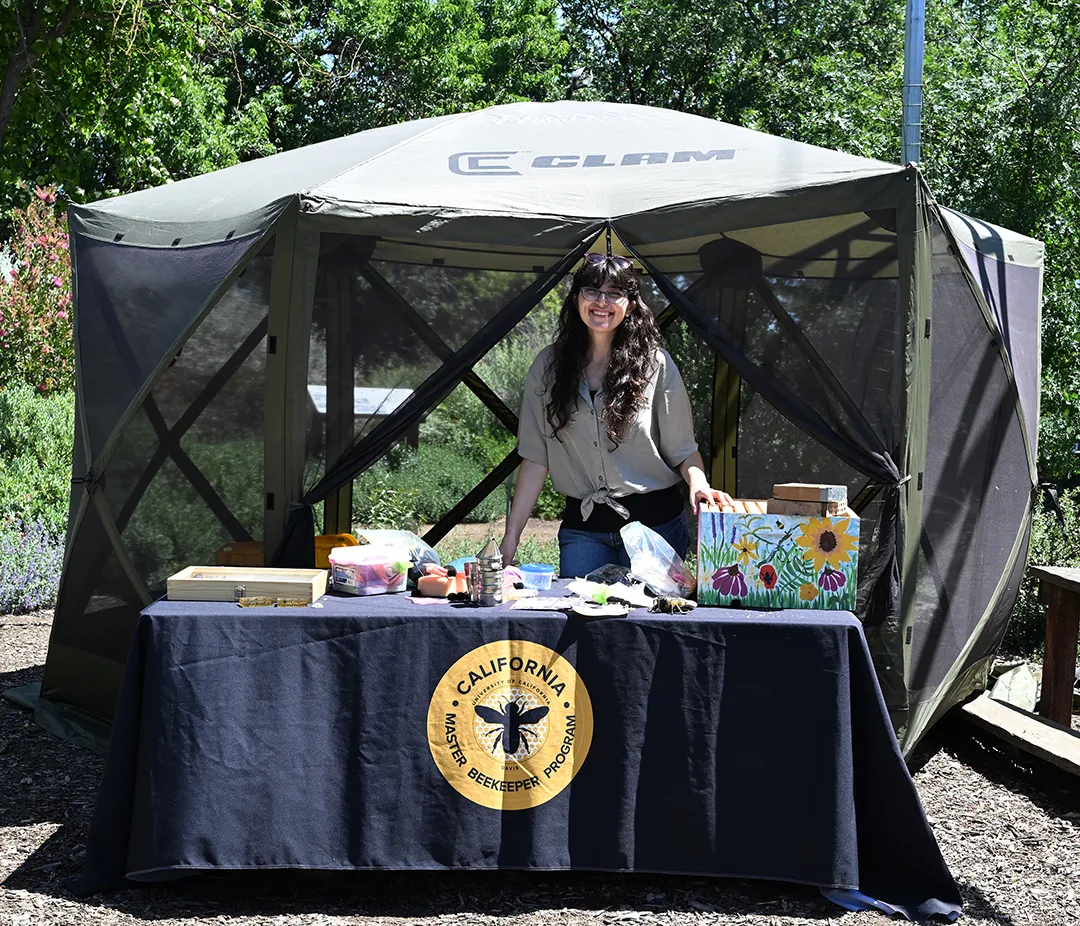
Children of UC Davis and UC Davis Health System employees learned about the birds and the bees (and other pollinators) at the recent Take Our Children (TOC) to Work Day, hosted by the UC Davis Bee Haven. The sights and sounds captivated the special visitors: honey bees buzzed, Western tiger swallowtails fluttered, a carpenter bee tended its nest, a syrphid fly claimed a rockrose, and a hummingbird nectared on salvia and fuchsia.
The Haven, a half-acre public garden installed in the fall of 2009 by the UC Davis Department of Entomology and Nematology, thrives with more than 200 native plants. It is located at 1 Biology Road, next to the Harry H. Laidlaw Jr. Honey Bee Research Facility.
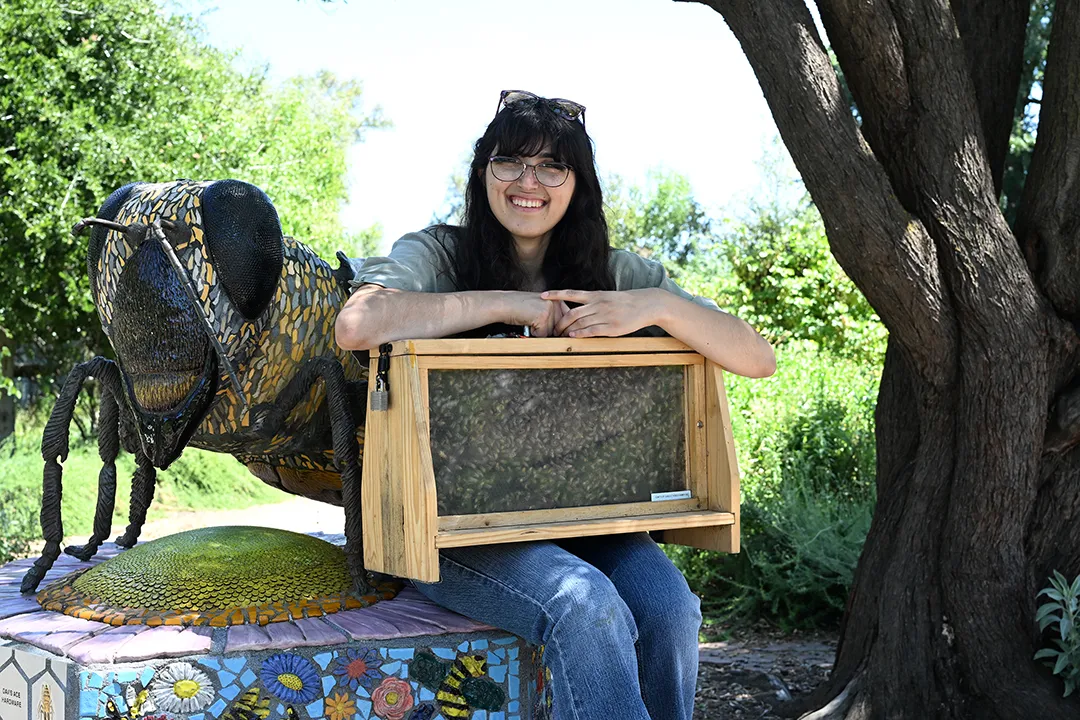
Samantha "Sam" Murray, education and garden coodinator, greeted the groups. She showed them a bee observation hive, pointing out the queen bee, workers and drones, and engaged them in conversations.
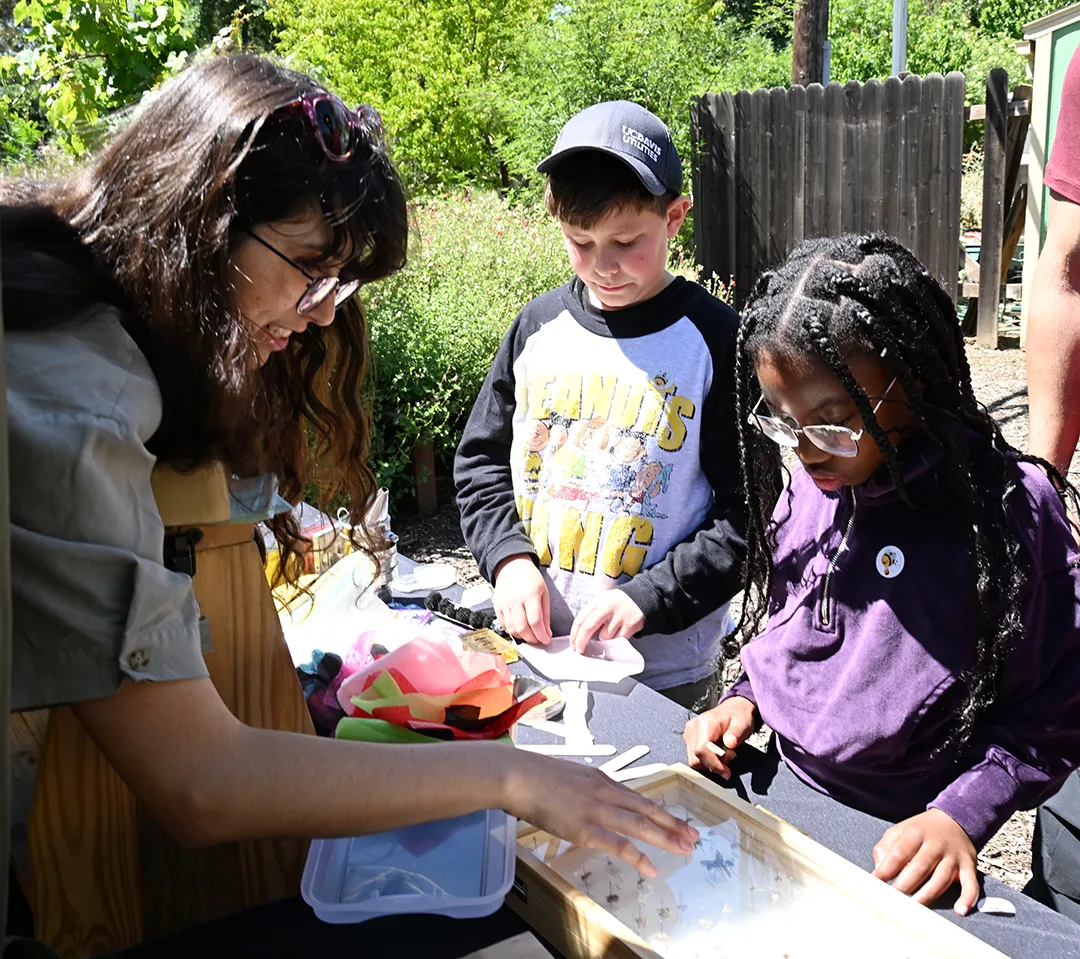
"How many native bees are there in California?" she asked. "Want to take a guess?"
One boy guessed 100.
The answer: 1600.
20,000 Species of Native Bees Worldwide
Scientists have documented some 20,000 species of native bees worldwide, and of that number, 4000 are native to the United States. The bees range from the tiny (2 mm) and solitary Perdita minima, known as the world’s smallest bee, to carpenter bees. The largest carpenter bee species is the tropical carpenter bee (Xylocopa latipes), found in Southeast Asia. It can reach up to 35 mm (about 1.4 inches) in length.
The late UC Davis distinguished emeritus professor Robbin Thorp (1933-2019), detected and identified more than 80 species of native bees in the UC Davis Bee Haven. The natives represent the families of Andreniae, Apidae, Colletidae, Halictidae, and Megachilidae. Among them, the mining bee, Andrena cuneilabris; the yellow-faced bumble bee, Bombus vosnesenskii; the Mesilla masked bee, Hylaeus mesillae; the metallic green sweat bee, Agapostemon texanus; and the Texas osmia, Osmia texana.
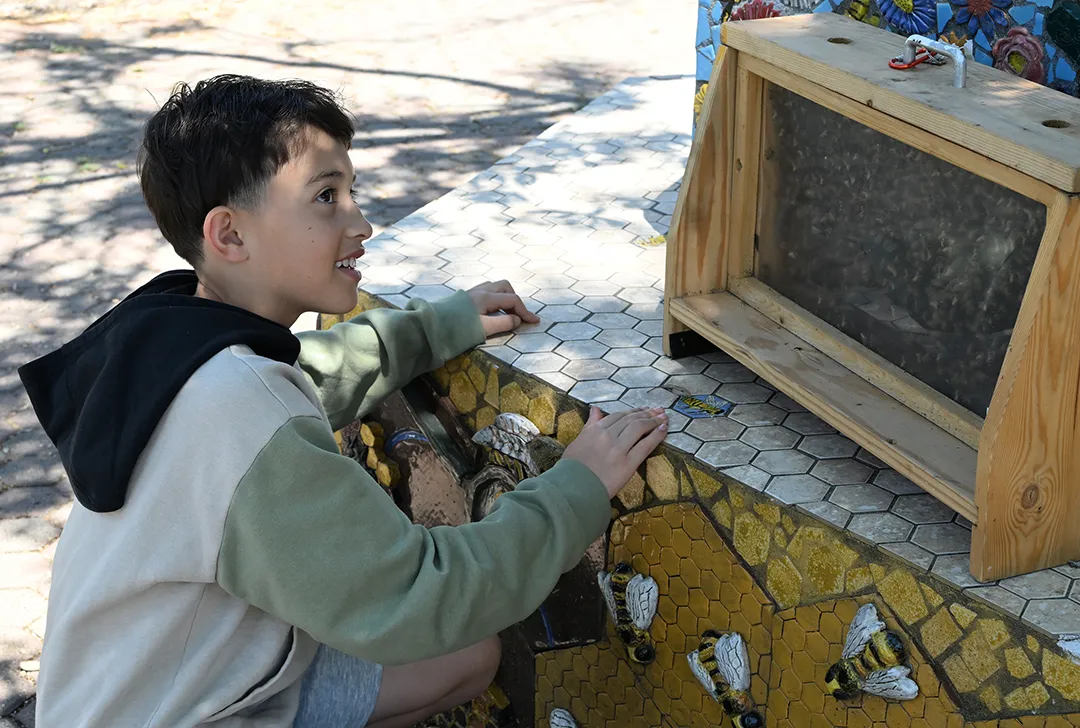
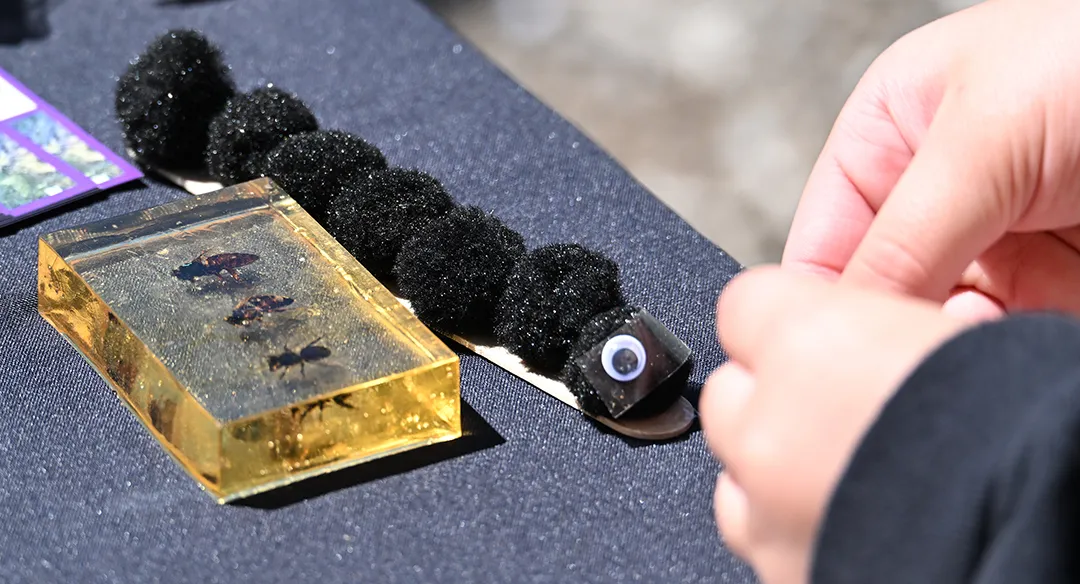
The Haven visitors learned about the three castes of bees (queen, worker and drone), checked out the bee smoker, and, in an art project, crafted replica carpenter bees, complete with googly eyes, to take home. They toured the grounds, admired "Miss Bee Haven," the six-foot-long worker bee sculpture of ceramic-mosaic that anchors the garden; the native bee art work on the garden shed; and other ceramic-mosaic art in the garden. Benches beckoned.
"This is so beautiful," a parent said.
Donna Billick of Davis sculpted "Miss Bee Haven" in 2010, a year after the UC Davis Department of Entomology and Nematology (ENT) installed the garden. Shaded by an almond tree, "Miss Bee Haven" occupies a pedestal/bench tiled with ceramic art, the intricate work of the UC Davis Art/Science Fusion Program, co-founded and co-directed by entomologist-artist Diane Ullman (now UC Davis distinguished professor emerita) and Billick. Much of the art in the garden was created by Ullman's students in Entomology 1. (See history of the garden).
The Haven is open to the public from dawn to dusk. Admission is free. Elina L. Niño, professor of Cooperative Extension, apiculture, a member of the ENT faculty, and founder and director of the California Master Beekeeper Program, serves as the director of The Haven.