
Congratulations to a trio of UC Davis entomology doctoral students who just received major fellowships, funding totaling more than $500,000.
Abigail "Abby" Lehner, a doctoral candidate in the lab of pollinator ecologist Neal Williams, professor of entomology, UC Davis Department of Entomology and Nematology (ENT), received a pre-doctoral fellowship of $180,000 from the National Institute of Food and Agriculture (NIFA), U.S. Department of Food and Agriculture (USDA).
Curtis Carlson, a doctoral candidate in the lab of molecular geneticist-physiologist Joanna Chiu, professor and chair of ENT, received a $147,000 Ruth L. Kirschstein F31 Pre-Doctoral Fellowship from the National Institute of Neurological Disorders and Stroke (NINDS), National Institutes of Health (NIH).
Olivia Lopez, doctoral student in the lab of circadian-biologist Fumika Hamada, professor, Department of Neurobiology, Physiology and Behavior, College of Biological Sciences, is the recipient of two fellowships: a $159,000 National Science Foundation Graduate Research Fellowship (GRFP) for 2016-2031, and a $52,807 NIEHS T32 pre-doctoral fellowship from the National Institute of Environmental Health Sciences (NIEHS). UC Davis officials earlier (March 2025) awarded her an $118,000 21-month Eugene Cota-Robles Fellowship, given to outstanding students enrolling in a doctoral program.
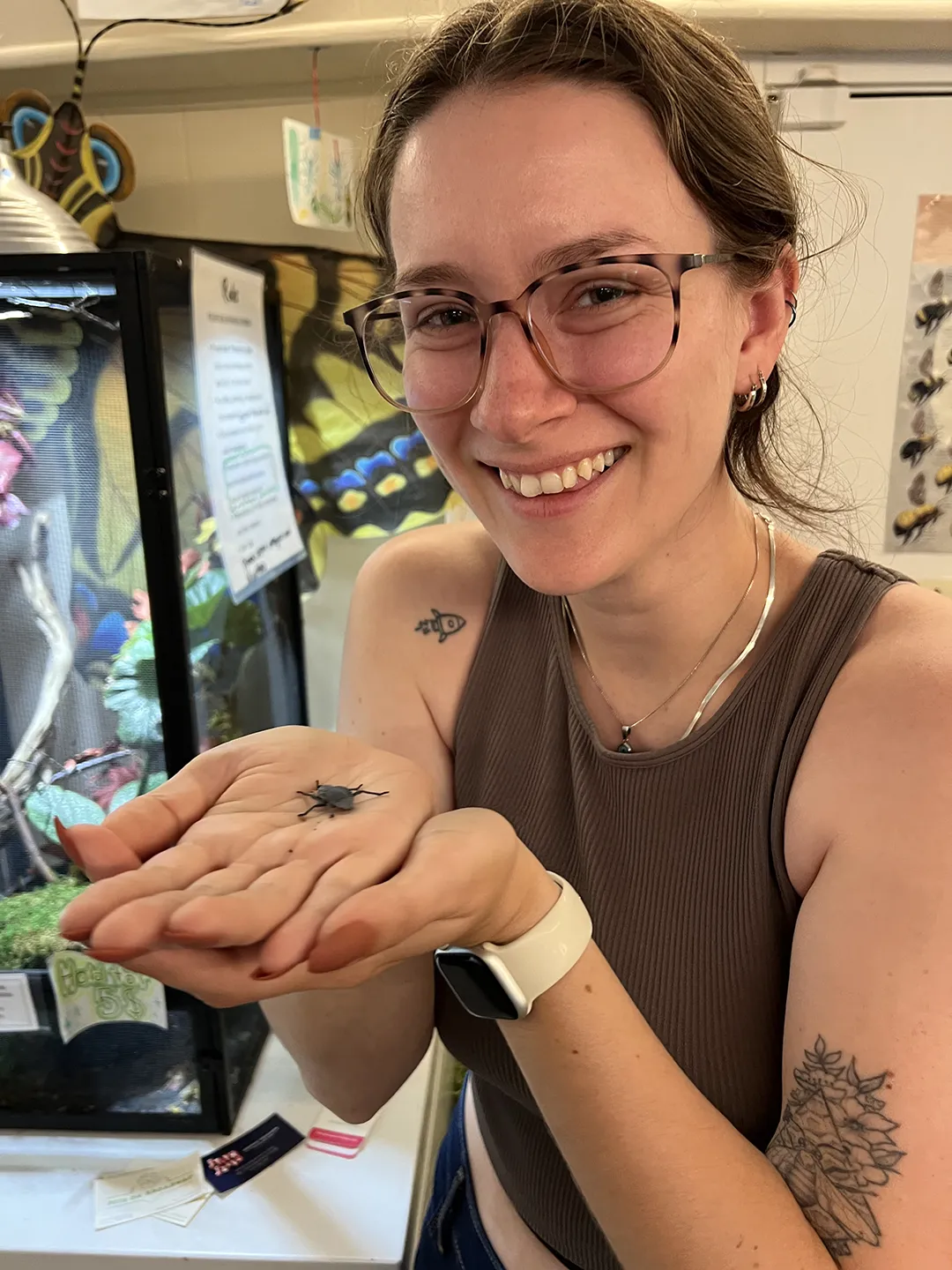
Abigail 'Abby' Lehner
Lehner, on track to receive her PhD in entomology in 2028, holds a bachelor's degree in biology (2018) from Union College, Schenectady, New York, where she minored in chemistry and theater. She received her master's degree in biology from Utah State University (USU), in 2022, and a graduate certificate in geographic information science (GIS) from USU in 2024.
"I am interested in how global change impacts solitary bees," Lehner writes on the Williams lab website. "For my dissertation work, I aim to understand how blue orchard bee (Osmia lignaria) populations are affected by the introduction of an invasive kleptoparasite, the Houdini fly (Cacoxenus indagator). I will also assess how the Houdini fly may establish throughout North America. My previous research was primarily focused on bee community ecology. Throughout my master’s, I studied how bee diversity and community composition changed over time at Pinnacles National Park. During my bachelor’s, I monitored and compared bee communities in native and restored habitats at the Albany Pine Bush Preserve."
Lehner serves as treasurer of the Orchard Bee Association (OBA) and has presented invited talks to OBA and delivered presentations at the Entomological Society of America (ESA) meetings. OBA named her Contributor of the Year in 2024. She is a member of the ENT Graduate Admissions Committee, an outreach chair for the UC Davis Entomology Graduate Student Association (EGSA), and a volunteer at UC Davis Picnic Day. She earlier (2025) received a Graduate Student Research and Education Grant of $30,000 from the Western Sustainable Agriculture Research and Education (SARE).
Lehner is a social media science educator with 55,000 followers on her TikTok account and 15,000 on her Instagram account. She films and edits educational videos covering topics in entomology, ecology, conservation, graduate school, and being a woman in STEM. Her user name is @entomologyabby.
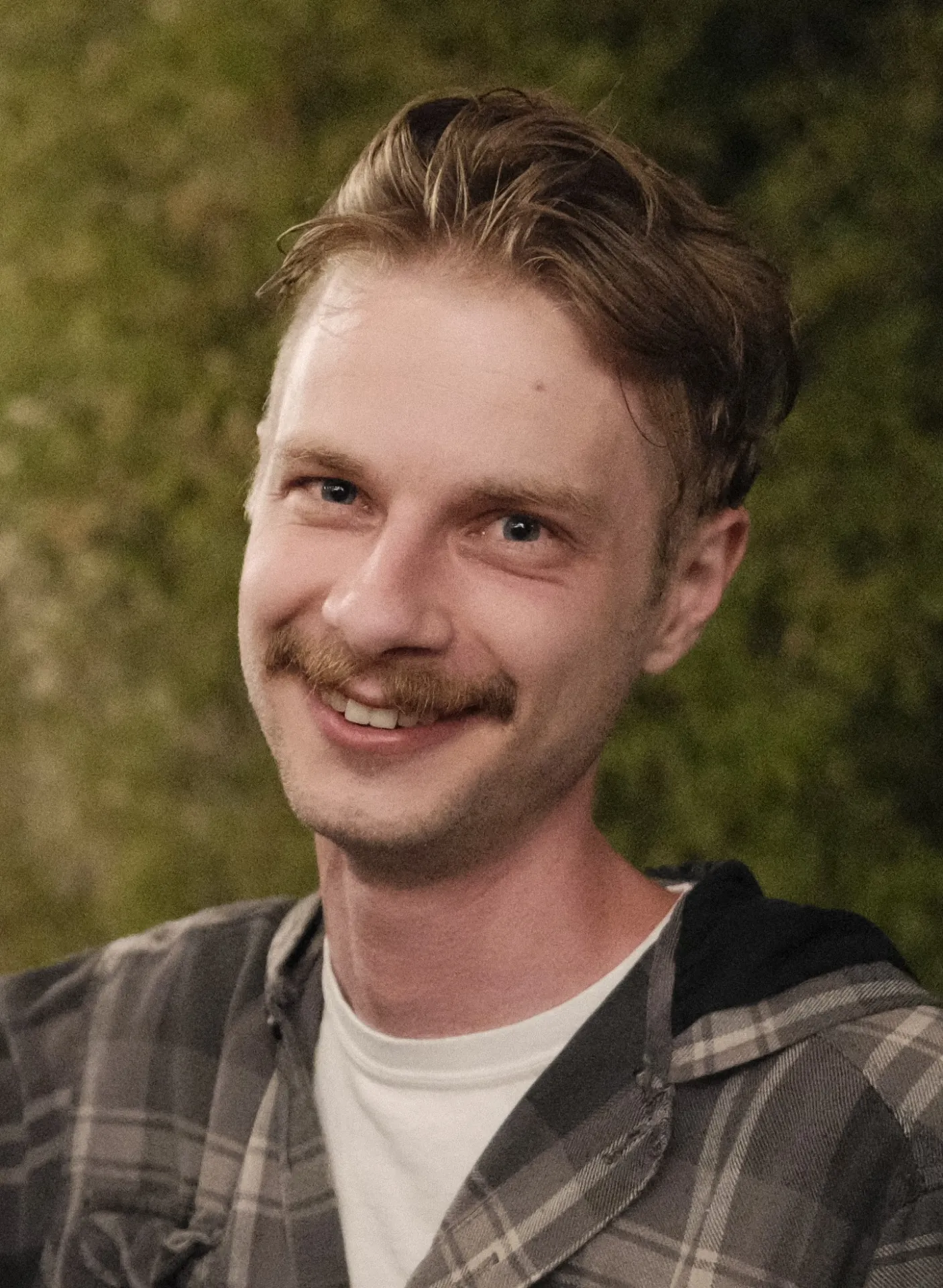
Curtis Carlson
Carlson, who holds a bachelor of science degree in global disease biology (2018) from UC Davis, joined the entomology graduate program in 2022. He received the fellowship for his dissertation research, “Investigating the Molecular Mechanisms Underlying Sleep Disruption in Smith-Kingsmore Syndrome (SKS).”
Carlson uses Drosophila models to study SKS, a rare neurodevelopmental disorder caused by pathogenic mutations in the nutrient-sensing gene mTOR. By investigating how dysregulated mTOR signaling disrupts sleep and brain function, he aims to advance understanding of disease mechanisms and future therapeutic strategies.
In the Chiu lab, Carlson designs and generates transgenic Drosophilamodels of SKS, using both the UAS/GAL4 expression system and CRISPR-Cas9 germline editing. He assays various Drosophila behaviors including sleep, circadian activity, seizure response, and feeding, among other projects.
Curtis and the Chiu Lab conduct this research in collaboration with the SKS Foundation to support patients and families affected by SKS.
Carlson has also worked with several other ENT faculty members. In his 2017-2019 research internship with UC Davis Distinguished Professor Steve Nadler, he completed a focused research project on the phylogeography of Baylisascaris procyonis (raccoon roundworm) which he later published as first-author. Working with ENT associate Scott Carroll, Carlson served as a senior research assistant, 2018–2019, in the Carroll-Loye Biological Research Laboratory, where he conducted insect repellent efficacy field trials, including the collection, counting, and identification of mosquito species. He maintained mosquito colonies for wind tunnel experiments.
Carlson also worked as a laboratory assistant from 2018-19 in the lab of Professor Christian Nansen. In assisting Ph.D. student Trevor Fowles in insect bioconversion of food waste project, Carlson reared and maintained large insect colonies of black soldier flies, mealworms, soapberry bugs, and meal moths. Carlson also served as a junior specialist, from 2019 to 2022, in the plant pathology lab of UC Davis Distinguished Professor Bruce Falk. While there, he completed and published a first-author paper describing three new chromosome-scale genome assemblies of Diaphorina citri (Asian citrus psyllid).
Carlson is a member of the Society for Research on Biological Rhythms and the American Society for Virology. The Department of Global Disease featured him in an alumnus interview.
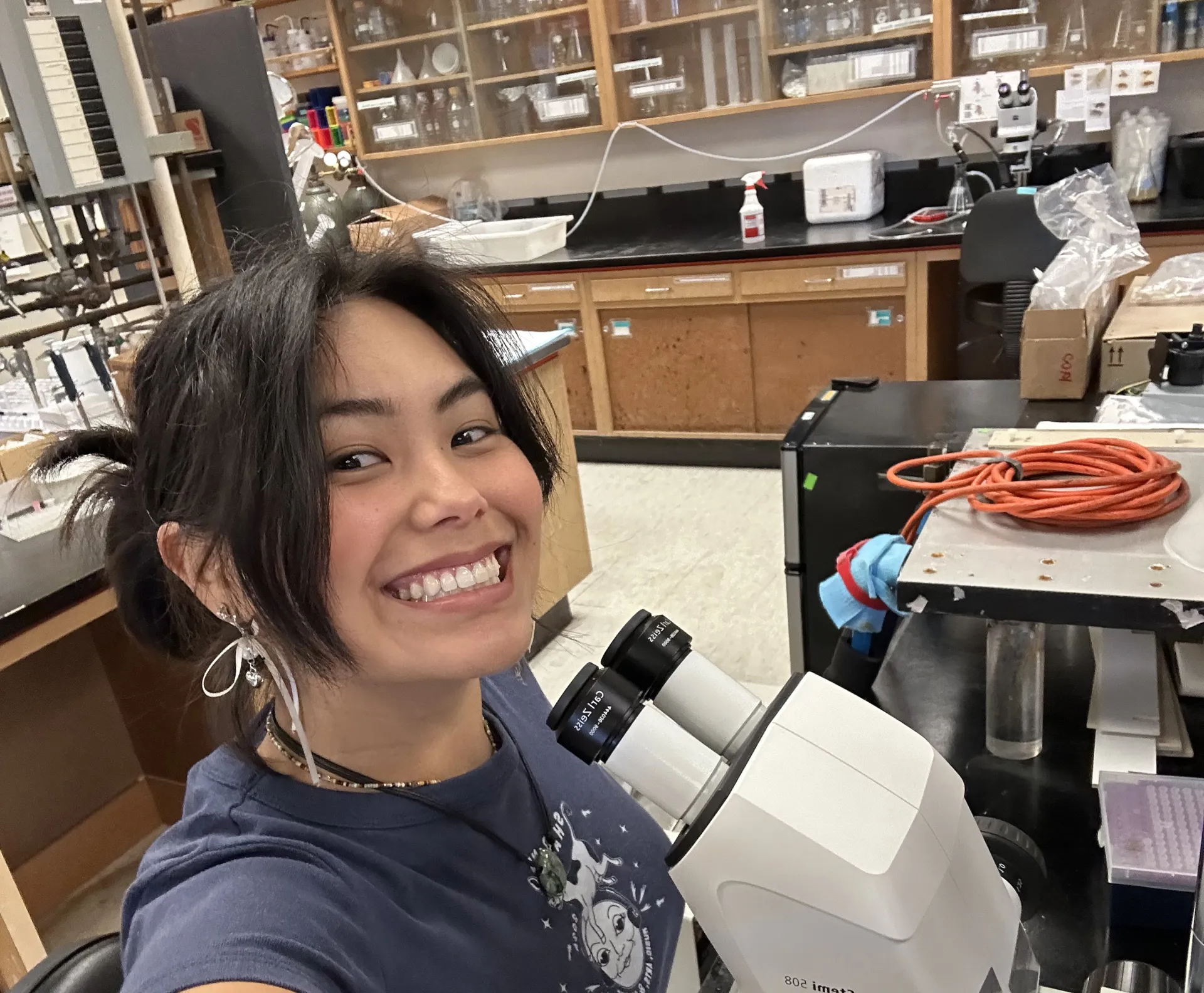
Olivia Lopez
Lopez, in her first year of her doctoral studies, holds a bachelor of science degree in psychobiology, cum laude (2021) from UCLA. In the Hamada lab, she is "investigating the interplay of thermoregulation with circadian rhythms from a behavioral neuroscience perspective using Drosophila melanogaster as a model." She is also mentoring three undergraduate researchers.
Her individual projects involve:
- Identifying the neuronal mechanisms and temperature input pathways regulating circadian body temperatures rhythms (BTR) using Drosophila
- Researching the role of PFAS (per- and polyfluoroalkyl substances) on BTR to elucidate toxic effects on the molecular mechanisms of circadian rhythms such as BTR, locomotor activity, and metabolism
Before enrolling in the UC Davis doctoral program, Lopez worked as a junior specialist in the Hamada Lab from January 2025 to September 2025, where she conducted investigations on understanding the underlying neural mechanisms and circuitry of BTR in Drosophila; mentored three undergraduate researchers to build strong foundations in Drosophila husbandry, data analysis, and experimental designs; and published a first-authored manuscript on the neuronal circuit underlying BTR, using a new assay and discovering the noncanonical role of Cryptochrome-negative clock neurons in Drosophila.
She previously worked as a technologist in the Microbiology Sterility Department for Eurofins, Donor and Product Testing, based in San Ramon, and as a science teacher, instructing seventh and eighth grade students, as a member of AmeriCorps.
Lopez presented her work at the 2025 UC Davis Molecular, Cell and Developmental Biology (MCDB) T32 Retreat; at the September 2024 Neuroscience Retreat; and at the 2024 UC Davis Biochemistry, Molecular, Cellular and Developmental Biology (BMCDB) Colloquium. She will present a poster, “THERM-D Uncovers Distinct Neural Mechanisms Separating Morning and Evening Body Temperature Rhythms in Drosophila” at the 2026 biennial meeting of the Society for Research on Biological Rhythms, to be held May 9-13 in Amelia Island, Fla. This is one of the world’s leading international forums for the exchange of cutting-edge scientific information about research in all aspects of biological rhythms.
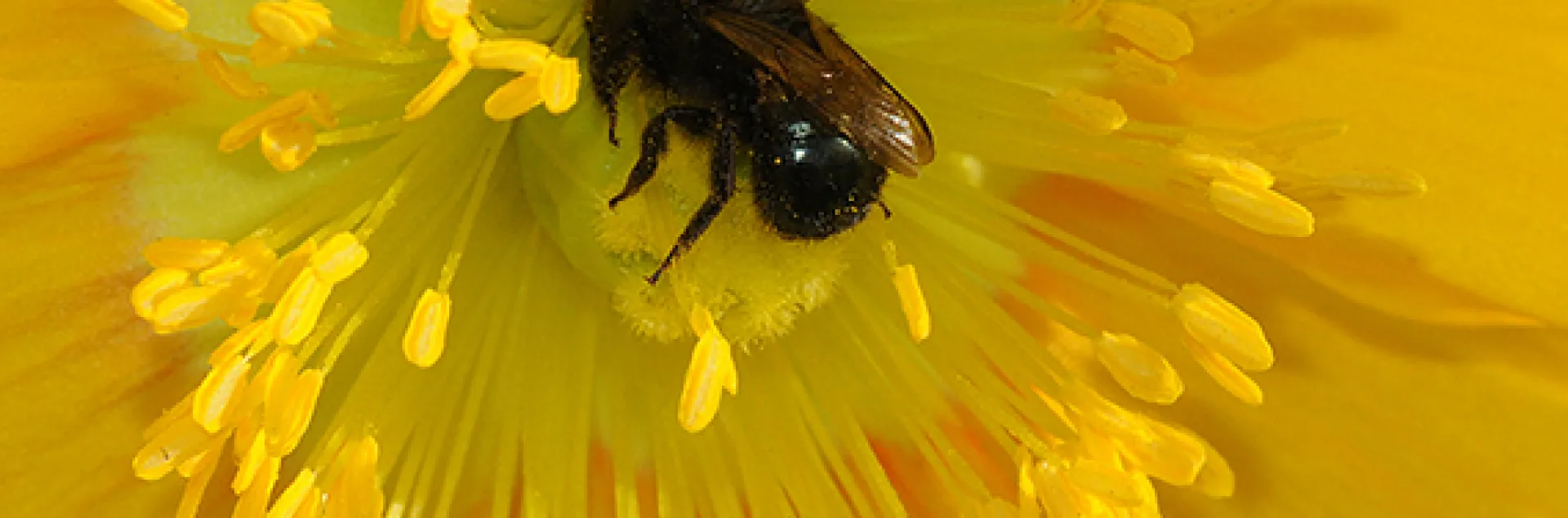
Cover image: Blue orchard bee, Osmia lignaria, foraging on Iceland poppy. This is the organism that doctoral candidate Abigail "Abby" Lehner studies. (Photo by Kathy Keatley Garvey)