
Today, on Veterans' Day, let's salute our kin who served in the military.
I pay tribute to the family members who fought in all of our nation's wars since the American Revolution.
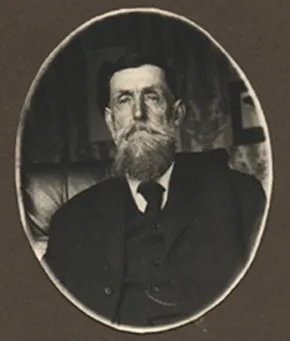
I particularly pay tribute to my maternal great-grandfather, Samuel Davidson Laughlin, (1843-1910), a Civil War color bearer.
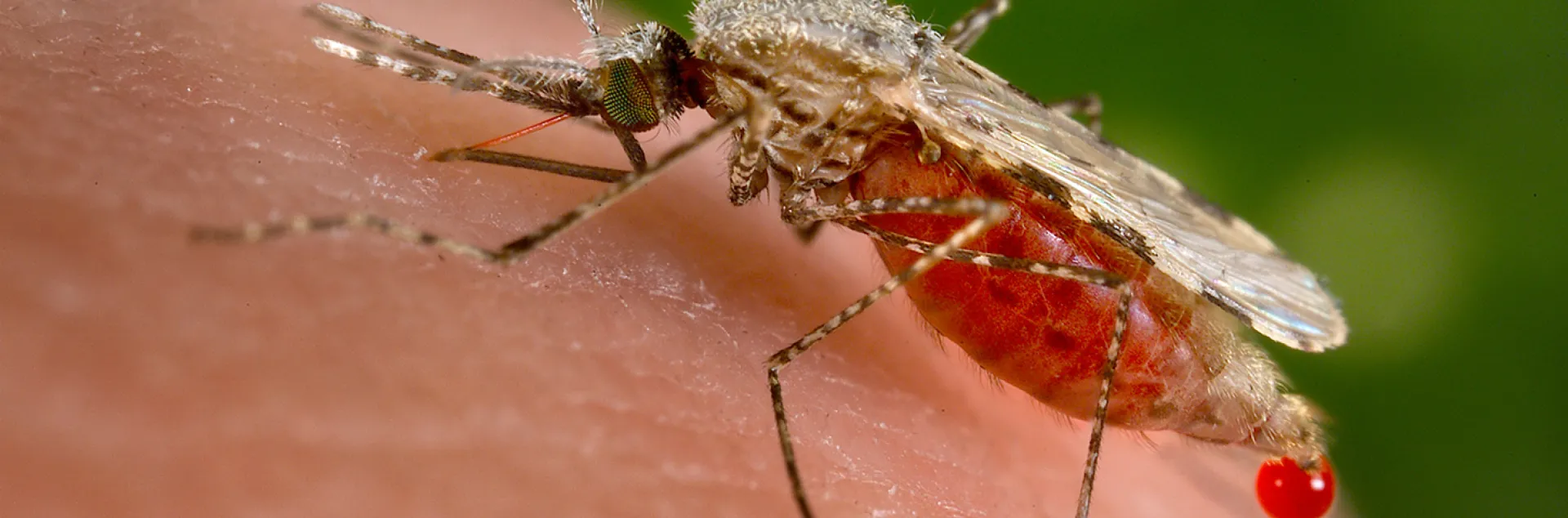
And since this is a bug blog, malaria mosquitoes are a part of this blog. Laughlin contracted malaria during the Siege of Vicksburg (May 18 -July 4, 1863).
His youngest daughter, Esther Laughlin Martin, recounted: "He caught malaria in the Yazoo swamps of the Yazoo River. He said they'd spread their blankets and they'd be lying in the water in the morning. The only way they could keep out of the water was to throw fence rails down and put their blankets on top of that. That's where he picked up malaria. There was no sanitation whatsoever, and of course, they had to use the water there for drinking."
Physicians had not yet linked malaria to Anopheles mosquitoes. They believed "humidity" or “swamp effluvia" caused what they called "intermittent fever." Soldiers who contracted "intermittent fever" complained of "ague" (fever and chills) or "the shakes."
Sam, a towering farm boy from Linn., Mo., was 18 when he enlisted in the Union Army. Company commanders selected him as the color bearer for three reasons: his height (6' 3"), his strength (hoisting the flag and flying it high) and his courage (front lines)

"Being a color bearer (aka carrying the flag), was a prestigious and important role in the Army. Not only were you carrying the symbol of what you were fighting for, the flag was any easy mark for soldiers to organize around," according to an article written in a National Museum of Civil War Medicine post by Amelia Grabowski, the outreach and education coordinator at the National Museum of Civil War Medicine and the Clara Barton Missing Soldiers Office Museum.
"When one color-bearer fell, another immediately took his place. For instance, Colonel D. K. Mcrae of the 5th North Carolina Infantry, Commanding Brigade recorded this about the Battle of Williamsburg: "My color bearer was first struck down, when his comrade seized the flag, who fell immediately. A third took it and shared the same fate; then Capt. Benjamin Robinson, of Company A, carried it until the staff had shivered to pieces in his hands."
"...The flags made them (color bearers) easy and enticing targets," Grabowski wrote.
Young Samuel carried the flag in three of the bloodiest battles of the Civil War: the Battle of Lookout Mountain, and the battles of Chicamauga and Chattanooga. A musket tore a hole in his flag but he emerged from the Civil War physically unscathed.
Ironically, after surviving the Civil War, Samuel Davidson Laughlin died of blood poisoning. He was carring an armload of firewood into the family home in Castle Rock, Wash., when a splinter lodged in his hand. He died Feb. 24, 1910 in an Oregon hospital.
He is buried on a knoll overlooking the historic round barn (now in the National Register of Historic Places) that he built in 1883. His gravestone is etched with: "Gone, but not forgotten."
On Veterans' Day, especially, we do not forget those who served and those serving our military today.
Cover image: A malaria mosquito, Anopheles stephensi. (Image by Centers for Disease Control and Prevention's Public Health Image Library)