
If you missed the UC Davis Biodiversity Museum Day Speaker Series on Saturday, Feb. 21 in the Sensory Theatre of the Robert Mondavi Institute for Wine and Food Science, 392 Old Davis Road, not to worry.
The series, featuring introductory information about nematodes, dinosaurs, yeast, and bees and pollinator gardens, is online at
https://www.youtube.com/watch?v=ojEQZgEpC58
The speakers:
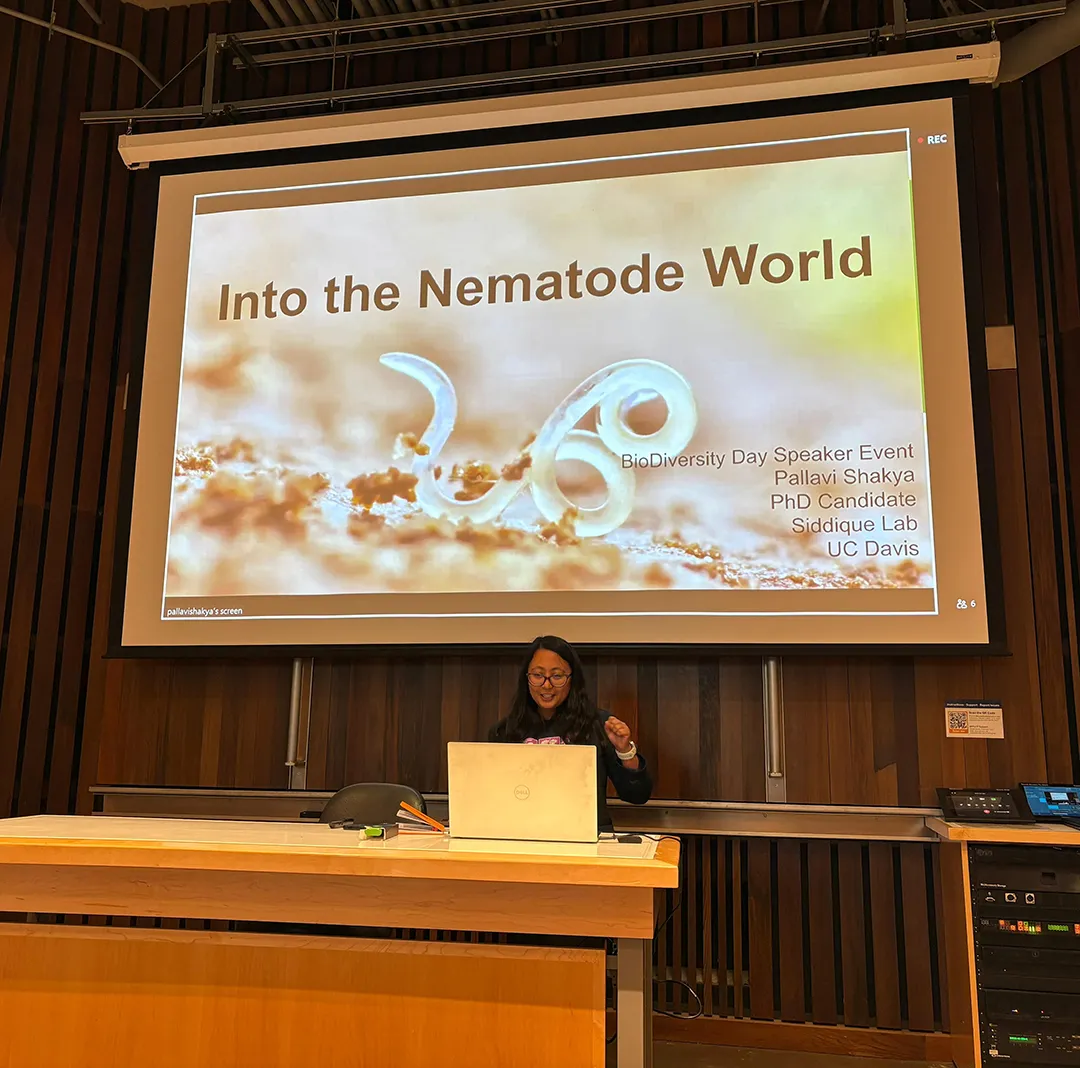
- Pallavi Shakya, doctoral candidate, lab of nematologist Shahid Siddique, "Into the Nematode World."
- Samantha "Sam" Murray, education and garden coordinator of The Bee Haven and member of the bee lab of Elina Niño, "Creating Your Own Pollinator Haven"
- Tracy Thomson, PhD, UC Davis Earth and Planetary Sciences, research assistant, "Hobnobbing in the Cretaceous: What's Up With Dinosaur Forelimbs?"
- Kyria Boundy-Mills, PhD, collection curator and research microbiologist, Phaff Yeast Collection. "Creative Uses of Yeasts."
A brief look at nematodes...a subject that puzzles many folks...
Nematodes are the most abundant animals on earth, Shakya said. She quoted Nathan Cobb (1859-1932), known as "the father of nematology in the United States" as saying in 1914: "If everything in the world disappeared except nematodes, we would see a ghostly outline of mountains, lakes and trees made of worms."
Shakya defined nematodes as "unsegmented roundworms." Approximately "80 percent of all individual animals on Earth are nematodes. They are found everywhere: from deepest ocean trenches and Antarctica to your own backyard. And even in movies."
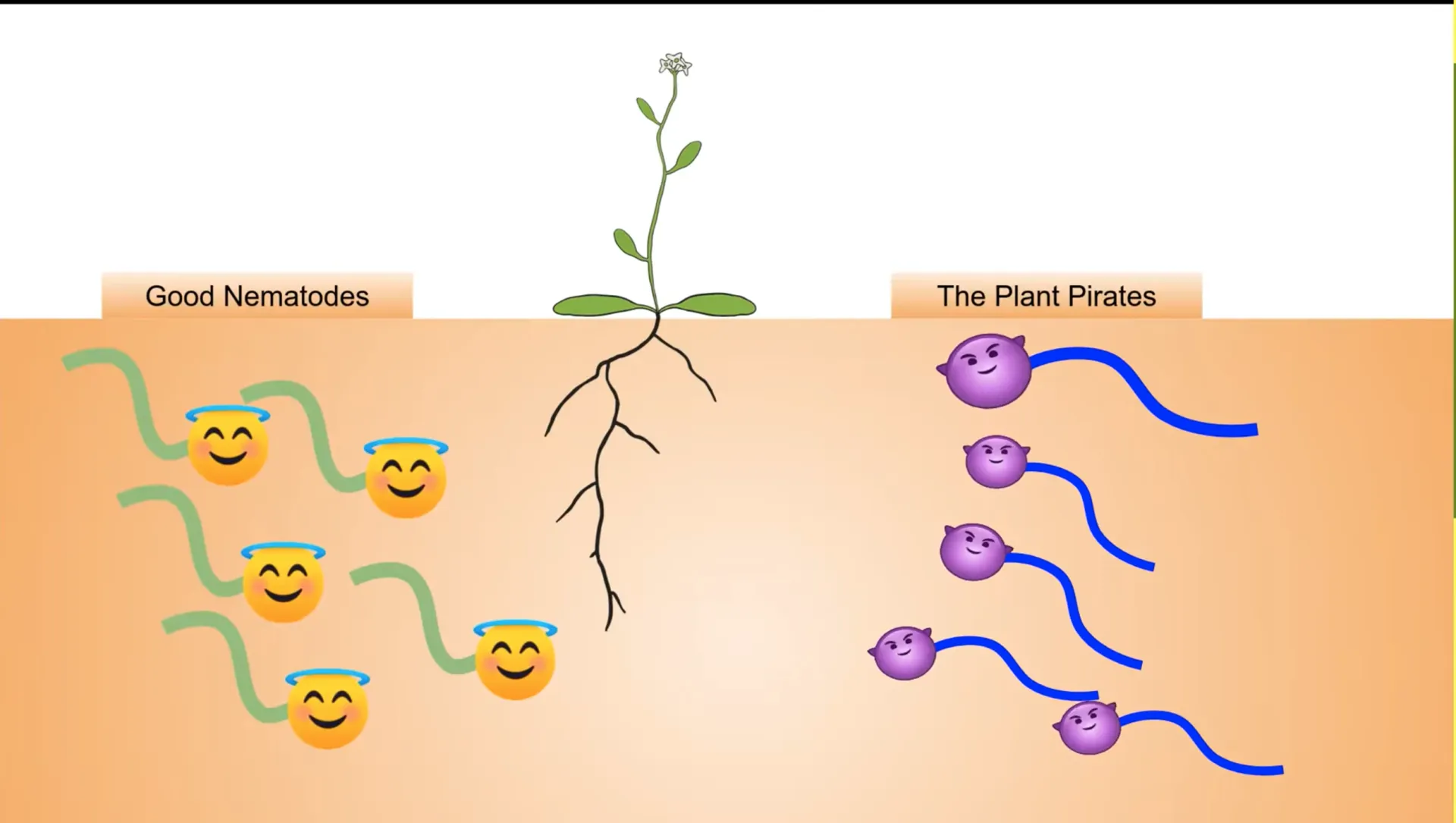
Shakya pointed out that the "majority of nematodes are free-living, but there are parasitic ones as well."
The "good guy nematodes" are beneficial soil nematodes, she related. "These species of nematodes hunt garden pests like grubs and fungus gnats, killing them without the need for harsh chemicals." She explained that "these nematodes harbor special bacteria in their guts. They release these bacteria inside the pest body. The bacteria make toxins that kill the host."
Turning to plant parasitic nematodes, Shakya mentioned that many gardeners have noticed root-knot nematodes on their tomato roots. She then explained how to check for nematodes in the garden:
- Above ground signs look like other problems such as nutrient deficiencies
- Check roots for galls, lesions or stubs
- Compare a sick plant to healthy one
- Consider lab diagnosis
("Although California has many different species of root-feeding nematodes, the most damaging ones to gardens are the root knot nematodes, Meloidogyne species," according to a UC Statewide Integrated Pest Management Program website. "Root knot nematodes attack a wide range of plants, including many common vegetables, fruit trees, and ornamentals. They are difficult to control, and they can spread easily from garden to garden in soil on tools and boots or on infested plants.")
Turning to animal parasitic nematodes, Shakya called attention to roundworms, heartworms and hookworms--"common in cats and dogs." Some can affect people, too, she added.
Mosquitoes are the sole vector for transmitting heartworm (Dirofilaria immitis) to dogs. When a mosquito bites an infected dog, nematologists say it picks up "baby worms" (microfilaria), which develop into infective larvae over 10-14 days and are then transmitted to new dogs through subsequent bites.
Or as the U.S. Food and Drug Administration says on its website: "Heartworm disease is a serious disease that results in severe lung disease, heart failure, other organ damage, and death in pets, mainly dogs, cats, and ferrets. It is caused by a parasitic worm called Dirofilaria immitis. The worms are spread through the bite of a mosquito. The dog is the definitive host, meaning that the worms mature into adults, mate, and produce offspring while living inside a dog. The mosquito is the intermediate host, meaning that the worms live inside a mosquito for a short transition period in order to become infective (able to cause heartworm disease). The worms are called 'heartworms' because the adults live in the heart, lungs, and associated blood vessels of an infected animal. "
"Prevention is the key to heartworm disease," Shakya told the crowd.
See more at https://www.youtube.com/watch?v=ojEQZgEpC58.
The 15th annual UC Davis Biodiversity Museum Day, featuring 12 museums or collections, drew an estimated 5000 people, according to committee chair Tabatha Yang, education and outreach coordinator of the Bohart Museum of Entomology.
Cover image: Root-knot nematodes in tomato plant.