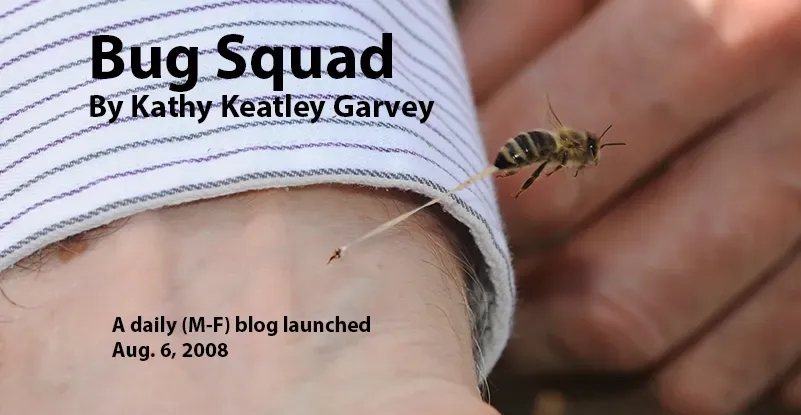
Bug Squad Logo

Bug Squad

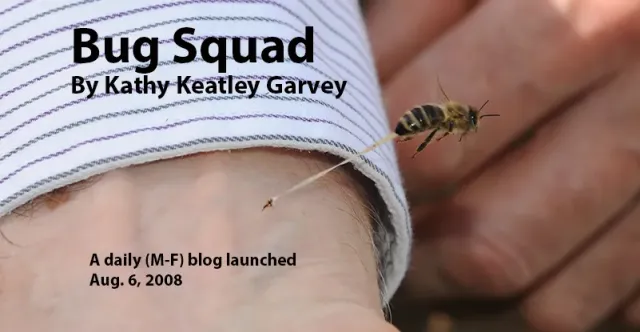
Bug Squad blog image depicts a honey bee sting in action.

Welcome to the Bug Squad blog! The Bug Squad blog was launched Aug. 6, 2008 and is a daily blog (Monday through Friday). It showcases entomologists and the work they do.  The blog focuses on scientists in the UC Davis Department of Entomology and Nematology, the Bohart Museum of Entomology, Harry H. Laidlaw Jr. Honey Bee Research Facility, the UC Davis Bee Haven, and assorted campuswide events, including UC Davis Picnic Day, UC Davis Biodiversity Museum Day, and Bohart Museum open houses. The blog spotlights insects, including bees, butterflies, dragonflies, and praying mantises, as well as arachnids such as jumping spiders and crab spiders. Author and photographer is Kathy Keatley Garvey, communications specialist, UC Davis Department of Entomology and Nematology, and a longtime journalist and community scientist with two degrees from Washington State University.  She is a member of the Entomological Society of America (ESA) and the Association for Communication Excellence (ACE). Her blog posts and images have won international awards from ACE and ESA and appeared on journal and magazine covers. She shoots primarily with a Nikon Z-8 mirrorless camera, a Nikon D500 and Nikon 800, with assorted macro lenses. 
Primary Image
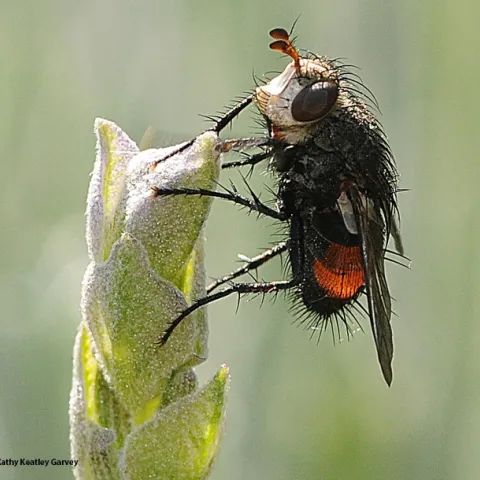
A female tachinid on lavender. (Photo by Kathy Keatley Garvey)

It's Friday Fly Day!

December 17, 2021
By Kathy Keatley Garvey
If it's Friday, it must be "Friday Fly Day!" And a perfect day to post an image of a fly. This is a female tachinid, genus Peleteria, in the family Tachinidae. It is perched on a lavender in Vacaville, Calif. The genus is characterized by two prominent setae in front of the lower part of the eye.
View Article
Primary Image
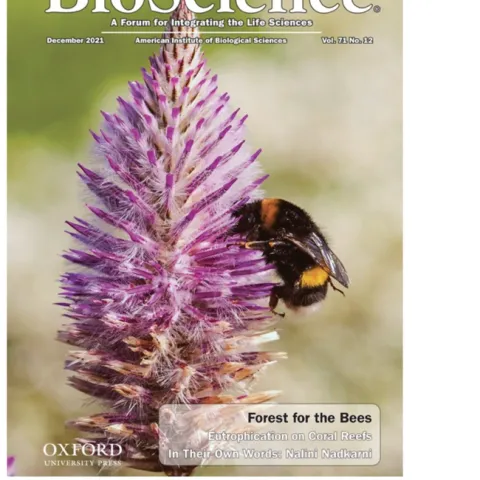
The cover image of BioScience by Diego Delso shows a Bombus terrestris, a buff-tailed bumble bee that is one of the most numerous bumble bee species in Europe.

Do Forests Play a Role in Bumble Bee Life History?

December 16, 2021
By Kathy Keatley Garvey
Do forests play a role in bumble bee life history? Yes, says UC Davis alumnus and research ecologist John Mola and his colleagues in a newly published article, "The Importance of Forests in Bumble Bee Biology and Conservation," the cover story in the current edition of the journal Bioscience.
View Article
Primary Image
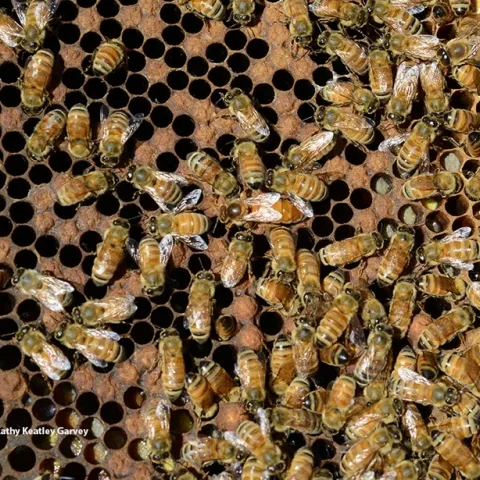
Inside the hive: a queen bee and worker bees. (Photo by Kathy Keatley Garvey)

Western Honey Bee Origin: It's in the Genes

December 14, 2021
By Kathy Keatley Garvey
Scientists and honey bee enthusiasts have been debating the origin of the Western honey bee (Apis mellifera) for centuries. We know that European colonists introduced honey bees (Apis mellifera) into the Jamestown colony (now Virginia) in 1622.
View Article
Primary Image
This was part of Extension apiculturist emeritus Eric Mussen's office, ready to be moved. (Photo by Kathy Keatley Garvey)

Eric Has Left the Building

December 13, 2021
By Kathy Keatley Garvey
Remember when, following an Elvis Presley concert, an emcee would announce "Elvis has left the building"? That was to signal that Elvis would not be returning for an encore. Since then, "Elvis has left the building," has served as a catchphrase for not only music celebrities but for retirees.
View Article