Bug Squad Logo

Bug Squad

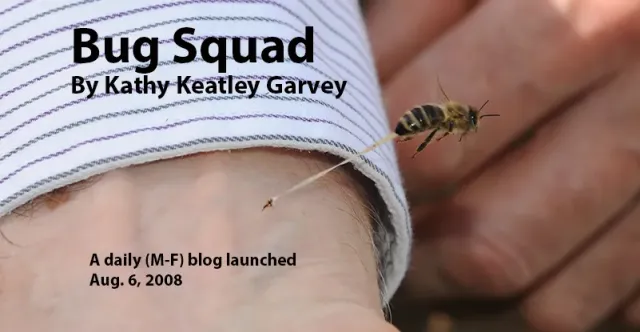
Bug Squad blog image depicts a honey bee sting in action.

Welcome to the Bug Squad blog! The Bug Squad blog was launched Aug. 6, 2008 and is a daily blog (Monday through Friday). It showcases entomologists and the work they do.  The blog focuses on scientists in the UC Davis Department of Entomology and Nematology, the Bohart Museum of Entomology, Harry H. Laidlaw Jr. Honey Bee Research Facility, the UC Davis Bee Haven, and assorted campuswide events, including UC Davis Picnic Day, UC Davis Biodiversity Museum Day, and Bohart Museum open houses. The blog spotlights insects, including bees, butterflies, dragonflies, and praying mantises, as well as arachnids such as jumping spiders and crab spiders. Author and photographer is Kathy Keatley Garvey, communications specialist, UC Davis Department of Entomology and Nematology, and a longtime journalist and community scientist with two degrees from Washington State University.  She is a member of the Entomological Society of America (ESA) and the Association for Communication Excellence (ACE). Her blog posts and images have won international awards from ACE and ESA and appeared on journal and magazine covers. She shoots primarily with a Nikon Z-8 mirrorless camera, a Nikon D500 and Nikon 800, with assorted macro lenses. Feedspot lists it as one of the top entomology blogs on the Internet. 
Primary Image
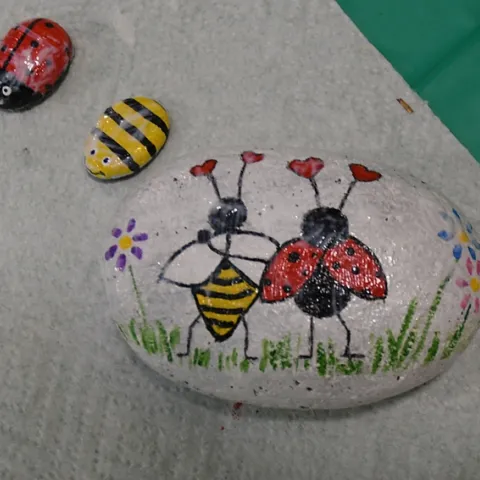
These rocks at the Bohart Museum of Entomology depict favorite insects: honey bees and ladybugs (lady beetles.) The larger rock, inspired by Valentine's Day, is titled "Love Bugs." (Photo by Kathy Keatley Garvey)

Why These Rock Artists Are Rock Stars

January 22, 2020
By Kathy Keatley Garvey
Rock artists, all. Those who painted rocks at the UC Davis Bohart Museum of Entomology open house on Saturday, Jan. 18 were not just rock artists. They were rock stars, painting creative, inspirational and seasonal illustrations.
View Article
Primary Image
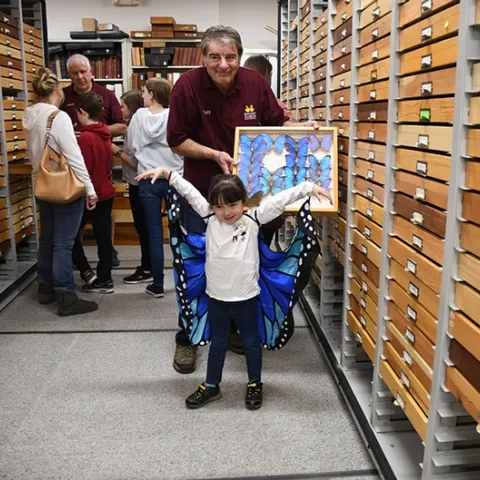
Tien Ferreira, 4, of Fairfield, displays her blue butterfly cape, as Bohart associate Greg Karofelas holds a collection of blue morpho butterflies. In back is Jeff Smith, curator of the Lepidoptera section. (Photo by Kathy Keatley Garvey)

'Eyes on the Butterflies' at the Bohart Museum of Entomology

January 21, 2020
By Kathy Keatley Garvey
Tien Ferreira, 4, of Fairfield knew just what to do. She donned her special outfit, a blue butterfly cape, and headed over to the open house at the Bohart Museum of Entomology, University of California, Davis, to see the blue butterflies. The event, held Saturday afternoon, Jan.
View Article
Primary Image
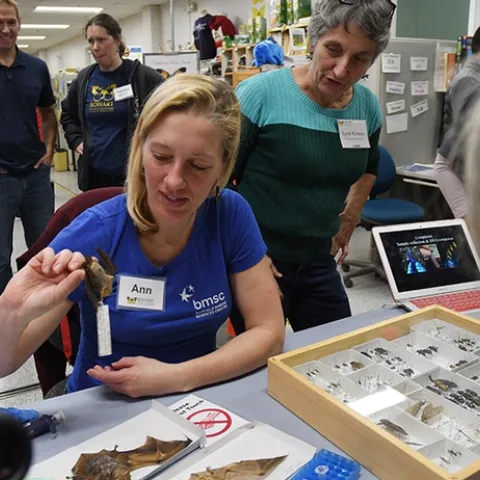
Doctoral student Ann Holmes holds up a bat specimen. Next to her is Lynn Kimsey, director of the Bohart Museum and professor of entomology at UC Davis. (Photo by Kathy Keatley Garvey)

Bohart Museum Open House: A Science of a Day

January 20, 2020
By Kathy Keatley Garvey
It was a "Science of a Day" at the UC Davis Bohart Museum of Entomology open house last Saturday afternoon, Jan. 18. For three hours, six UC Davis doctoral students discussed their research and fielded questions from the 270-plus guests, ranging from pre-kindergarten students to senior citizens.
View Article
Primary Image
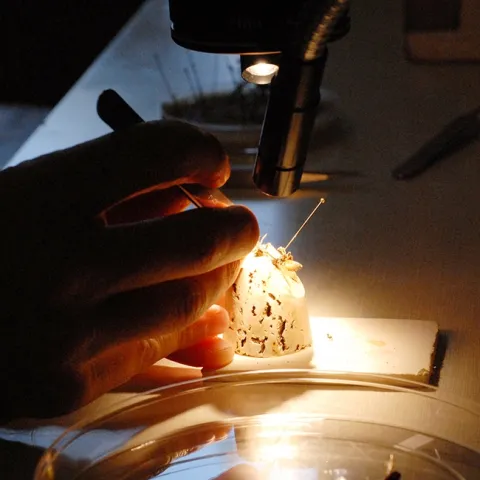
Eight microscopes will be available at the Bohart Museum of Entomology open house on Jan. 18. Visitors can view the research projects of doctoral students. (Photo by Kathy Keatley Garvey)

How Do Monarchs Know When to Migrate? Bohart Museum Open House Jan. 18

January 17, 2020
By Kathy Keatley Garvey
How do monarch butterflies know when to migrate? Take the case of a male monarch reared, released and tagged by Steven Johnson in a Washington State University citizen-science project operated by WSU entomologist David James. Johnson tagged and released the monarch on Sunday, Aug.
View Article
Primary Image
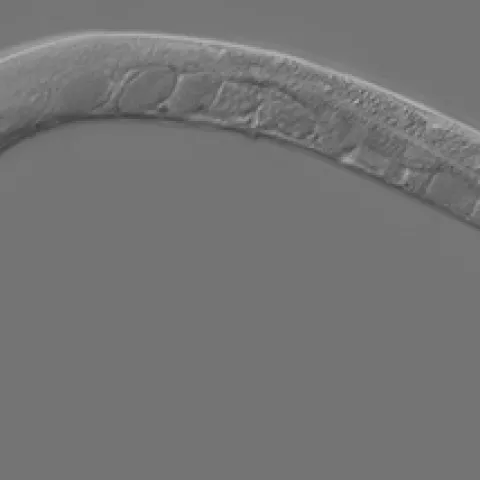
This is an adult Caenorhabditis elegans, one of the nematodes that Sebastian Eves-van den Akker studies. (Courtesy of Wikipedia)

Cambridge Scientist to Speak on Plant-Nematode Parasitism

January 16, 2020
By Kathy Keatley Garvey
When you think about global food security, you may not immediately think of plant-parasitic nematodes. But you should. They are a major threat to global food security, says Sebastian Eves-van den Akker of the Department of Plant Sciences, University of Cambridge, UK.
View Article