Bug Squad Logo

Bug Squad

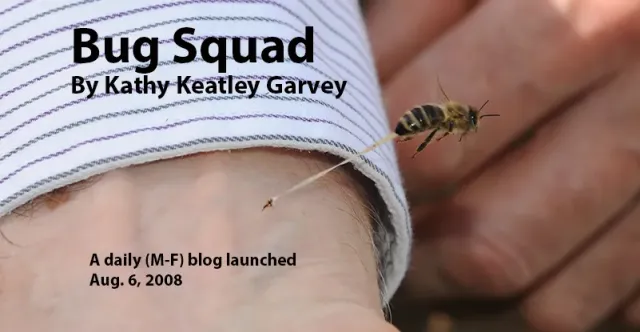
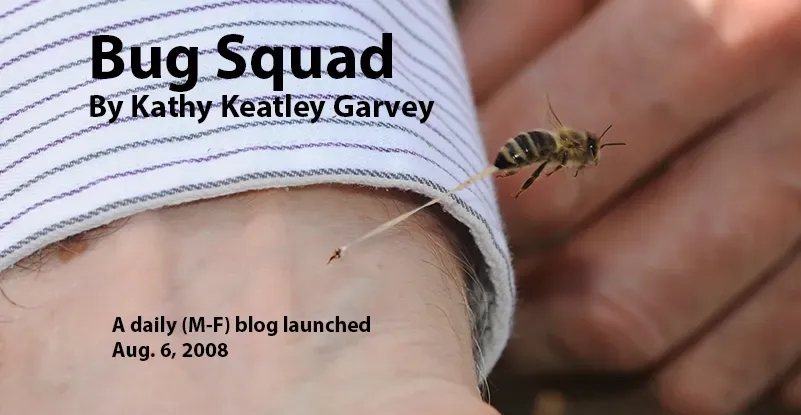
Bug Squad blog image depicts a honey bee sting in action.

Welcome to the Bug Squad blog! The Bug Squad blog was launched Aug. 6, 2008 and is a daily blog (Monday through Friday). It showcases entomologists and the work they do.  The blog focuses on scientists in the UC Davis Department of Entomology and Nematology, the Bohart Museum of Entomology, Harry H. Laidlaw Jr. Honey Bee Research Facility, the UC Davis Bee Haven, and assorted campuswide events, including UC Davis Picnic Day, UC Davis Biodiversity Museum Day, and Bohart Museum open houses. The blog spotlights insects, including bees, butterflies, dragonflies, and praying mantises, as well as arachnids such as jumping spiders and crab spiders. Author and photographer is Kathy Keatley Garvey, communications specialist, UC Davis Department of Entomology and Nematology, and a longtime journalist and community scientist with two degrees from Washington State University.  She is a member of the Entomological Society of America (ESA) and the Association for Communication Excellence (ACE). Her blog posts and images have won international awards from ACE and ESA and appeared on journal and magazine covers. She shoots primarily with a Nikon Z-8 mirrorless camera, a Nikon D500 and Nikon 800, with assorted macro lenses. Feedspot lists it as one of the top entomology blogs on the Internet. 

Primary Image
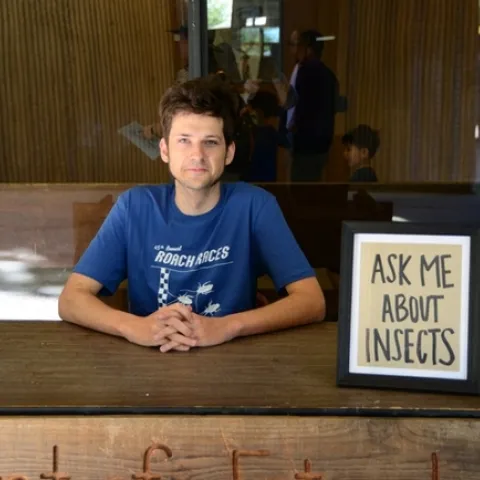
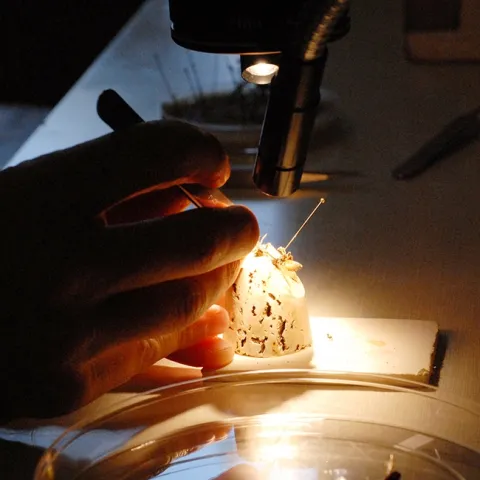
Eight microscopes will be available at the Bohart Museum of Entomology open house on Jan. 18. Visitors can view the research projects of doctoral students. (Photo by Kathy Keatley Garvey)

How Do Monarchs Know When to Migrate? Bohart Museum Open House Jan. 18

January 17, 2020
By Kathy Keatley Garvey
How do monarch butterflies know when to migrate? Take the case of a male monarch reared, released and tagged by Steven Johnson in a Washington State University citizen-science project operated by WSU entomologist David James. Johnson tagged and released the monarch on Sunday, Aug.
View Article
Primary Image
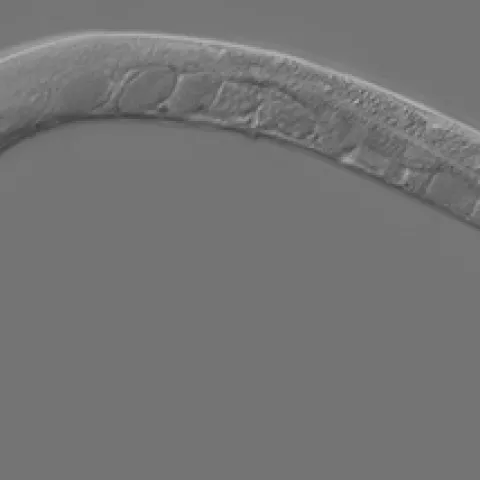
This is an adult Caenorhabditis elegans, one of the nematodes that Sebastian Eves-van den Akker studies. (Courtesy of Wikipedia)

Cambridge Scientist to Speak on Plant-Nematode Parasitism

January 16, 2020
By Kathy Keatley Garvey
When you think about global food security, you may not immediately think of plant-parasitic nematodes. But you should. They are a major threat to global food security, says Sebastian Eves-van den Akker of the Department of Plant Sciences, University of Cambridge, UK.
View Article
Primary Image
Ready to cut the ribbon (from left) are almond pollination consultant Robert Curtis of Carmichael, retired director of agricultural affairs, Almond Board of California; Brad Pankratz of Can-Am Apiaries, Orland; Jackie Parks-Burris of Jackie Park-Burris Queen Bees, Palo Cedro and a past president of California State Beekeepers' Association; Darren Cox, Logan, Utah, past president of American Honey Producers; and Kelvin Adee of Bruce, S.D., president of American Honey Producers.

A Grand Opening--And Bees Were Nowhere in Sight

January 15, 2020
By Kathy Keatley Garvey
It was a grand opening of the USDA-ARS bee research facility at the University of California, Davis, but the bees were nowhere in sight. That's because bees don't fly until the temperature hits around 55, and the thermometer on that wintry day (Jan. 7) refused to budge over 47.
View Article
Primary Image
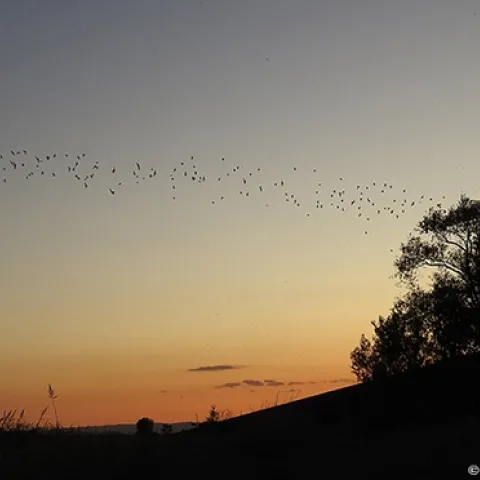
Mexican free-tailed batsleaving Yolo Causeway at dusk on Sept. 10, 2019. (Photo by Kathy Keatley Garvey)

Bohart Museum Open House: What Insects Do Bats Eat?

January 13, 2020
By Kathy Keatley Garvey
When you watch bats emerge at dusk in the summer from the Yolo Causeway, have you ever wondered what insects they eat? UC Davis doctoral candidate Ann Holmes has--and she's doing research on what's in their guano (feces).
View Article