Bug Squad Logo

Bug Squad

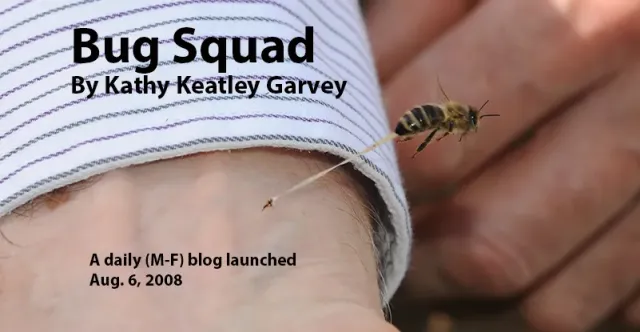
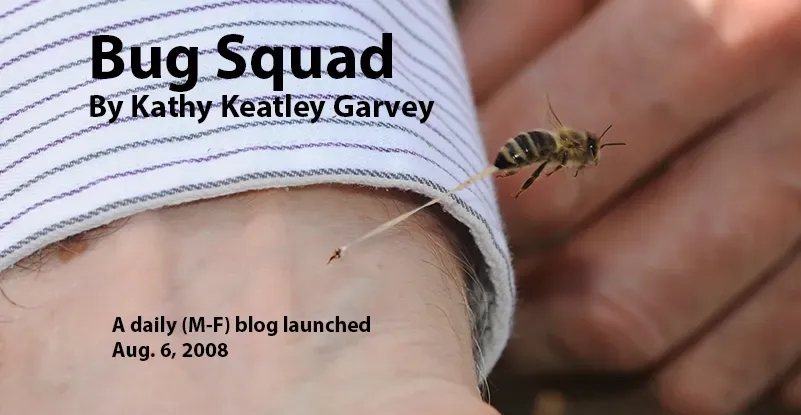
Bug Squad blog image depicts a honey bee sting in action.

Welcome to the Bug Squad blog! The Bug Squad blog was launched Aug. 6, 2008 and is a daily blog (Monday through Friday). It showcases entomologists and the work they do.  The blog focuses on scientists in the UC Davis Department of Entomology and Nematology, the Bohart Museum of Entomology, Harry H. Laidlaw Jr. Honey Bee Research Facility, the UC Davis Bee Haven, and assorted campuswide events, including UC Davis Picnic Day, UC Davis Biodiversity Museum Day, and Bohart Museum open houses. The blog spotlights insects, including bees, butterflies, dragonflies, and praying mantises, as well as arachnids such as jumping spiders and crab spiders. Author and photographer is Kathy Keatley Garvey, communications specialist, UC Davis Department of Entomology and Nematology, and a longtime journalist and community scientist with two degrees from Washington State University.  She is a member of the Entomological Society of America (ESA) and the Association for Communication Excellence (ACE). Her blog posts and images have won international awards from ACE and ESA and appeared on journal and magazine covers. She shoots primarily with a Nikon Z-8 mirrorless camera, a Nikon D500 and Nikon 800, with assorted macro lenses. Feedspot lists it as one of the top entomology blogs on the Internet. 
Primary Image
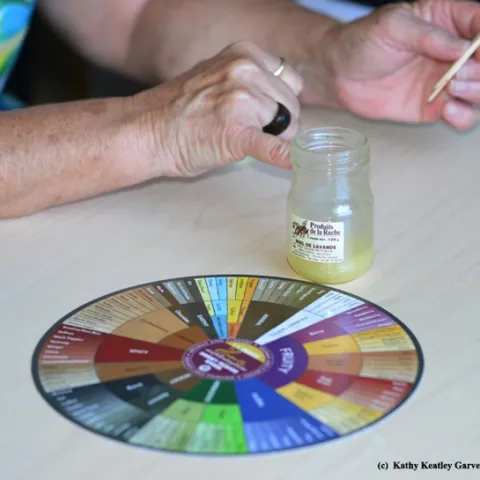
Jar of lavender honey rests next to the UC Davis Honey and Pollination Center's Honey Flavor Wheel. (Photo by Kathy Keatley Garvey)

A Taste of Honey

August 14, 2014
By Kathy Keatley Garvey
Honey connoisseur Amina Harris, director of the UC Davis Honey and Pollination Center, opens the jar of lavender honey from France and sniffs the aroma. She breathes in deeply. The "miel de lavande" produced by "apiculteur Marc Agnel" is creamed, as most lavender honeys are, she says.
View Article
Primary Image
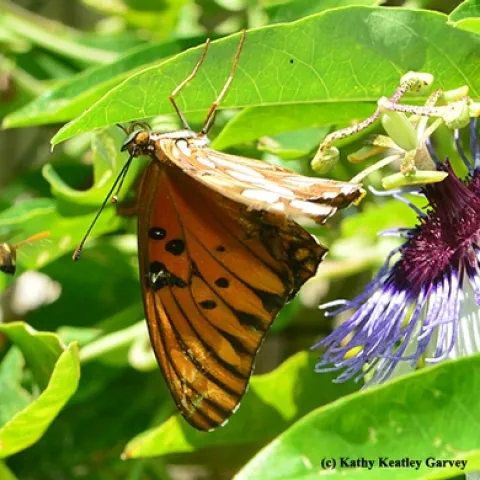
European paper wasp targets a crippled Gulf Fritillary. (Photo by Kathy Keatley Garvey)

Wasp Attack

August 13, 2014
By Kathy Keatley Garvey
When you're trying to rear Gulf Fritillary butterflies (Agraulis vanillae), expect the expected: predators. It doesn't take long for European paper wasps (Polistes dominula) to find the butterfly's host plant, the passionflower vine (Passsiflora) and prey.
View Article
Primary Image
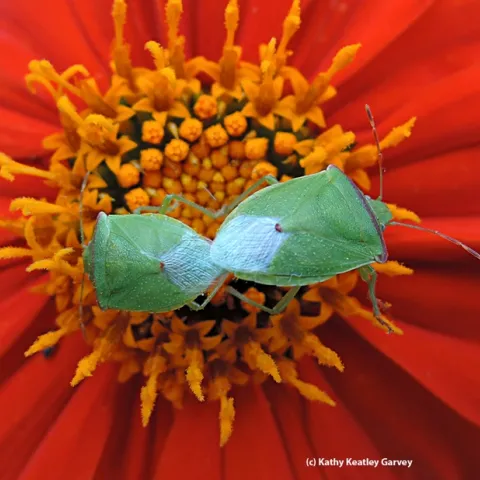
Red-shouldered stink bugs mating. (Photo by Kathy Keatley Garvey)

Stink Bugs Do It, Too!

August 12, 2014
By Kathy Keatley Garvey
"Birds do it," sang Ella Fitzgerald. "Bees do it..." "Even educated" (insert "stink bugs") "do it." But she didn't sing that; that wasn't part of Cole Porter's lyrics. But it's true. Stink bugs do it. Unfortunately. We'd rather they NOT.
View Article
Primary Image
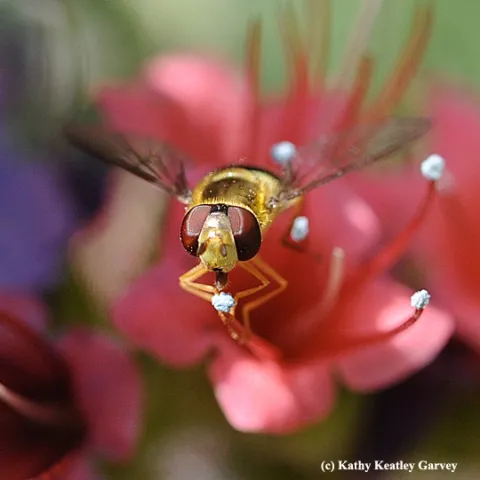
A syrphid fly, aka flower fly or hover fly, nectaring on a tower of jewels. (Photo by Kathy Keatley Garvey)

The Good Guys--and Girls!

August 11, 2014
By Kathy Keatley Garvey
Think of them as "the good guys" and "the good girls." Insects such as lacewings, lady beetles and flower flies. We're delighted to see that the Xerces Society for Invertebrate Conservation has just published a 250-page book on "Farming with Native Beneficial Insects.
View Article
Primary Image
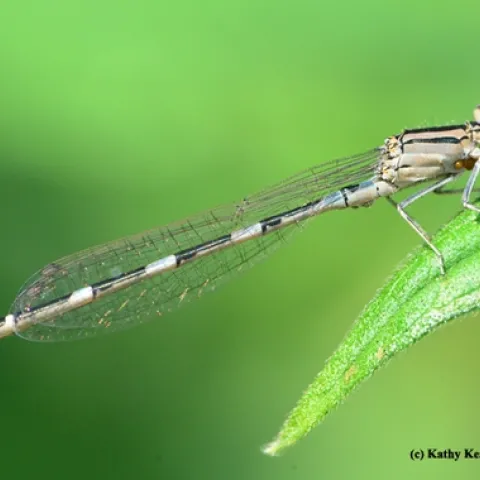
Damselfly with water mites (see egglike mass). The insect next to it is probably thrips, according to Lynn Kimsey, director of the Bohart Museum of Entomology, UC Davis. (Photo by Kathy Keatley Garvey)

Delightful Damselflies

August 8, 2014
By Kathy Keatley Garvey
When an egret swooped down and ate all the goldfish in our fish pond--quite a smorgasbord of goldies--we left the pond bare for a couple of months. The result was a good one: more damselflies.
View Article