Bug Squad Logo

Bug Squad

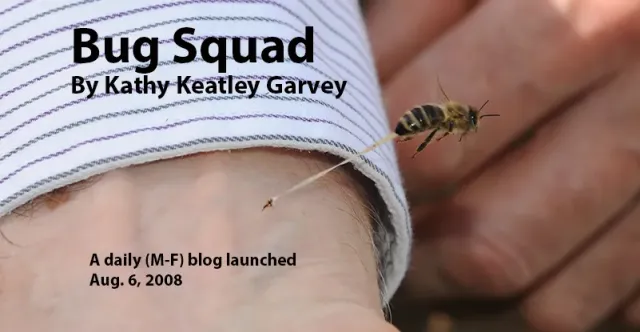
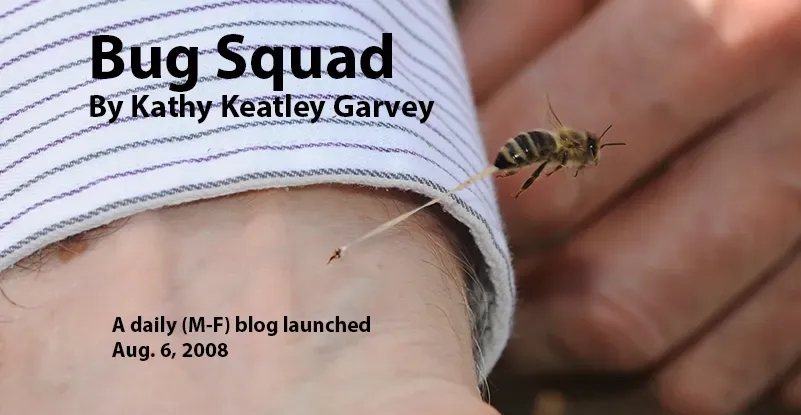
Bug Squad blog image depicts a honey bee sting in action.

Welcome to the Bug Squad blog! The Bug Squad blog was launched Aug. 6, 2008 and is a daily blog (Monday through Friday). It showcases entomologists and the work they do.  The blog focuses on scientists in the UC Davis Department of Entomology and Nematology, the Bohart Museum of Entomology, Harry H. Laidlaw Jr. Honey Bee Research Facility, the UC Davis Bee Haven, and assorted campuswide events, including UC Davis Picnic Day, UC Davis Biodiversity Museum Day, and Bohart Museum open houses. The blog spotlights insects, including bees, butterflies, dragonflies, and praying mantises, as well as arachnids such as jumping spiders and crab spiders. Author and photographer is Kathy Keatley Garvey, communications specialist, UC Davis Department of Entomology and Nematology, and a longtime journalist and community scientist with two degrees from Washington State University.  She is a member of the Entomological Society of America (ESA) and the Association for Communication Excellence (ACE). Her blog posts and images have won international awards from ACE and ESA and appeared on journal and magazine covers. She shoots primarily with a Nikon Z-8 mirrorless camera, a Nikon D500 and Nikon 800, with assorted macro lenses. 
Primary Image
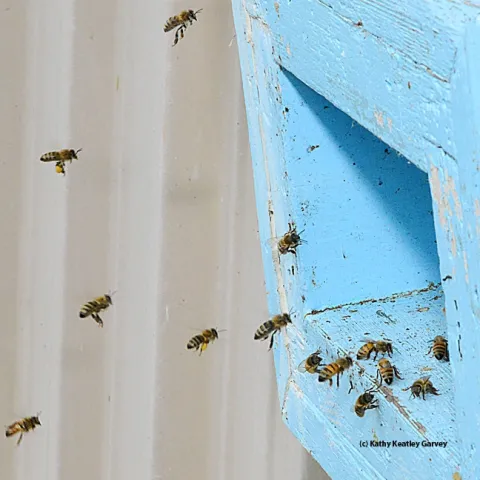
Honey bees making a "bee line" for their home. (Photo by Kathy Keatley Garvey)

Watching the Girls Go By

March 28, 2014
By Kathy Keatley Garvey
Pull up a chair and engage in a little "girl-watching." That is, honey bees heading home to their colony. Many beekeepers, especially beginning beekeepers, like to watch their worker bees--they call them "my girls"--come home. They're loaded with pollen this time of year.
View Article
Primary Image
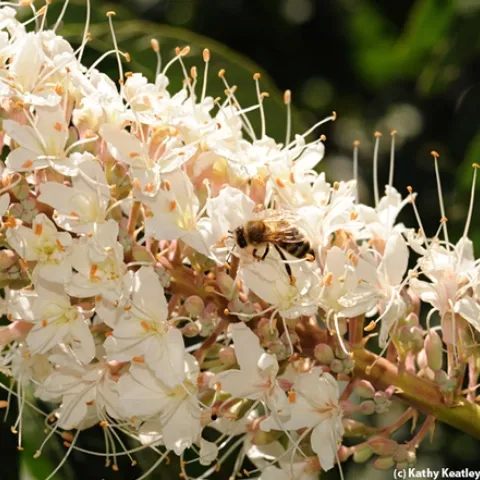
Honey bee foraging last May on a California buckeye, which is poisonous to honey bees. (Photo by Kathy Keatley Garvey)

Eye on the Buckeye

March 26, 2014
By Kathy Keatley Garvey
It won't bloom until summer, but already many eyes are on the California buckeye. The tree's blossoms are poisonous to honey bees. Bees are attracted to them and forage on them, but the end result of the food provisions to the colony can be deformed larval development.
View Article
Primary Image
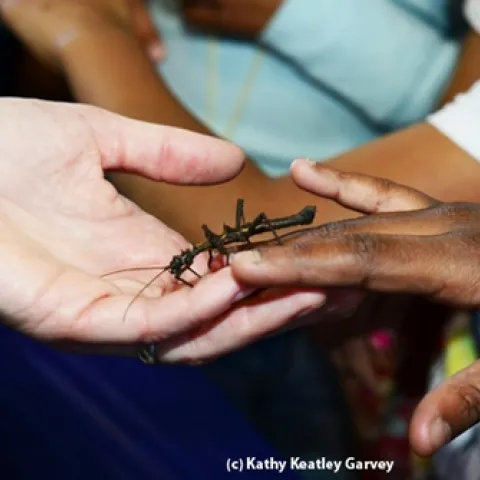
From one hand to another: a walking stick finds a place to walk. (Photo by Kathy Keatley Garvey)

Bugs R Us

March 25, 2014
By Kathy Keatley Garvey
Who wouldn't want to get up close and personal with bugs? And maybe give them a hug? Or two? Or three?
View Article
Primary Image
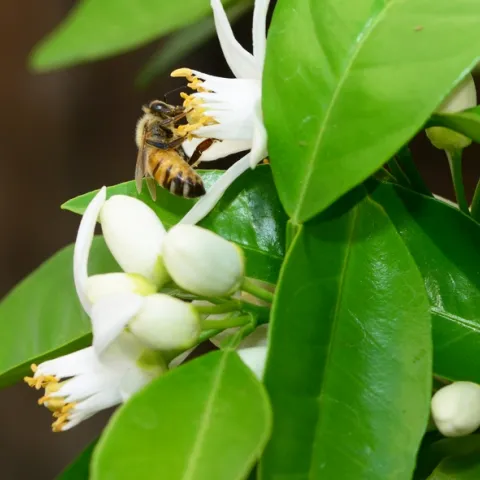
A honey bee pollinating an orange blossom. (Photo by Kathy Keatley Garvey)

Orange Blossom Special

March 24, 2014
By Kathy Keatley Garvey
If you like oranges, you can thank a honey bee. Oranges are 90 percent dependent on honey bees for pollination. Remember that week of freezing temperatures back in December? Yes, it affected California's $2 billion citrus industry.
View Article