Bug Squad Logo

Bug Squad

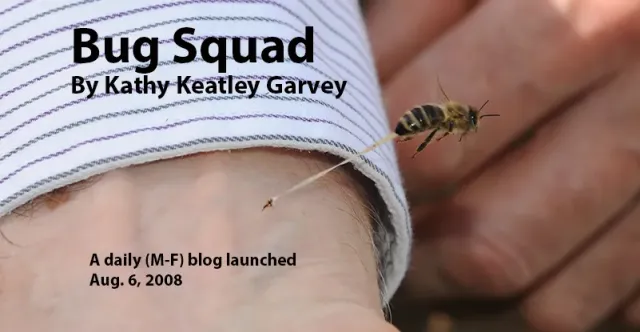
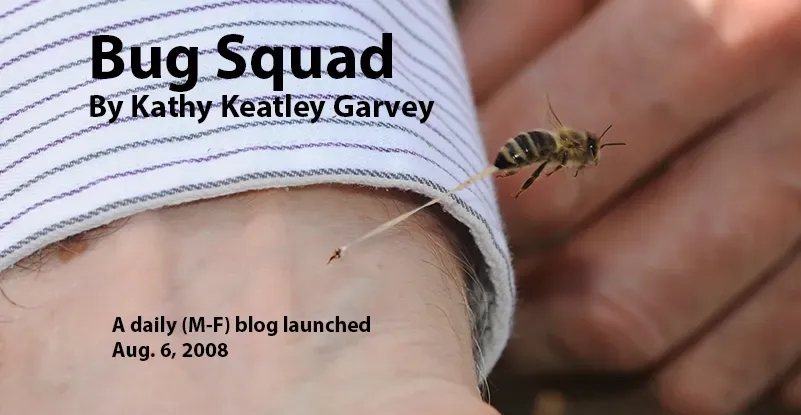
Bug Squad blog image depicts a honey bee sting in action.

Welcome to the Bug Squad blog! The Bug Squad blog was launched Aug. 6, 2008 and is a daily blog (Monday through Friday). It showcases entomologists and the work they do.  The blog focuses on scientists in the UC Davis Department of Entomology and Nematology, the Bohart Museum of Entomology, Harry H. Laidlaw Jr. Honey Bee Research Facility, the UC Davis Bee Haven, and assorted campuswide events, including UC Davis Picnic Day, UC Davis Biodiversity Museum Day, and Bohart Museum open houses. The blog spotlights insects, including bees, butterflies, dragonflies, and praying mantises, as well as arachnids such as jumping spiders and crab spiders. Author and photographer is Kathy Keatley Garvey, communications specialist, UC Davis Department of Entomology and Nematology, and a longtime journalist and community scientist with two degrees from Washington State University.  She is a member of the Entomological Society of America (ESA) and the Association for Communication Excellence (ACE). Her blog posts and images have won international awards from ACE and ESA and appeared on journal and magazine covers. She shoots primarily with a Nikon Z-8 mirrorless camera, a Nikon D500 and Nikon 800, with assorted macro lenses. 

Primary Image
A female Valley carpenter bee is covered with yellow pollen. (Photo by Kathy Keatley Garvey)

Passionate About the Passionflower Vines

September 6, 2013
By Kathy Keatley Garvey
Valley carpenter bees are passionate about passionflower vines (Passiflora). You see these black bees foraging on the blossoms. Tiny grains of golden pollen, looking like gold dust, dot the thorax. Their loud buzz frightens many a person, but wait, they're pollinators.
View Article
Primary Image
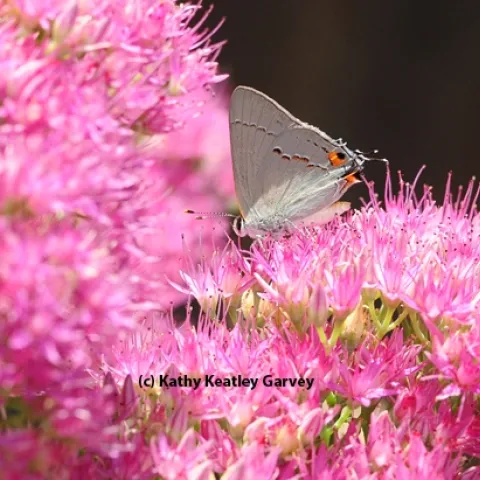
A gray hairstreak foraging in sedum. (Photo by Kathy Keatley Garvey)

A Streak of Gray

September 5, 2013
By Kathy Keatley Garvey
if it's a streak of gray, you don't wash it away. You welcome it. The gray hairstreak butterfly (Strymon melinus) is common on our sedum, a good fall plant for pollinators, including butterflies, honey bees, sweat bees and syrphid flies, aka hover flies or flower flies.
View Article
Primary Image
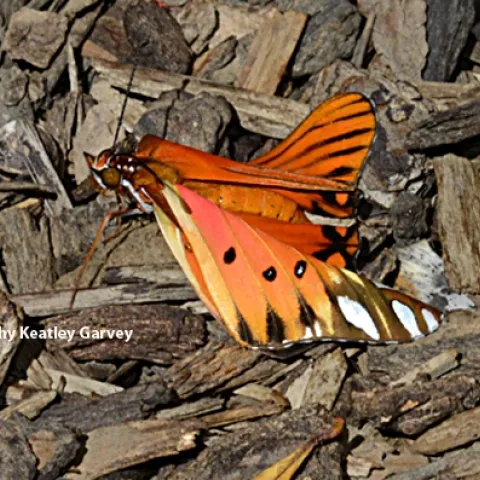
Newly emerged Gulf Fritillary butterfly, fresh from its chrysalis, lands on a bed of wood chips. (Photo by Kathy Keatley Garvey)

Just Emerged: Gulf Fritillary Butterfly

September 4, 2013
By Kathy Keatley Garvey
Call it serendipity. Call it a prize from the sky. Frankly, it's not every day that a newly emerged Gulf Fritillary butterfly, Agraulis vanillae, lands at your feet.
View Article
Primary Image
A honey bee foraging on a blanket flower, Gaillardia. (Photo by Kathy Keatley Garvey)

Color Them Hungry

September 3, 2013
By Kathy Keatley Garvey
As summer nears its end, the honey bees are hungry. That's why Extension apiculturist Eric Mussen of the UC Davis Department of Entomology and Nematology advocates that we plant flowers for late summer and fall to help the bees.
View Article
Primary Image
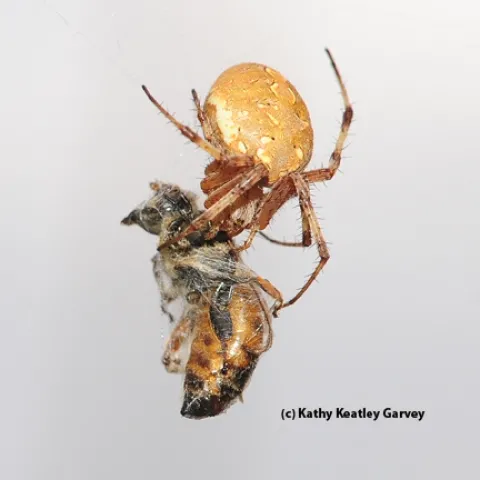
Western spotted orb weaver snares and wraps a honey bee. (Photo by Kathy Keatley Garvey)

Labor Day Travails

September 2, 2013
By Kathy Keatley Garvey
Today (Labor Day) began just like any other day. And it ended just like any other day, except for the Labor Day celebrations that we humans plan. For Nature's predators and prey that frequent our garden, however, it was an intertwining of life and death.
View Article