Bug Squad Logo

Bug Squad

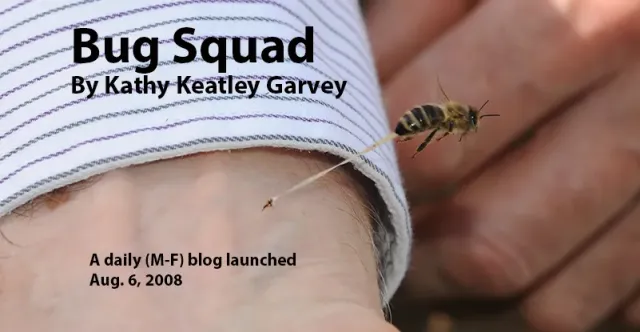
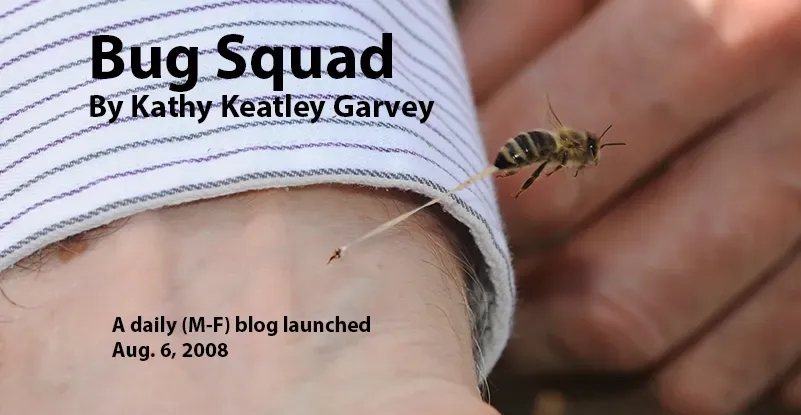
Bug Squad blog image depicts a honey bee sting in action.

Welcome to the Bug Squad blog! The Bug Squad blog was launched Aug. 6, 2008 and is a daily blog (Monday through Friday). It showcases entomologists and the work they do.  The blog focuses on scientists in the UC Davis Department of Entomology and Nematology, the Bohart Museum of Entomology, Harry H. Laidlaw Jr. Honey Bee Research Facility, the UC Davis Bee Haven, and assorted campuswide events, including UC Davis Picnic Day, UC Davis Biodiversity Museum Day, and Bohart Museum open houses. The blog spotlights insects, including bees, butterflies, dragonflies, and praying mantises, as well as arachnids such as jumping spiders and crab spiders. Author and photographer is Kathy Keatley Garvey, communications specialist, UC Davis Department of Entomology and Nematology, and a longtime journalist and community scientist with two degrees from Washington State University.  She is a member of the Entomological Society of America (ESA) and the Association for Communication Excellence (ACE). Her blog posts and images have won international awards from ACE and ESA and appeared on journal and magazine covers. She shoots primarily with a Nikon Z-8 mirrorless camera, a Nikon D500 and Nikon 800, with assorted macro lenses. 
Primary Image
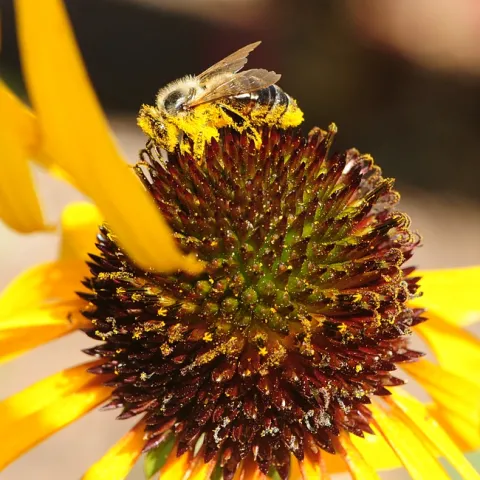
Honey bee covered with pollen; she is on a yellow coneflower, Echinacea paradoxa. (Photo by Kathy Keatley Garvey)

Pollen Power

May 27, 2013
By Kathy Keatley Garvey
Bees carry pollen in their pollen baskets, but that's not the only place.
View Article
Primary Image
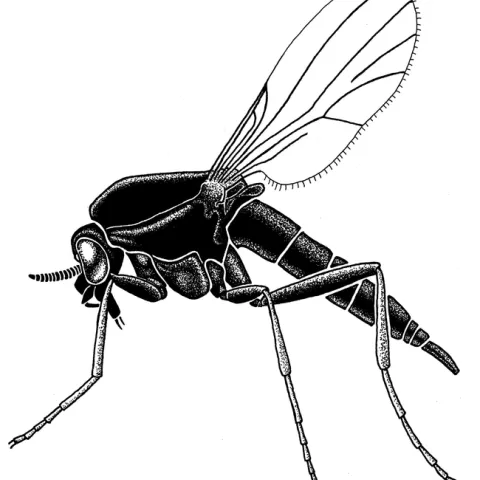
No-see-um, 70 times life size. (Illustration by Lynn Kimsey)

No-See-Ums, But You Feel 'Em

May 24, 2013
By Kathy Keatley Garvey
It happened unexpectedly. Tabatha Yang and her six-month-old son, Karoo, were sitting on their lawn last Sunday at their West Davis home, when she saw red. Literally. One minute they were enjoying the springlike weather, and the next minute his head was covered with bright red dots.
View Article
Primary Image
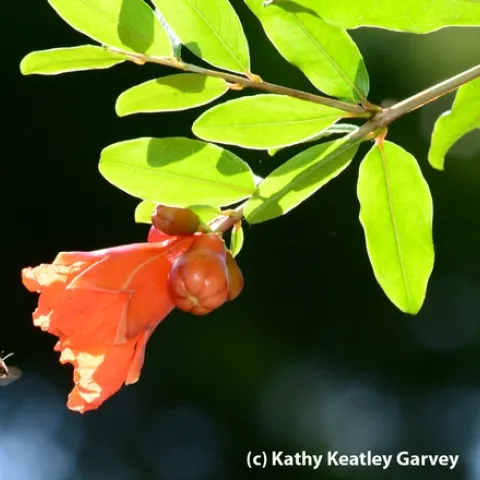
A backlit honey bee heads for a pomegranate blossom. (Photo by Kathy Keatley Garvey)

Promenade in the Pomegranates

May 23, 2013
By Kathy Keatley Garvey
What a match--honey bees and pomegranate blossoms. Watching the golden bees forage amid the brilliant red blossoms in the late afternoon is a delight to see, especially when the sun backlights them. The ancient fruit, native to Iran, is one of the world's first cultivated fruits.
View Article
Primary Image
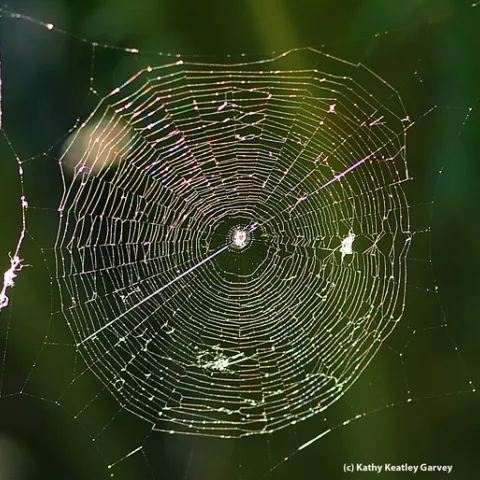
Backlit by the morning sun, a spider web glows, glistens and glitters. (Photo by Kathy Keatley Garvey)

Where's Charlotte?

May 22, 2013
By Kathy Keatley Garvey
A spider web is one of nature's most marvelous wonders. It's art, it's architecture, and it's engineering. The silk is as beautiful as it is deceiving. It's 10 times stronger than Kevlar; as sticky as cotton candy covered with honey; and as flexible as a classical ballet dancer.
View Article
Primary Image
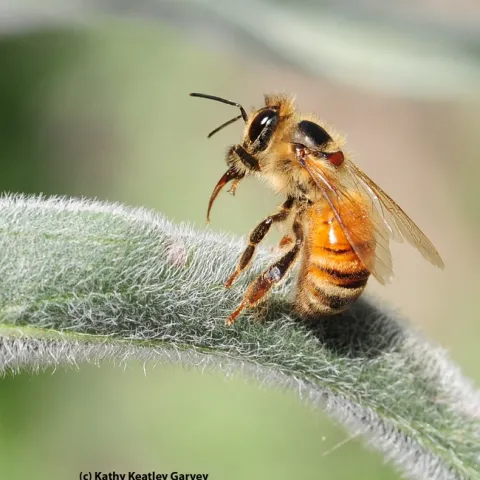
A worker bee staggers and extends her tongue. (Photo by Kathy Keatley Garvey)

Where Do Foraging Bees Go to Die?

May 21, 2013
By Kathy Keatley Garvey
"Where do foraging bees go to die?" That question was asked this week of honey bee guru Eric Mussen of the UC Davis Department of Entomology, who serves as the statewide Extension apiculturist. "Do they return to the hive? Do they retire and live out their last days inside?" he was asked.
View Article