Bug Squad Logo

Bug Squad

Bug Squad blog image depicts a honey bee sting in action.

Welcome to the Bug Squad blog! The Bug Squad blog was launched Aug. 6, 2008 and is a daily blog (Monday through Friday). It showcases entomologists and the work they do.  The blog focuses on scientists in the UC Davis Department of Entomology and Nematology, the Bohart Museum of Entomology, Harry H. Laidlaw Jr. Honey Bee Research Facility, the UC Davis Bee Haven, and assorted campuswide events, including UC Davis Picnic Day, UC Davis Biodiversity Museum Day, and Bohart Museum open houses. The blog spotlights insects, including bees, butterflies, dragonflies, and praying mantises, as well as arachnids such as jumping spiders and crab spiders. Author and photographer is Kathy Keatley Garvey, communications specialist, UC Davis Department of Entomology and Nematology, and a longtime journalist and community scientist with two degrees from Washington State University.  She is a member of the Entomological Society of America (ESA) and the Association for Communication Excellence (ACE). Her blog posts and images have won international awards from ACE and ESA and appeared on journal and magazine covers. She shoots primarily with a Nikon Z-8 mirrorless camera, a Nikon D500 and Nikon 800, with assorted macro lenses. Feedspot lists it as one of the top entomology blogs on the Internet. 
Primary Image
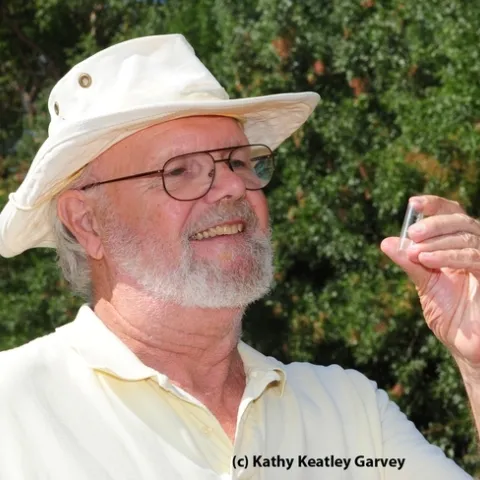
Native pollinator specialist Robbin Thorp of UC Davis is a nationally known expert on bumble bees. (Photo by Kathy Keatley Garvey)

Saving the Rusty-Patched Bumble Bee

February 19, 2013
By Kathy Keatley Garvey
It's good to see that the Xerces Society for Invertebrate Conservation and noted bumble bee expert Robbin Thorp of UC Davis have filed a petition with the U.S. Fish and Wildlife Service for Endangered Species Act protection for the beleagured rusty-patched bumble bee.
View Article
Primary Image
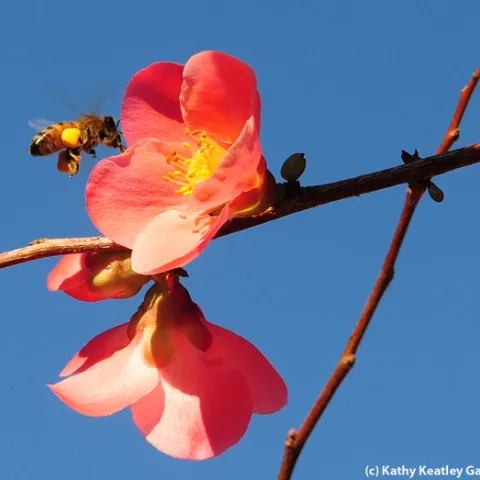
Pollen-packing honey bee cleaning her tongue as she heads for flowering quince. (Photo by Kathy Keatley Garvey)

Where the Yellow Pollen Came From

February 18, 2013
By Kathy Keatley Garvey
"Where'd that yellow pollen come from?" Beekeepers who watch their bees return to their hives with pollen loads like to guess the origin of the pollen. Red, yellow, blue, white... It's not unlike "What Color Is Your Parachute?" the job-hunting guide by Richard N. Bolles.
View Article
Primary Image
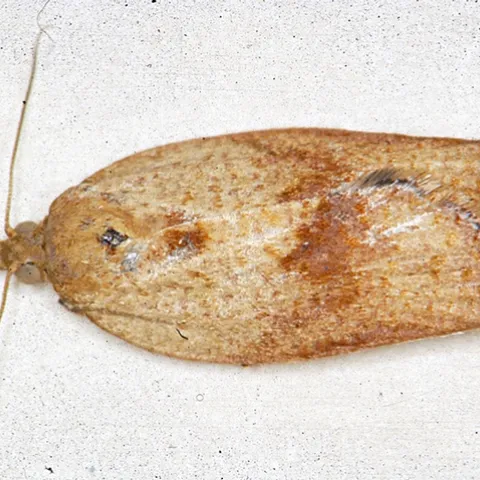
Female light brown apple moth, Epiphyas postvittana. (Photo courtesy of David Williams, principal scientist, Perennial Horticulture, Department of Primary Industries, Victoria, Australia.)

LBAM--Not Your Typical Invader

February 15, 2013
By Kathy Keatley Garvey
The light brown apple moth (Epiphyas postvittana)--it's not your typical invader. UC Berkeley professor Nick Mills will head to UC Davis on Wednesday, Feb. 20 to speak on just that: "The Light Brown Apple Moth--Not a Typical Invader.
View Article
Primary Image
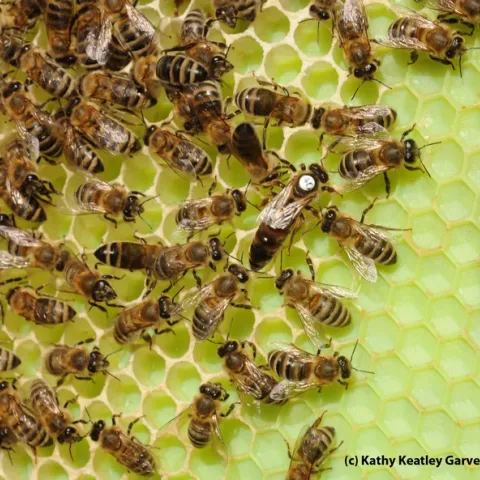
Queen bee (with dot) and worker bees. (Photo by Kathy Keatley Garvey)

Bee My Valentine

February 14, 2013
By Kathy Keatley Garvey
It's nice to remember the honey bee on Valentine's Day. You'll see many Valentine cards inscribed with "Bee My Valentine" and featuring a photo of a bee. Many of those photos depict a queen bee, the mother of all bees in the hive. To be a queen, she'll need to be fed royal jelly as a larva.
View Article
Primary Image
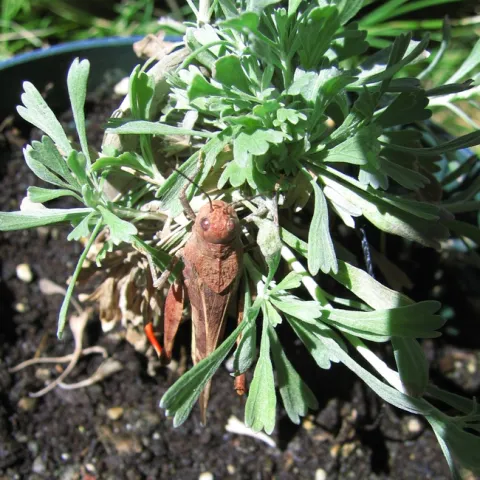
Grasshopper feeding on sagebrush. (Photo courtesy of Rick Karban)

It Pays to Be a Relative

February 13, 2013
By Kathy Keatley Garvey
Plants communicate. They do. Ecologist Richard Karban, a professor in the UC Davis Department of Entomology, points out that one of the simplest forms of communication involves shade. When a plant is shaded, it grows away from the plant or other object that's shading it.
View Article