Bug Squad Logo

Bug Squad

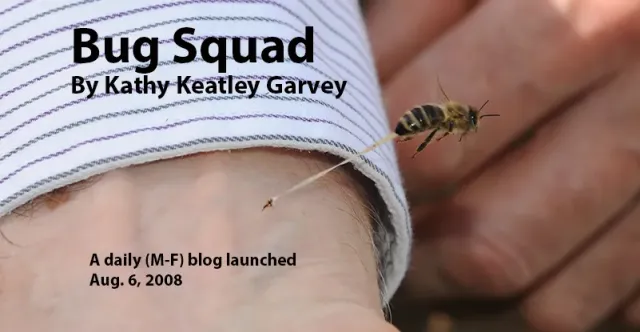
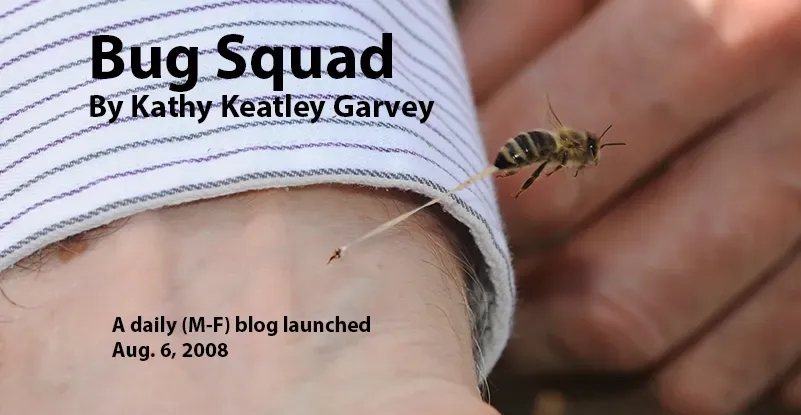
Bug Squad blog image depicts a honey bee sting in action.

Welcome to the Bug Squad blog! The Bug Squad blog was launched Aug. 6, 2008 and is a daily blog (Monday through Friday). It showcases entomologists and the work they do.  The blog focuses on scientists in the UC Davis Department of Entomology and Nematology, the Bohart Museum of Entomology, Harry H. Laidlaw Jr. Honey Bee Research Facility, the UC Davis Bee Haven, and assorted campuswide events, including UC Davis Picnic Day, UC Davis Biodiversity Museum Day, and Bohart Museum open houses. The blog spotlights insects, including bees, butterflies, dragonflies, and praying mantises, as well as arachnids such as jumping spiders and crab spiders. Author and photographer is Kathy Keatley Garvey, communications specialist, UC Davis Department of Entomology and Nematology, and a longtime journalist and community scientist with two degrees from Washington State University.  She is a member of the Entomological Society of America (ESA) and the Association for Communication Excellence (ACE). Her blog posts and images have won international awards from ACE and ESA and appeared on journal and magazine covers. She shoots primarily with a Nikon Z-8 mirrorless camera, a Nikon D500 and Nikon 800, with assorted macro lenses. 
Primary Image
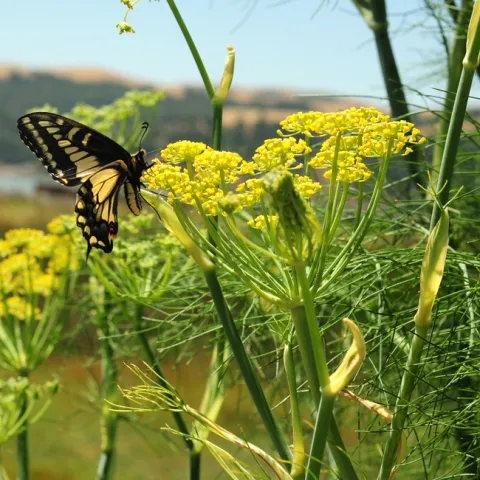
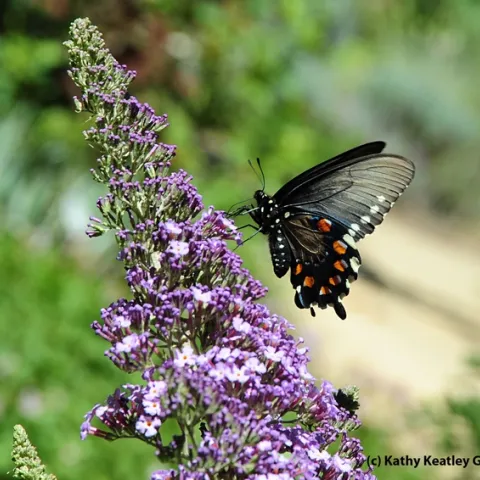
Pipevine swallowtail visiting the Storer Garden, UC Davis. (Photo by Kathy Keatley Garvey)

Pray Thee Well

June 29, 2012
By Kathy Keatley Garvey
When I last met up with a pipevine swallowtail, it wasn't faring well. In fact, I didn't recognize it as a pipevine swallowtail (Battus philenor), no thanks to it being in the clutches of a hungry praying mantis.
View Article
Primary Image
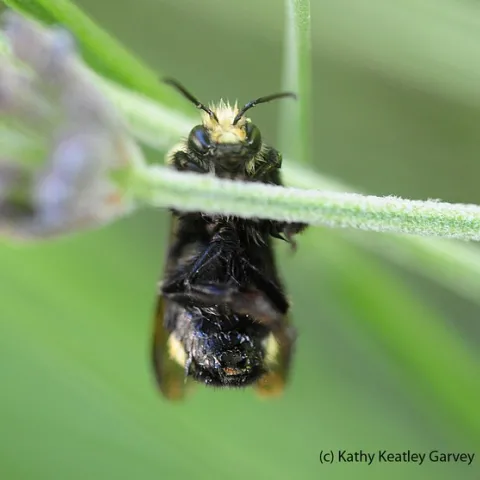
Male yellow-faced bumble bee, Bombus vosnesenskii, appears to be doing a chin up. (Photo by Kathy Keatley Garvey)

Training for the Olympics?

June 28, 2012
By Kathy Keatley Garvey
Training for the Olympics? If you step into your garden in the early morning, you might see a male bumble bee sleeping on one of your plants. The females return to their nests at night, but the males don't. They stage slumber parties, aka sleepovers, on your plants.
View Article
Primary Image
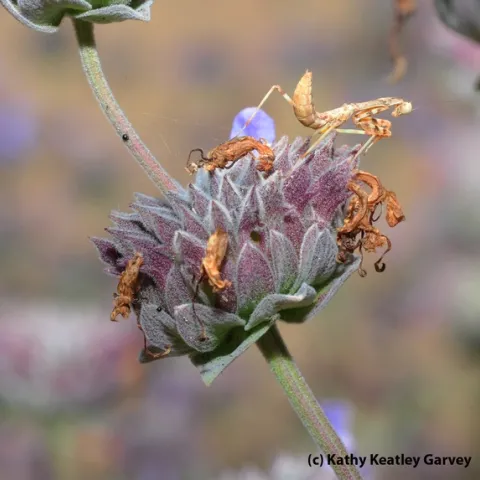
Praying mantis on Cleveland sage (Salvia clevelandii). (Photo by Kathy Keatley Garvey

The Waiting Game

June 26, 2012
By Kathy Keatley Garvey
When you visit the Hagen-Dazs Honey Bee Haven, the half-acre bee friendly garden planted next to the Harry H. Laidlaw Jr. Honey Bee Research Facility on Bee Biology Road, UC Davis, don't expect to see just pollinators. There are predators there, too.
View Article
Primary Image
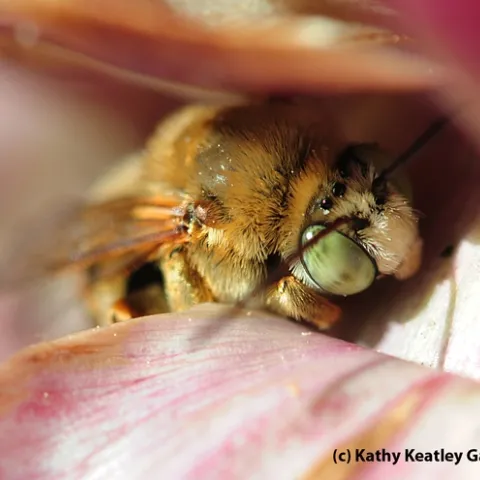
Long-horned sunflower bee tucked in a flowering artichoke. (Photo by Kathy Keatley Garvey)

Green-Eyed Bee

June 25, 2012
By Kathy Keatley Garvey
So you're poking around in your garden and you see a bee on a flowering artichoke that you've never seen foraging there before. On sunflowers, yes. On artichokes, no. A closer look--and huge green eyes stare back at you. Definitely not a honey bee (Apis mellifera), although its size is comparable.
View Article