Bug Squad Logo

Bug Squad

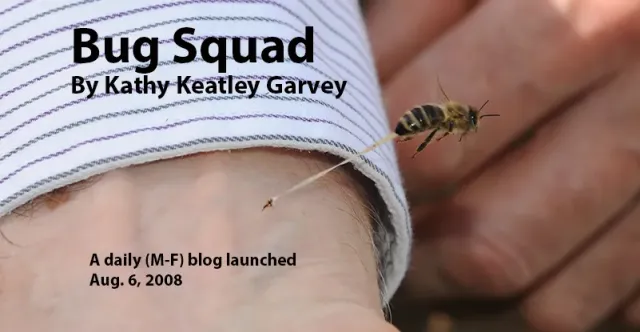
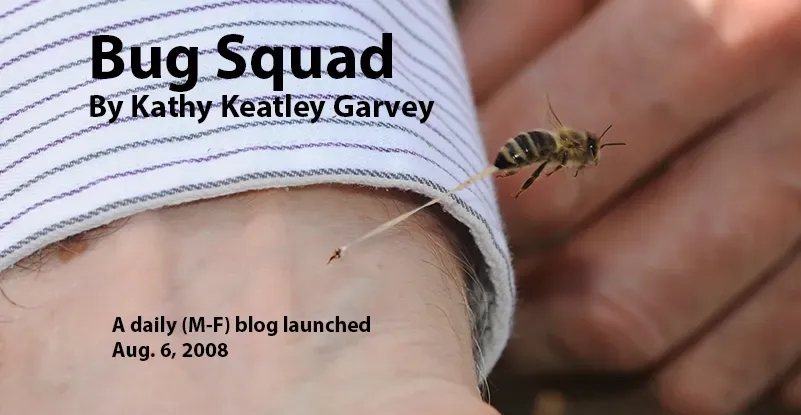
Bug Squad blog image depicts a honey bee sting in action.

Welcome to the Bug Squad blog! The Bug Squad blog was launched Aug. 6, 2008 and is a daily blog (Monday through Friday). It showcases entomologists and the work they do.  The blog focuses on scientists in the UC Davis Department of Entomology and Nematology, the Bohart Museum of Entomology, Harry H. Laidlaw Jr. Honey Bee Research Facility, the UC Davis Bee Haven, and assorted campuswide events, including UC Davis Picnic Day, UC Davis Biodiversity Museum Day, and Bohart Museum open houses. The blog spotlights insects, including bees, butterflies, dragonflies, and praying mantises, as well as arachnids such as jumping spiders and crab spiders. Author and photographer is Kathy Keatley Garvey, communications specialist, UC Davis Department of Entomology and Nematology, and a longtime journalist and community scientist with two degrees from Washington State University.  She is a member of the Entomological Society of America (ESA) and the Association for Communication Excellence (ACE). Her blog posts and images have won international awards from ACE and ESA and appeared on journal and magazine covers. She shoots primarily with a Nikon Z-8 mirrorless camera, a Nikon D500 and Nikon 800, with assorted macro lenses. Feedspot lists it as one of the top entomology blogs on the Internet. 
Primary Image
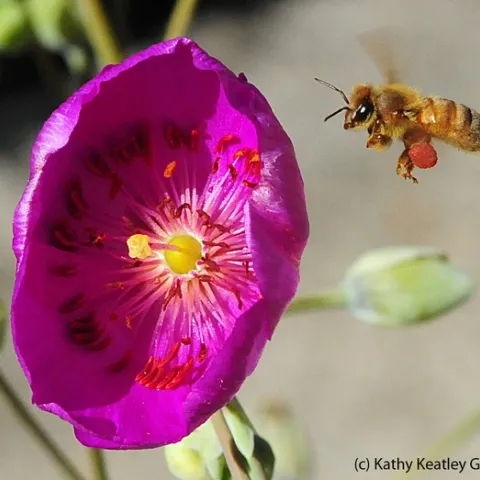
Honey bee packing red pollen from rockpurslane. (Photo by Kathy Keatley Garvey)

Getting the Red Out

June 4, 2012
By Kathy Keatley Garvey
"Where do bees get red pollen?" we were asked. "We've seen bees packing blood-red pollen at the entrance to a hive." Well, one flower that yields red pollen is rock purslane (Calandrinia grandiflora). It's a drought-tolerant perennial, a succulent.
View Article
Primary Image
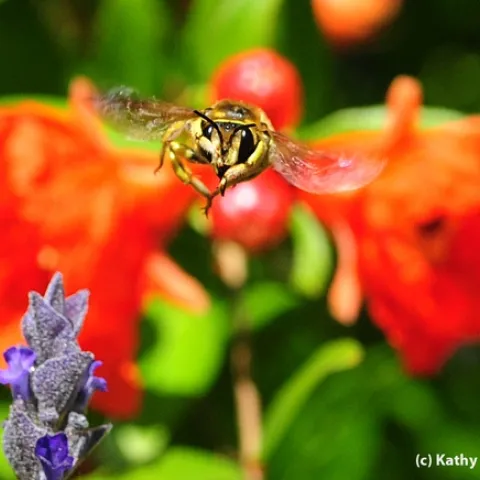
Male European wool carder bee is very territorial. Front, lavender blossoms. Back: pomegranate blossoms. (Photo by Kathy Keatley Garvey

So Very Territorial!

June 1, 2012
By Kathy Keatley Garvey
Whether it's coming or going, you notice this pollinator's presence. The European wool carder bee (Anthidium manicatum), so named because the female collects or cards "plant hairs" or "plant fuzz" to line her nest, is strikingly beautiful. The bee is mostly black and yellow.
View Article
Primary Image
This millipede (Xystocheir dissecta) glows under ultraviolet light. Alexander Nguyen of the UC Davis Entomology Club captured this image on Alcatraz, during one of UC Davis forensic entomologist Robert Kimsey's field trips.

They'll Light Up Your Life

May 31, 2012
By Kathy Keatley Garvey
Most scorpions glow under an ultraviolet light, but now a discovery on Alcatraz Island reveals that a certain species of millipedes will, too.
View Article
Primary Image
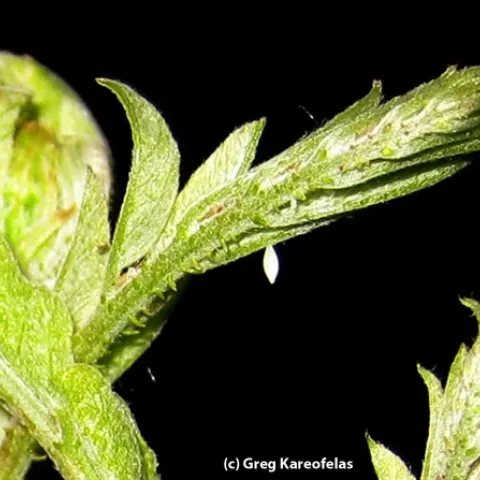
Egg of a California dogface butterfly. (Photo by Greg Kareofelas)

And Now, Your California State Insect...

May 30, 2012
By Kathy Keatley Garvey
There's always something special going on at the Bohart Museum of Entomology on the UC Davis campus. But this Sunday, June 3, something even more special "may" occur. That's "may" because a California dogface butterfly "may" emerge from its chrysalis during the Bohart open house, set from 1 to 4 p.
View Article
Primary Image
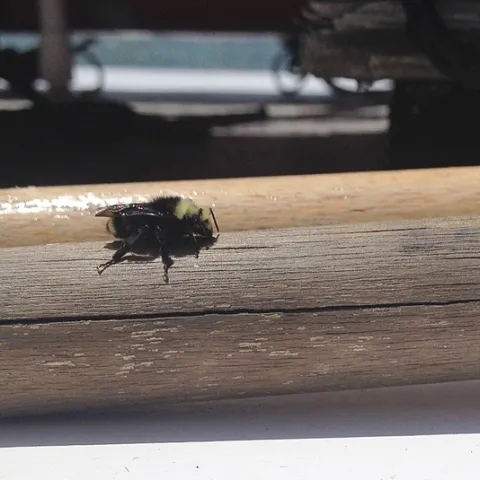
Yellow-faced bumble bee lands on The Morning Star. (Photo taken with an IPhone)

Bumble Bee's Daily Commute?

May 29, 2012
By Kathy Keatley Garvey
If you've ever been to Angel Island or Alcatraz Island in the San Francisco Bay, you may have seen them. Bumble bees. And sometimes if you're fishing in the Bay, a bumble bee may land on your boat.
View Article