Bug Squad Logo

Bug Squad

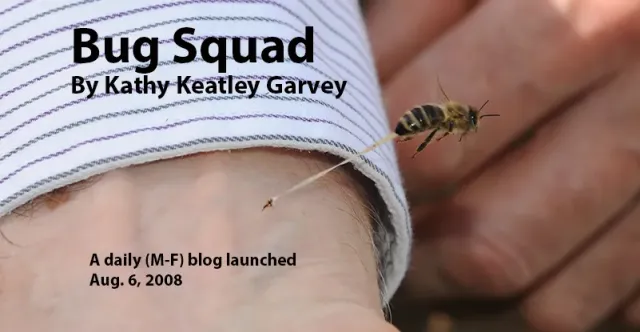
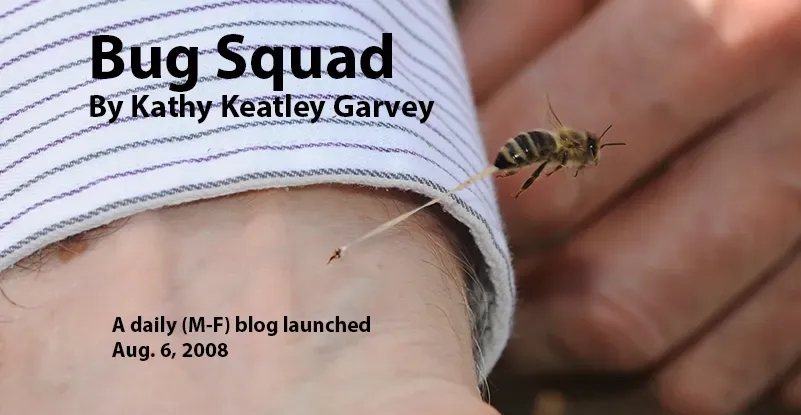
Bug Squad blog image depicts a honey bee sting in action.

Welcome to the Bug Squad blog! The Bug Squad blog was launched Aug. 6, 2008 and is a daily blog (Monday through Friday). It showcases entomologists and the work they do.  The blog focuses on scientists in the UC Davis Department of Entomology and Nematology, the Bohart Museum of Entomology, Harry H. Laidlaw Jr. Honey Bee Research Facility, the UC Davis Bee Haven, and assorted campuswide events, including UC Davis Picnic Day, UC Davis Biodiversity Museum Day, and Bohart Museum open houses. The blog spotlights insects, including bees, butterflies, dragonflies, and praying mantises, as well as arachnids such as jumping spiders and crab spiders. Author and photographer is Kathy Keatley Garvey, communications specialist, UC Davis Department of Entomology and Nematology, and a longtime journalist and community scientist with two degrees from Washington State University.  She is a member of the Entomological Society of America (ESA) and the Association for Communication Excellence (ACE). Her blog posts and images have won international awards from ACE and ESA and appeared on journal and magazine covers. She shoots primarily with a Nikon Z-8 mirrorless camera, a Nikon D500 and Nikon 800, with assorted macro lenses. Feedspot lists it as one of the top entomology blogs on the Internet. 
Primary Image
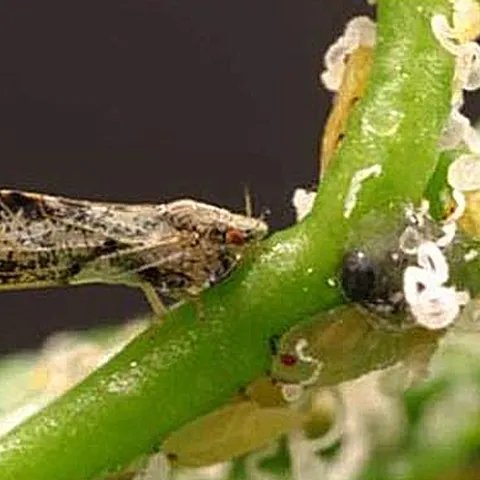
Asian citrus psyllid is an invasive pest. (Photo by M. E. Rogers, University of Florida)

The Threat of Invasive Species

February 24, 2012
By Kathy Keatley Garvey
The public, says entomologist Kris Godfrey, needs to become more aware of the threat of invasive species. And, she adds, we need to educate people and organizations about the incoming pests and pests that are already here.
View Article
Primary Image
Extension apiculturist Eric Mussen answers questions from a Woodland crowd. (Photo by Kathy Keatley Garvey)

Zeroing in on Honey Bee Decline

February 23, 2012
By Kathy Keatley Garvey
Honey bee guru Eric Mussen talks a lot about the declining honey bee population. After all, he's served as the Extension apiculturist with the UC Davis Department of Entomology since 1976.
View Article
Primary Image
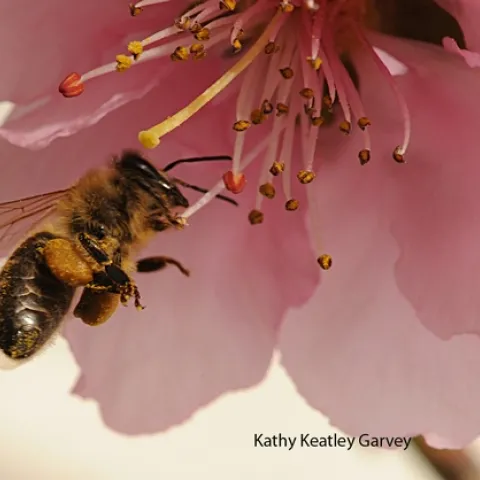
Honey bee packing pollen while foraging on a nectarine blossom. (Photo by Kathy Keatley Garvey

Packing It In

February 22, 2012
By Kathy Keatley Garvey
If you've ever watched honey bees work the blossoms, you'll probably see them packing pollen in their pollen baskets and cleaning their tongue as they buzz from flower to flower. Pollen is protein, and nectar, carbohydrates.
View Article
Primary Image
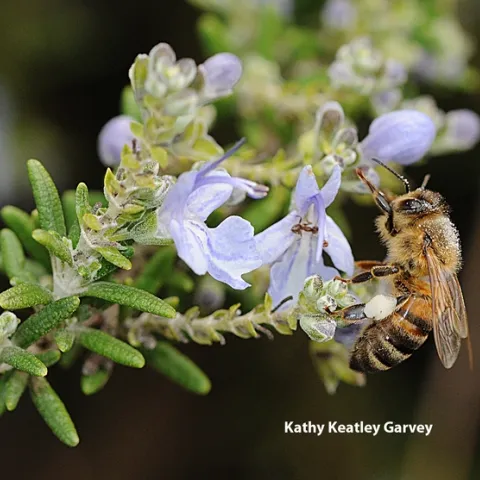
Honey bee foraging on rosemary. (Photo by Kathy Keatley Garvey)

Not Everybody Loves Honey Bees

February 21, 2012
By Kathy Keatley Garvey
Not everybody loves honey bees. Indeed, about one percent of the population will go into anaphylactic shock if they're stung by a bee. That's a very small percentage--one percent--but it's huge if you're allergic to bees. Other folks just don't want to be around them.
View Article
Primary Image
Honey bee on nectarine blossom on Presidents' Day. (Photo by Kathy Keatley Garvey)

A Golden Moment

February 20, 2012
By Kathy Keatley Garvey
It was a golden moment. The honey bees that collected pollen from our nectarine trees today looked as if they were lugging gold nuggets left over from the California Gold Rush. Struggling with the heavy pollen loads, some of the bees crashed to the ground.
View Article