Bug Squad Logo

Bug Squad

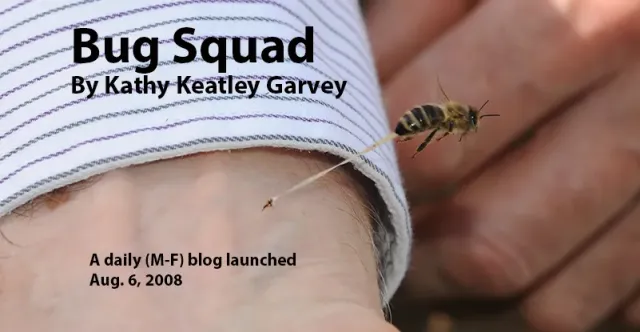
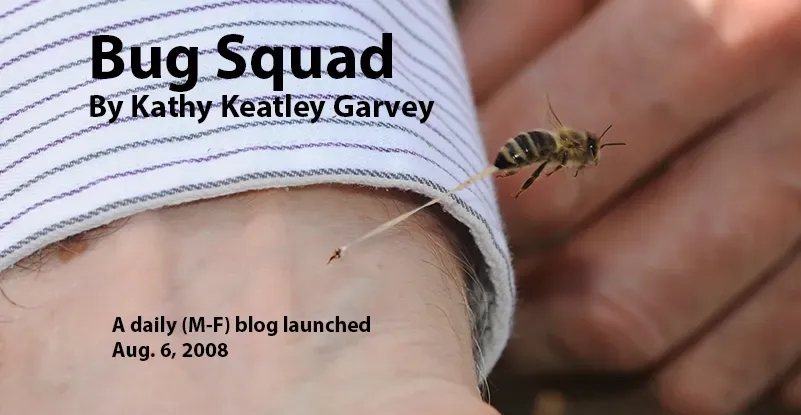
Bug Squad blog image depicts a honey bee sting in action.

Welcome to the Bug Squad blog! The Bug Squad blog was launched Aug. 6, 2008 and is a daily blog (Monday through Friday). It showcases entomologists and the work they do.  The blog focuses on scientists in the UC Davis Department of Entomology and Nematology, the Bohart Museum of Entomology, Harry H. Laidlaw Jr. Honey Bee Research Facility, the UC Davis Bee Haven, and assorted campuswide events, including UC Davis Picnic Day, UC Davis Biodiversity Museum Day, and Bohart Museum open houses. The blog spotlights insects, including bees, butterflies, dragonflies, and praying mantises, as well as arachnids such as jumping spiders and crab spiders. Author and photographer is Kathy Keatley Garvey, communications specialist, UC Davis Department of Entomology and Nematology, and a longtime journalist and community scientist with two degrees from Washington State University.  She is a member of the Entomological Society of America (ESA) and the Association for Communication Excellence (ACE). Her blog posts and images have won international awards from ACE and ESA and appeared on journal and magazine covers. She shoots primarily with a Nikon Z-8 mirrorless camera, a Nikon D500 and Nikon 800, with assorted macro lenses. Feedspot lists it as one of the top entomology blogs on the Internet. 
Primary Image
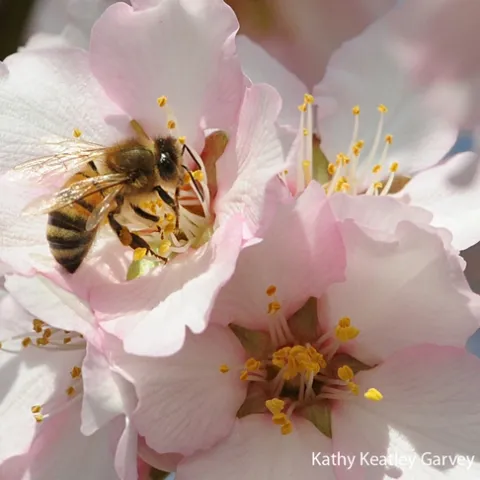
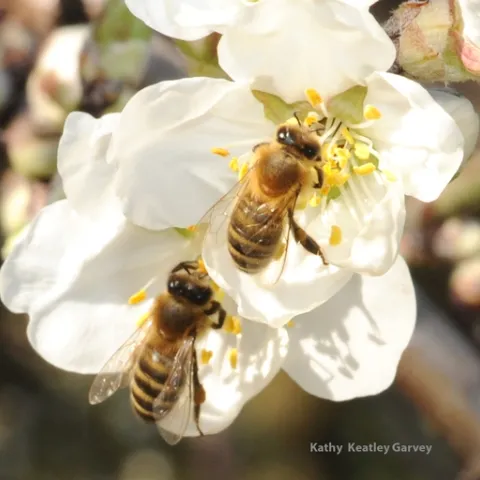
Honey bees foraging in almonds on the grounds of the Laidlaw facility. (Photo by Kathy Keatley Garvey)

At Last, Laidlaw Almonds in Bloom

February 10, 2012
By Kathy Keatley Garvey
At last, the Laidlaw almonds are in bloom. That would be the almond trees on the grounds of the Harry H. Laidlaw Jr. Honey Bee Research Facility on Bee Biology Road at the University of California, Davis. And no one appreciates this more than the bees holed up in the 40 hives behind the facility.
View Article
Primary Image
Jamesina Scott at work. (Photo by Dave Woodward)

A Little Known Mosquito

February 9, 2012
By Kathy Keatley Garvey
When people think of mosquitoes, they probably never think of Aedes japonicus. It's an Asian species "generally found in Japan, Korea, the Ryukyu Archipelago (Okinawa and associated islands), Taiwan, South China, and Hong Kong," according to the Centers for Disease Control and Prevention (CDC).
View Article
Primary Image
Honey bee pollinating almonds in Vacaville. (Photo by Kathy Keatley Garvey)

First the Tweets, then the Buzzes

February 8, 2012
By Kathy Keatley Garvey
"Almonds are one of the first crops of the season that need bee pollination," tweeted the Almond Board of California yesterday. Valentine's Day traditionally marks the beginning of almond pollination season, but it's an early spring. The almonds are blooming and the bees are buzzing.
View Article
Primary Image
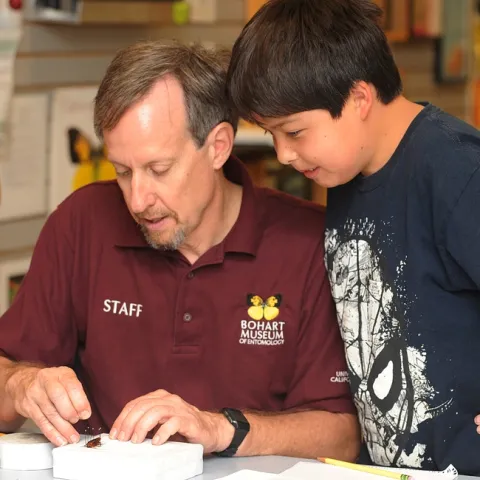
Senior museum scientist Steve Heydon shows his son, James, 10, around the Bohart Museum of Entomology. (Photo by Kathy Keatley Garvey)

Biodiversity Reigns Supreme

February 7, 2012
By Kathy Keatley Garvey
Biodiversity--that's what it's at on Sunday, Feb. 12 at the University of California, Davis. That's when four museums or centers that engage in education and research involving insects, vertebrates or plants will host open houses. And folks will be amazed, officials promise.
View Article
Primary Image
Honey bee visiting flowering quince. (Photo by Kathy Keatley Garvey)

Saving the Bees

February 6, 2012
By Kathy Keatley Garvey
A sure sign that winter is nearly over: when the flowering quince bursts into bloom, attracting a flotilla of foraging honey bees. Actually, the bees began "inspecting" the flowering quince in the bud stage. "Hurry, open up!" the bees seemed to urge. "We have to start feeding our colonies.
View Article