Bug Squad Logo

Bug Squad

Bug Squad blog image depicts a honey bee sting in action.

Welcome to the Bug Squad blog! The Bug Squad blog was launched Aug. 6, 2008 and is a daily blog (Monday through Friday). It showcases entomologists and the work they do.  The blog focuses on scientists in the UC Davis Department of Entomology and Nematology, the Bohart Museum of Entomology, Harry H. Laidlaw Jr. Honey Bee Research Facility, the UC Davis Bee Haven, and assorted campuswide events, including UC Davis Picnic Day, UC Davis Biodiversity Museum Day, and Bohart Museum open houses. The blog spotlights insects, including bees, butterflies, dragonflies, and praying mantises, as well as arachnids such as jumping spiders and crab spiders. Author and photographer is Kathy Keatley Garvey, communications specialist, UC Davis Department of Entomology and Nematology, and a longtime journalist and community scientist with two degrees from Washington State University.  She is a member of the Entomological Society of America (ESA) and the Association for Communication Excellence (ACE). Her blog posts and images have won international awards from ACE and ESA and appeared on journal and magazine covers. She shoots primarily with a Nikon Z-8 mirrorless camera, a Nikon D500 and Nikon 800, with assorted macro lenses. Feedspot lists it as one of the top entomology blogs on the Internet. 
Primary Image
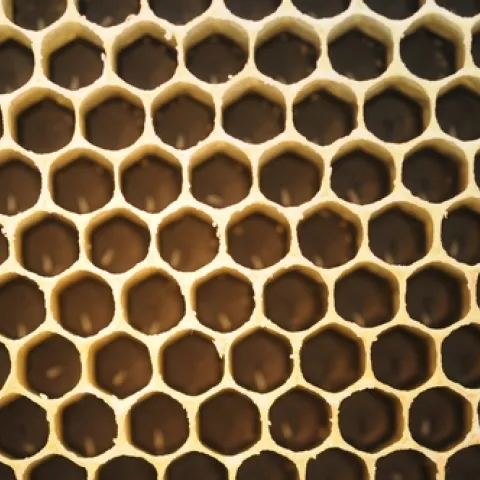
EGGS inside honey bee cells will turn into larvae, which will increase in weight 1000 times during the six days that they feed. (Photo by Kathy Keatley Garvey)

A Weighty Matter in the Hive

February 18, 2011
By Kathy Keatley Garvey
Think what it would be like if you increased your weight by 1000 times in six days. But that's exactly what worker bee larvae do in the honey bee colony.
View Article
Primary Image
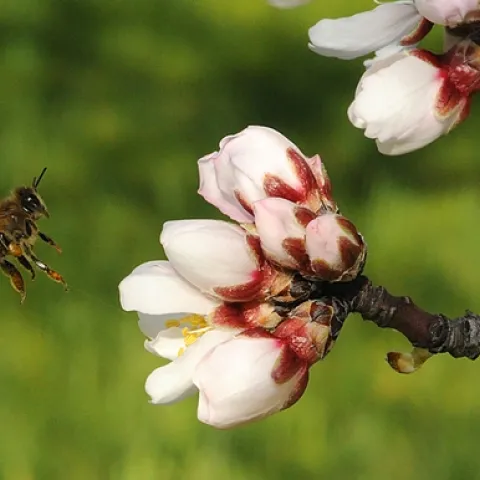
HONEY BEE heads for almond blossoms at the Harry H. Laidlaw Jr. Honey Bee Research Facility at the University of California, Davis. (Photo by Kathy Keatley Garvey)

Flight of the Honey Bee

February 17, 2011
By Kathy Keatley Garvey
Friday, Feb. 11 seemed like a glorious spring day. Almond trees at the Harry H. Laidlaw Jr. Honey Bee Research Facility at the University of California, Davis burst into bloom. Early birds...err...early bees...began foraging among the blossoms. A faux spring. Then the rains came.
View Article
Primary Image
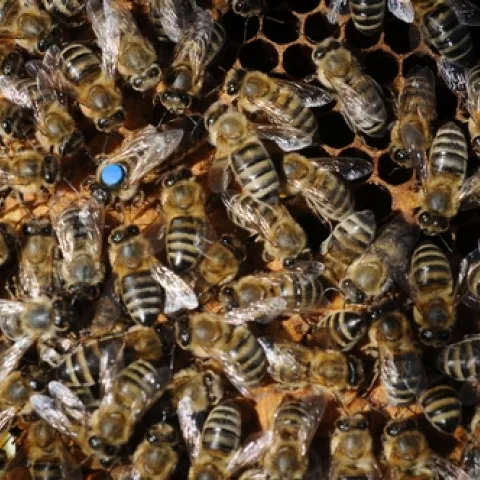
QUEEN BEE and her colony. (Photo by Kathy Keatley Garvey)

Bee-utiful Find

February 16, 2011
By Kathy Keatley Garvey
It was a bee-utiful find: A how-to book published in 1890 on rearing honey bees. We found the book, ABC of Bee Culture: A Cyclopedia of Everything Pertaining to the Care of the Honey Bee; Bees, Honey, Hives, Implements, Honey-Plants, Etc. by A. I.
View Article
Primary Image
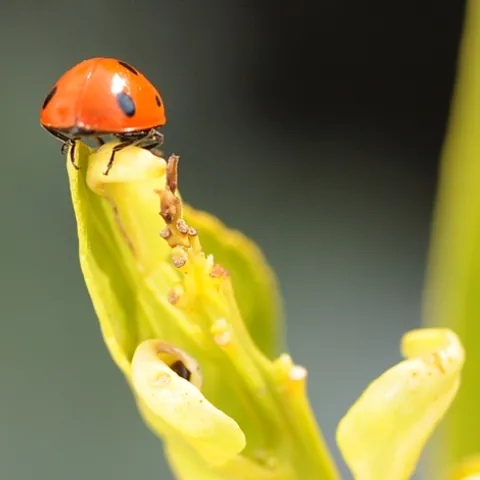
OVERWINTERING ladybug perches on top of a tangerine tree leaf as temperatures hit 75 degrees. This is an introduced species, Coccinella septempunctata, as identified by Natalia Vandenberg, a USDA employee with the Systematic Entomology Lab, Smithsonian's National Museum of Natural History. (Photo by Kathy Keatley Garvey)

Ladybugs in February

February 15, 2011
By Kathy Keatley Garvey
The overwintering ladybugs tucked in the leaves of our tangerine tree are gone. Sunny temperatures hit 75 degrees, and off they went. Guess they thought it was spring. Anyhow, they made a glorious sight as emerged from the folds of a tangerine leaf.
View Article
Primary Image
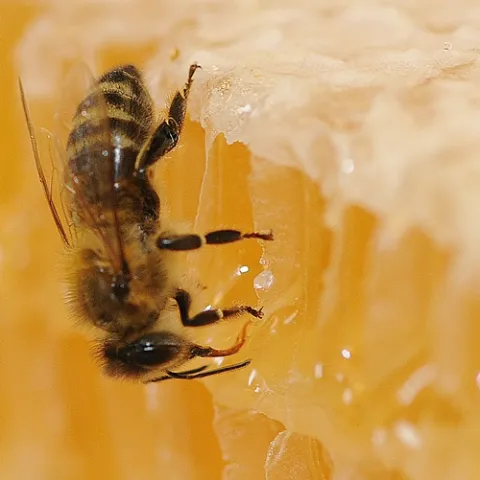
HONEY BEE on a comb of honey at the Harry H. Laidlaw Jr. Honey Bee Research Facility at the University of California, Davis. (Photo by Kathy Keatley Garvey)

A Honey of a Day

February 14, 2011
By Kathy Keatley Garvey
It's Valentine's Day and it's a honey of a day. Valentine cards proclaim "Bee Mine" and "Bee My Valentine." Invariably, there's a happy honey bee buzzing around a flower on a Valentine's Day card.
View Article