Bug Squad Logo

Bug Squad

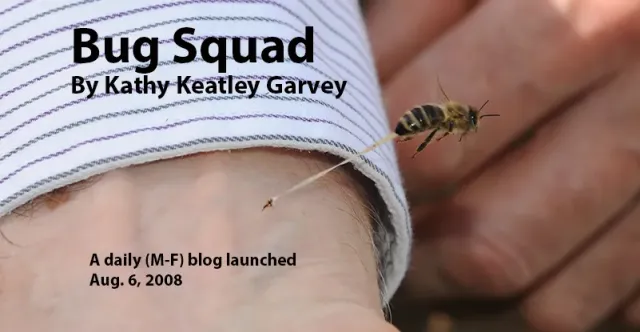
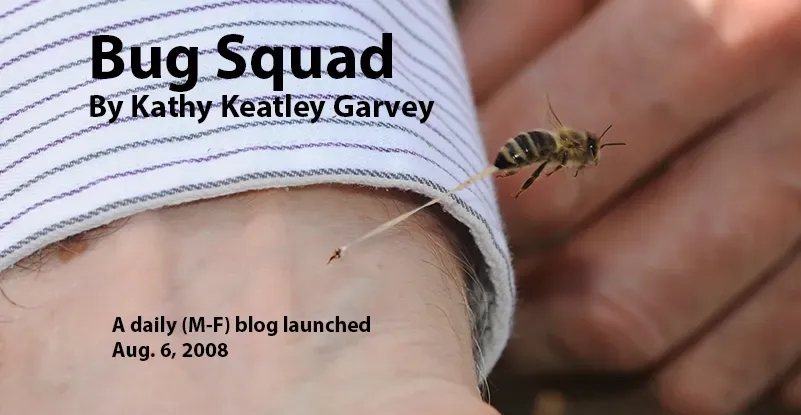
Bug Squad blog image depicts a honey bee sting in action.

Welcome to the Bug Squad blog! The Bug Squad blog was launched Aug. 6, 2008 and is a daily blog (Monday through Friday). It showcases entomologists and the work they do.  The blog focuses on scientists in the UC Davis Department of Entomology and Nematology, the Bohart Museum of Entomology, Harry H. Laidlaw Jr. Honey Bee Research Facility, the UC Davis Bee Haven, and assorted campuswide events, including UC Davis Picnic Day, UC Davis Biodiversity Museum Day, and Bohart Museum open houses. The blog spotlights insects, including bees, butterflies, dragonflies, and praying mantises, as well as arachnids such as jumping spiders and crab spiders. Author and photographer is Kathy Keatley Garvey, communications specialist, UC Davis Department of Entomology and Nematology, and a longtime journalist and community scientist with two degrees from Washington State University.  She is a member of the Entomological Society of America (ESA) and the Association for Communication Excellence (ACE). Her blog posts and images have won international awards from ACE and ESA and appeared on journal and magazine covers. She shoots primarily with a Nikon Z-8 mirrorless camera, a Nikon D500 and Nikon 800, with assorted macro lenses. 
Primary Image
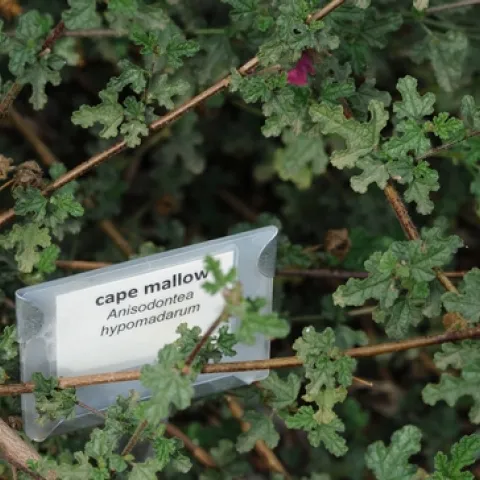
PLANTS in the Haagen-Dazs Honey Bee Haven are labeled so visitors can identify them and glean ideas what to plant in their own gardens. (Photo by Kathy Keatley Garvey)

Wallowing in Mallow

November 18, 2010
By Kathy Keatley Garvey
One of the spectacular plants blooming in the Hagen-Dazs Honey Bee Haven, the half-acre bee friendly garden at the University of California, Davis, is the cape mallow (Anisodontea hypomandarum), a native of South Africa.
View Article
Primary Image
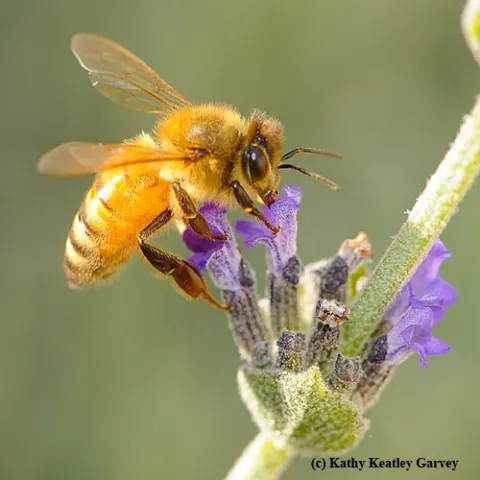
BLOND HONEY BEE, of the Cordovan subspecies of the Italian race of honey bees, nectaring on lavender. (Photo by Kathy Keatley Garvey)

More Precious Than Gold

November 17, 2010
By Kathy Keatley Garvey
Ever see a golden bee that takes your breath away? They're most likely Cordovans, a subspecies of the Italian race. The one below is a Cordovan, basically a bee with a color mutation that inhibits black, explains noted bee breeder-geneticist Susan Cobey.
View Article
Primary Image
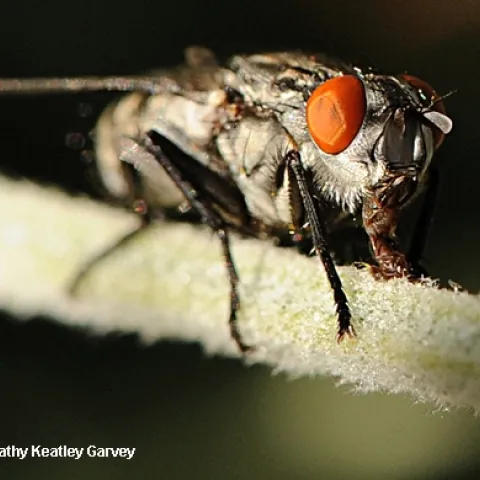
FLESH FLY, a member of the Sarcophagidae family, ejects its tongue. (Photo by Kathy Keatley Garvey)

Seeing Red

November 16, 2010
By Kathy Keatley Garvey
The first thing you notice about the fly is its brilliant red eyes. They stand out like the proverbial elephant in the room. But they are on a fly--a flesh fly.
View Article
Primary Image
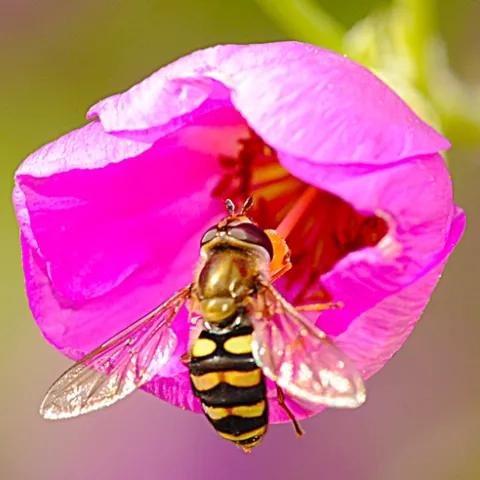
SYPRHID FLY heading inside a rock purslane blossom. (Photo by Kathy Keatley Garvey)

How Grand They Are

November 15, 2010
By Kathy Keatley Garvey
Aren't syrphid flies grand? Syrphid flies, aka hover flies or flower flies (family Syrphidae), are especially grand in a Calandrinia grandiflora, aka rock purslane.
View Article
Primary Image
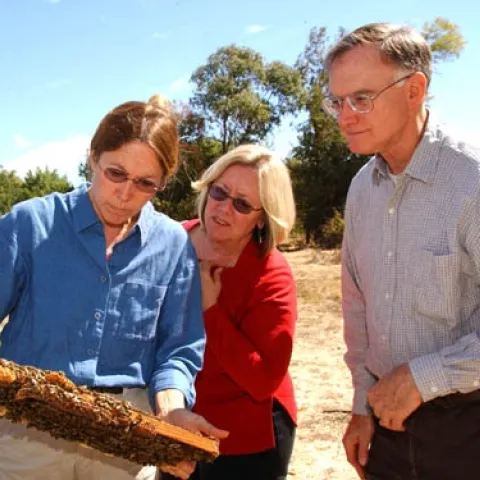
UC Davis bee breeder-geneticist Susan Cobey (far left) and UC Davis apiculturist Eric Mussen look at a bee frame with beekeeper Valerie Severson of Yuba City. (Photo by Kathy Keatley Garvey)

Coconut Oil to Treat Varroa Mites?

November 12, 2010
By Kathy Keatley Garvey
Is coconut oil effective in treating varroa mites, those nasty little mites that plague our honey bees? The facts aren't in, and research is ongoing.
View Article