Bug Squad Logo

Bug Squad

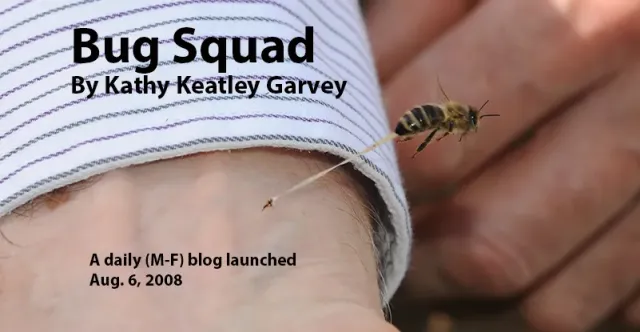
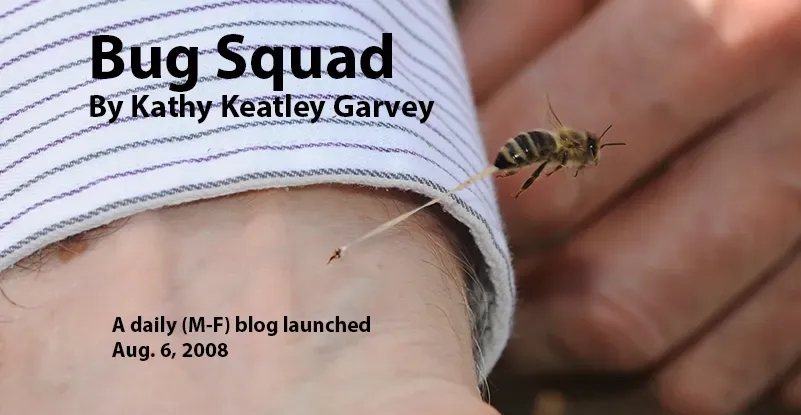
Bug Squad blog image depicts a honey bee sting in action.

Welcome to the Bug Squad blog! The Bug Squad blog was launched Aug. 6, 2008 and is a daily blog (Monday through Friday). It showcases entomologists and the work they do.  The blog focuses on scientists in the UC Davis Department of Entomology and Nematology, the Bohart Museum of Entomology, Harry H. Laidlaw Jr. Honey Bee Research Facility, the UC Davis Bee Haven, and assorted campuswide events, including UC Davis Picnic Day, UC Davis Biodiversity Museum Day, and Bohart Museum open houses. The blog spotlights insects, including bees, butterflies, dragonflies, and praying mantises, as well as arachnids such as jumping spiders and crab spiders. Author and photographer is Kathy Keatley Garvey, communications specialist, UC Davis Department of Entomology and Nematology, and a longtime journalist and community scientist with two degrees from Washington State University.  She is a member of the Entomological Society of America (ESA) and the Association for Communication Excellence (ACE). Her blog posts and images have won international awards from ACE and ESA and appeared on journal and magazine covers. She shoots primarily with a Nikon Z-8 mirrorless camera, a Nikon D500 and Nikon 800, with assorted macro lenses. Feedspot lists it as one of the top entomology blogs on the Internet. 
Primary Image
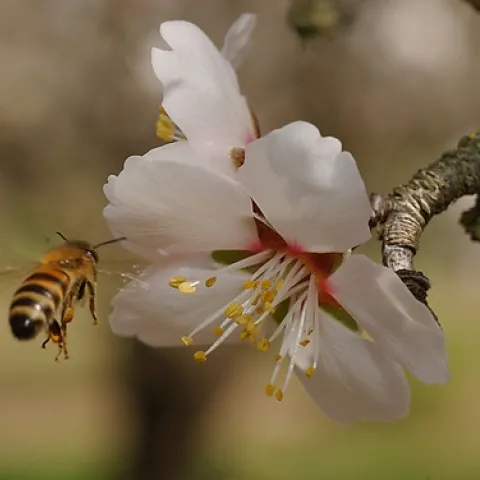
HONEY BEE makes a beeline to an almond blossom on the grounds of the Harry H. Laidlaw Jr. Honey Bee Research Facility at the University of California, Davis. California's annual almond pollination begins in February. (Photo by Kathy Keatley Garvey)

Waiting for the Almond Blossoms

December 30, 2009
By Kathy Keatley Garvey
Soon beekeepers from around the country will be trucking their bees to California for the annual almond pollination. California has some 700,000 acres of almonds, with each acre requiring two hives for pollination. But an article in the Dec.
View Article
Primary Image
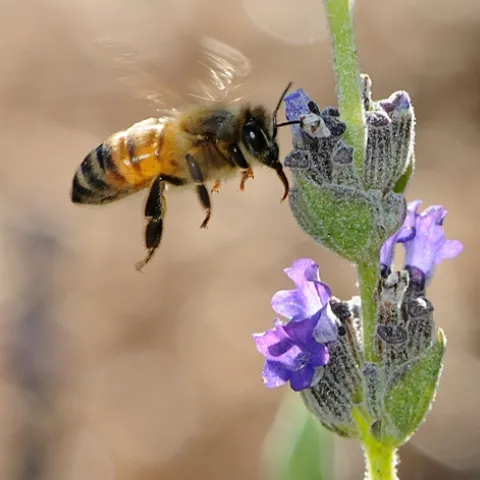
TONGUE EXTENDED in anticipation of nectar, a honey bee heads for lavender. Using the Pavlov dog method, bees can be trained to stick out their tongue, or proboscis, when they smell explosives. (Photo by Kathy Keatley Garvey)

Bomb-Sniffing Bees?

December 28, 2009
By Kathy Keatley Garvey
The attempt to down an airline over Detroit, Mich., on Christmas Day with a chemical explosive strapped inside a passenger's underwear may spur new interest in honey bees as bomb-sniffing detectives. It brings to mind scientist Robert Wingo's recent talk at UC Davis.
View Article
Primary Image
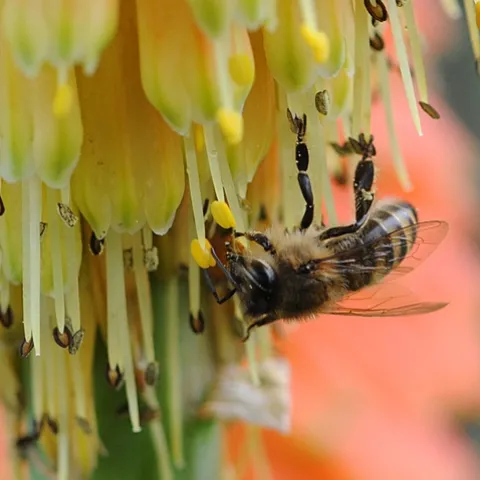
A SOLITARY HONEY BEE forages among the Christmas Cheer, also known as Knipofia "Christmas Cheer' or "red-hot poker." (Photo by Kathy Keatley Garvey)

Good Dose of Christmas Cheer

December 25, 2009
By Kathy Keatley Garvey
Definitely a good dose of Christmas Cheer! In the plant world, that would be the Kniphofia Christmas Cheer," also known as "red-hot poker." On a visit last week to the Storer Garden, UC Davis Arboretum, we encountered a lone honey bee foraging among the Christmas Cheer.
View Article
Primary Image
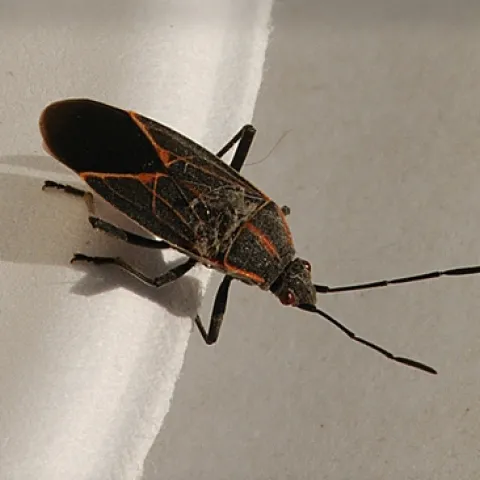
BOXELDER BUG likes to overwinter in homes and garages. (Photo by Kathy Keatley Garvey)

Not a Creature Was Stirring?

December 24, 2009
By Kathy Keatley Garvey
'Twas the night before Christmas When all through the house Not a creature was stirring Not even a mouse... --'Twas the Night Before Christmas by Clement Clarke Moore (1779-1863) No, but maybe a boxelder bug (Boisea trivittatus).
View Article
Primary Image
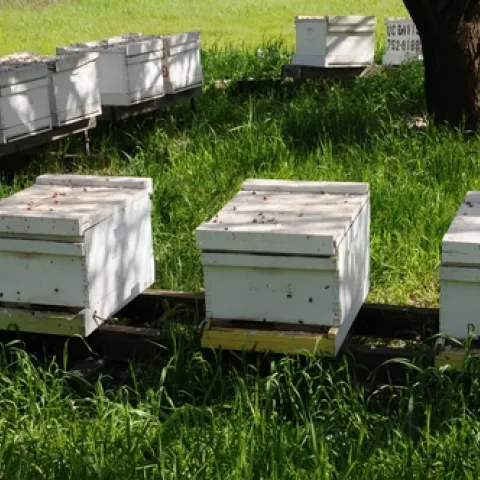
BEEKEEPING INDUSTRY is grateful to the Rev. Lorenzo Langstroth for inventing the moveable frame honey bee hive. These hives are at the Harry H. Laidlaw Jr. Honey Bee Research Facility at the University of California, Davis. (Photo by Kathy Keatley Garvey)

We Owe L. L. Langstroth

December 23, 2009
By Kathy Keatley Garvey
When the U.S. Postal Service Citizens' Stamp Advisory Committee meets in January 2010, let's hope the group supports the proposal for a Lorenzo Langstroth commemorative stamp. The Rev.
View Article