Bug Squad Logo

Bug Squad

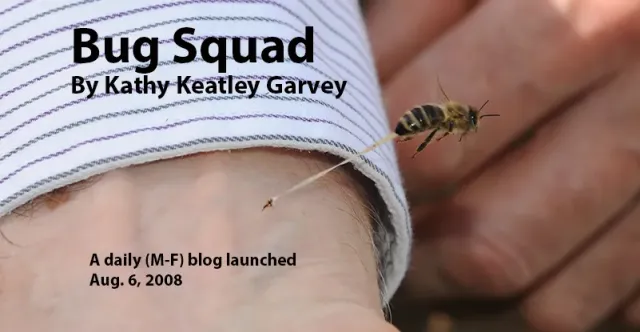
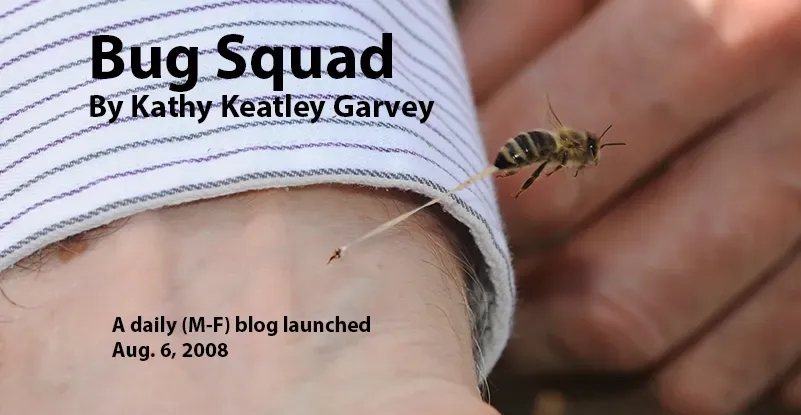
Bug Squad blog image depicts a honey bee sting in action.

Welcome to the Bug Squad blog! The Bug Squad blog was launched Aug. 6, 2008 and is a daily blog (Monday through Friday). It showcases entomologists and the work they do.  The blog focuses on scientists in the UC Davis Department of Entomology and Nematology, the Bohart Museum of Entomology, Harry H. Laidlaw Jr. Honey Bee Research Facility, the UC Davis Bee Haven, and assorted campuswide events, including UC Davis Picnic Day, UC Davis Biodiversity Museum Day, and Bohart Museum open houses. The blog spotlights insects, including bees, butterflies, dragonflies, and praying mantises, as well as arachnids such as jumping spiders and crab spiders. Author and photographer is Kathy Keatley Garvey, communications specialist, UC Davis Department of Entomology and Nematology, and a longtime journalist and community scientist with two degrees from Washington State University.  She is a member of the Entomological Society of America (ESA) and the Association for Communication Excellence (ACE). Her blog posts and images have won international awards from ACE and ESA and appeared on journal and magazine covers. She shoots primarily with a Nikon Z-8 mirrorless camera, a Nikon D500 and Nikon 800, with assorted macro lenses. Feedspot lists it as one of the top entomology blogs on the Internet. 
Primary Image
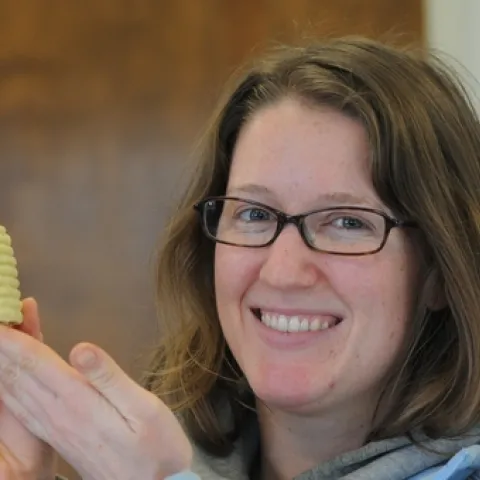
BEEKEEPER Elizabeth Frost shows a miniature beehive candle she made from beeswax and a little paraffin. (Photo by Kathy Keatley Garvey)

At Wick's End

December 8, 2009
By Kathy Keatley Garvey
Elizabeth Frost is at wick's end. When she's not tending the bees at the Harry H. Laidlaw Jr. Honey Bee Research Facility at UC Davis or tending her own bees at home, she loves to make candles.
View Article
Primary Image
A CREW recently planted the Campus Buzzway, a quarter-acre field of golden poppies, lupine and coreoposis, on Bee Biology Road, next the the Harry H. Laidlaw Jr. Honey Bee Research Facility, UC Davis. (Photo by Kathy Keatley Garvey)

Burst of Buds, Blooms and Bees

December 7, 2009
By Kathy Keatley Garvey
Next spring the Campus Buzzway at UC Davis will burst with buds, blooms and bees. The Campus Buzzway, a quarter-acre field of wildflowers, took root the third week of November when a crew planted golden poppies, lupine and coreopsis (tickseed).
View Article
Primary Image
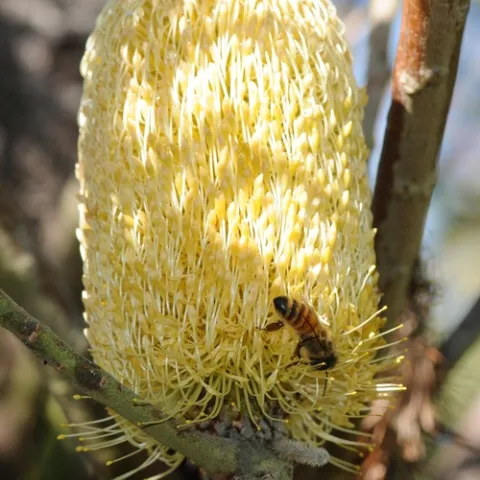
HONEY BEE nectaring a mutton bird sedge (Carex trifeda) at the UC Berkeley Botanical Garden. (Photo by Kathy Keatley Garvey)

Brush With a Bee and a Hummer

December 4, 2009
By Kathy Keatley Garvey
A brush with a honey bee... A brush with a hummingbird... When we visited the UC Berkeley Botanical Garden recently, honey bees were nectaring the mutton bird sedge (Carex trifeda), a New Zealand native known for its upright floral spikes that resemble golden bottle brushes.
View Article
Primary Image
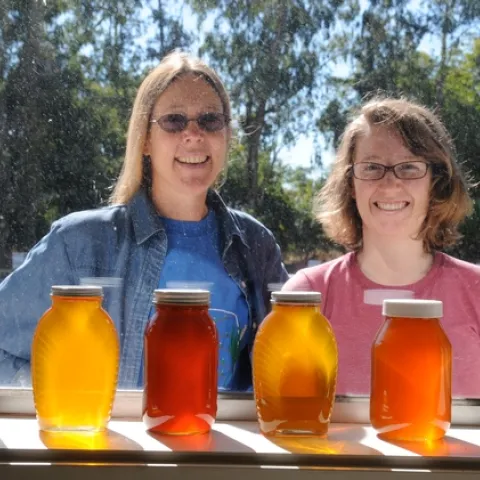
BEEKEEPERS outside the window of the Harry H. Laidlaw Jr. Honey Bee Research Facility at UC Davis. At left is bee breeder-geneticist Susan Cobey, manager of the Laidlaw Facility and a veteran beekeeper. With her is junior specialist Elizabeth Frost. (Photo by Kathy Keatley Garvey)

Honey, I'm Home!

December 3, 2009
By Kathy Keatley Garvey
Youngsters like to joke about what a honey bee says when she returns to the hive: "Honey, I'm home!" Honey...what is it? The National Honey Board defines honey as "the substance made when the nectar and sweet deposits from plants are gathered, modified and stored in the honeycomb by honey bees.
View Article
Primary Image
RAGGED WINGS of a honey bee. She is nectaring lantana. (Photo by Kathy Keatley Garvey)

Winged Wonders

December 2, 2009
By Kathy Keatley Garvey
Hear the buzz? That's the sound of a honey bee's wings moving at about 11,400 times per minute. As a field bee, the worker bee lives only several weeks during the peak nectaring season. She can fly four to five miles a day, at a speed of about 15 miles per hour.
View Article