Bug Squad Logo

Bug Squad

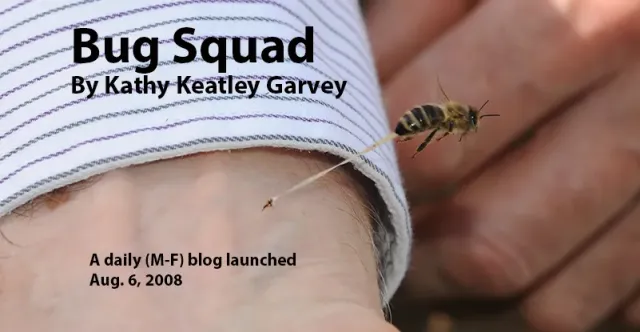
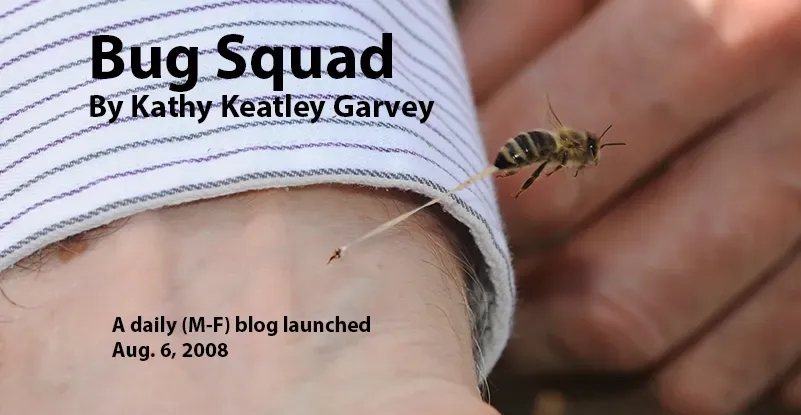
Bug Squad blog image depicts a honey bee sting in action.

Welcome to the Bug Squad blog! The Bug Squad blog was launched Aug. 6, 2008 and is a daily blog (Monday through Friday). It showcases entomologists and the work they do.  The blog focuses on scientists in the UC Davis Department of Entomology and Nematology, the Bohart Museum of Entomology, Harry H. Laidlaw Jr. Honey Bee Research Facility, the UC Davis Bee Haven, and assorted campuswide events, including UC Davis Picnic Day, UC Davis Biodiversity Museum Day, and Bohart Museum open houses. The blog spotlights insects, including bees, butterflies, dragonflies, and praying mantises, as well as arachnids such as jumping spiders and crab spiders. Author and photographer is Kathy Keatley Garvey, communications specialist, UC Davis Department of Entomology and Nematology, and a longtime journalist and community scientist with two degrees from Washington State University.  She is a member of the Entomological Society of America (ESA) and the Association for Communication Excellence (ACE). Her blog posts and images have won international awards from ACE and ESA and appeared on journal and magazine covers. She shoots primarily with a Nikon Z-8 mirrorless camera, a Nikon D500 and Nikon 800, with assorted macro lenses. Feedspot lists it as one of the top entomology blogs on the Internet. 

Primary Image
THE RESEARCHERS--Maurice and Catherine Tauber in Brazil.

The Taubers: Legends in the Entomological World

November 17, 2009
By Kathy Keatley Garvey
They met and married in the 1960s when they were studying for their doctorates in entomology at UC Berkeley. They established exemplary careers in entomology at Cornell University. Now, at retirement age, they've moved back to Northern California. Meet Drs.
View Article
Primary Image
BEEKEEPER AND ARTIST Andrew Tyzack of East Riding, Yorkshire, UK, with his bees. (Photo courtesy of Andrew Tyzack)

Bees in Art

November 16, 2009
By Kathy Keatley Garvey
Bees engage us. They fascinate, charm and inspire us. Last Sunday morning, as the temperature climbed from 40 to 50 degrees, the honey bees joined us in our garden. They buzzed in and out of the autumn blossoms, gathering pollen and nectar.
View Article
Primary Image
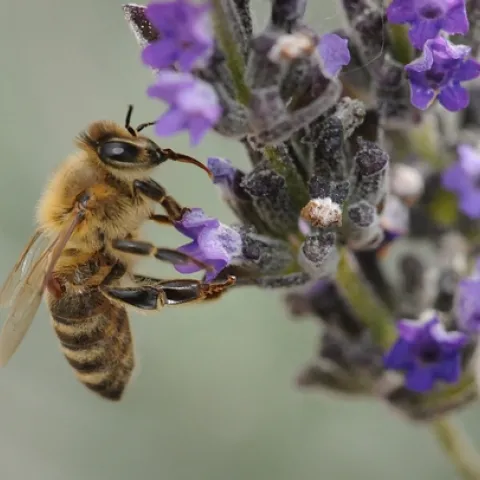
VARROA MITE on a honey bee (see raised reddish-brown spot under the wing). The mites reproduce in the hive, sucking the blood of pupae. (Photo by Kathy Keatley Garvey)

Not a Pleasant Sight

November 13, 2009
By Kathy Keatley Garvey
What's wrong with this photo? A honey bee is nectaring a lavender, right? Right. But if you look closely, you'll see a Varroa mite--a parasite--attached to her. Varroa mites, considered the No.
View Article
Primary Image
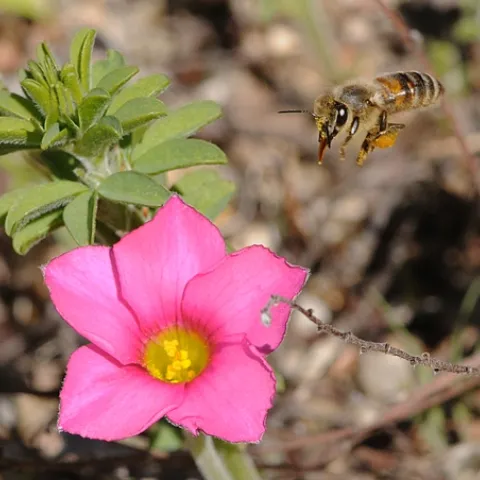
HONEY BEE, with tongue extended, makes a "beeline" for pink oxalis (Oxalis herta) in the UC Berkeley Botanical Garden. (Photo by Kathy Keatley Garvey)

Bottoms Up

November 12, 2009
By Kathy Keatley Garvey
A recent visit to the UC Berkeley Botanical Garden found honey bees making a...yes...beeline...for the pink oxalis (Oxalis herta), a native of South Africa. Some folks consider oxalis, especially yellow oxalis, a "weed.
View Article
Primary Image
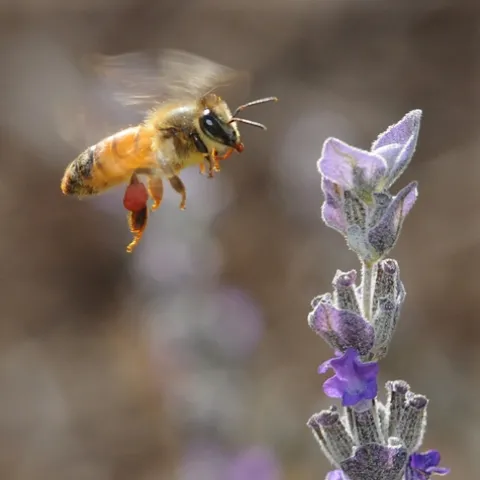
PACKING red pollen, a honey bee glides in to gather nectar from a lavender (Lavandula), a member of the mint family. (Photo by Kathy Keatley Garvey)

Red November

November 11, 2009
By Kathy Keatley Garvey
The honey bees are hungry. There are fewer flowers blooming this time of the year, so the bees are foraging for what they can. This morning the bees were all over the lavender (Lavandula) in our yard.
View Article