Bug Squad Logo

Bug Squad

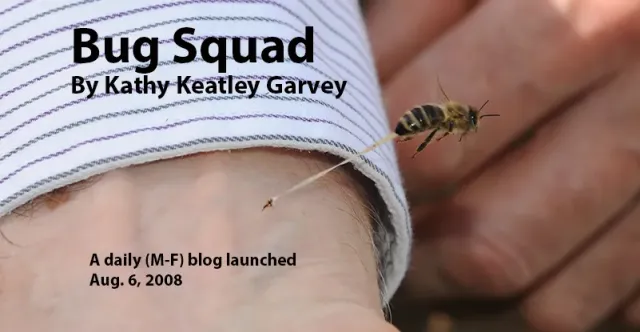
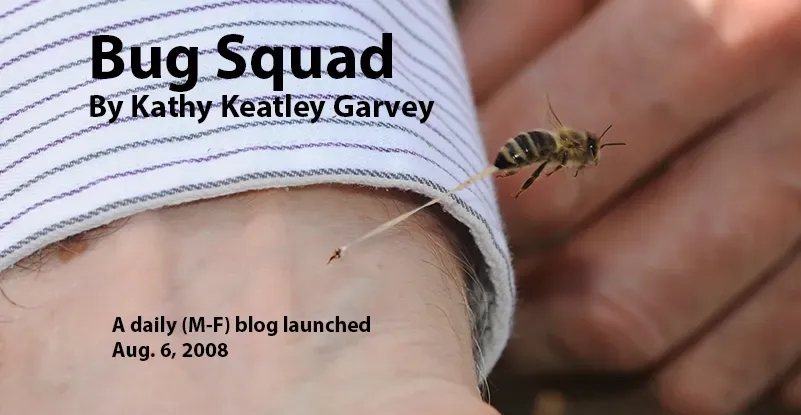
Bug Squad blog image depicts a honey bee sting in action.

Welcome to the Bug Squad blog! The Bug Squad blog was launched Aug. 6, 2008 and is a daily blog (Monday through Friday). It showcases entomologists and the work they do.  The blog focuses on scientists in the UC Davis Department of Entomology and Nematology, the Bohart Museum of Entomology, Harry H. Laidlaw Jr. Honey Bee Research Facility, the UC Davis Bee Haven, and assorted campuswide events, including UC Davis Picnic Day, UC Davis Biodiversity Museum Day, and Bohart Museum open houses. The blog spotlights insects, including bees, butterflies, dragonflies, and praying mantises, as well as arachnids such as jumping spiders and crab spiders. Author and photographer is Kathy Keatley Garvey, communications specialist, UC Davis Department of Entomology and Nematology, and a longtime journalist and community scientist with two degrees from Washington State University.  She is a member of the Entomological Society of America (ESA) and the Association for Communication Excellence (ACE). Her blog posts and images have won international awards from ACE and ESA and appeared on journal and magazine covers. She shoots primarily with a Nikon Z-8 mirrorless camera, a Nikon D500 and Nikon 800, with assorted macro lenses. Feedspot lists it as one of the top entomology blogs on the Internet. 
Primary Image
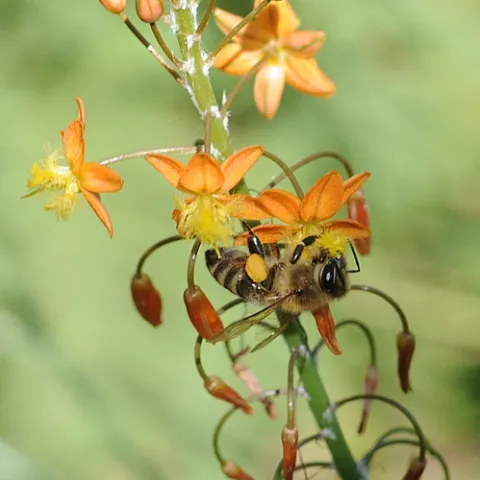
A HONEY BEE nectars a dwarf tangerine bulbine (Bulbine frutescens) in the UC Davis Arboretum. (Photo by Kathy Keatley Garvey)

Bee-ing There for the Bees

September 17, 2009
By Kathy Keatley Garvey
Apimondia. No, it's not a rock band or a new dance move or a new Billboard hit. It's the name of a worldwide bee organization. The 41st World Apiculture Congress is meeting this week through Sunday, Sept. 20 in Montepellier, France, and the buzz is all about what's killing the honey bees.
View Article
Primary Image
BAXTER HOUSE, built in 1938, went up in flames on June 30 in a UC Davis firefighters' control burn. The grounds will now be a quarter-acre field of wildflowers called The Campus Buzzway. (Photo by Kathy Keatley Garvey)

It's All the Buzz

September 16, 2009
By Kathy Keatley Garvey
Rising soon from the ashes of the Baxter House fire will be the soothing colors of the Campus Buzzway. It's a story that began in May 1938 with a farmhouse-turned-lab-turned-eyesore. It will end with the honey bees' version of "A Field of Dreams"--the Campus Buzzway.
View Article
Primary Image
HONEY BEE, packing pollen, heads into a patch of Argentine rain lilies (Zephyranthes candida) in the White Garden, UC Davis Arboretum. (Photo by Kathy Keatley Garvey)

It's Raining Rain Lilies

September 15, 2009
By Kathy Keatley Garvey
It's raining rain lilies in the Carolee Shields White Flower Garden of the UC Davis Arboretum. The Argentine Rain Lily (Zephyranthes candida), also known as the White Rain Lily, White Fairy Lily and White Zephyr Lily, is drawing a few honey bees, but the bees like the lavender and sage best.
View Article
Primary Image
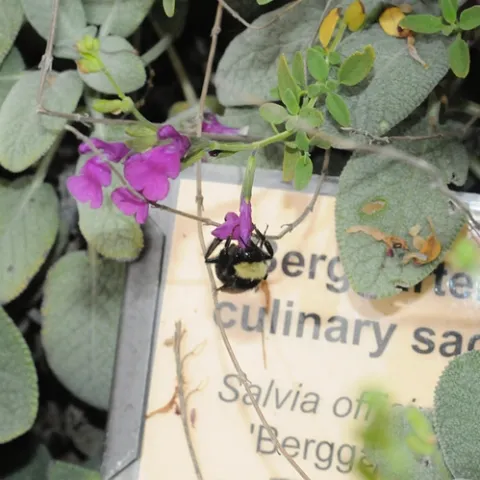
BLACK-FACED BUMBLE BEE, Bombus californicus, nectars salvia in the Storer Garden, UC Davis. This salvia is Salvia officinalis, cultivar Berggarten. (Photo by Kathy Keatley Garvey)

Warding Off Evil

September 14, 2009
By Kathy Keatley Garvey
If you stuff your turkey with sage, chances are it's Salvia officinalis. Not the turkey, the sage.
View Article
Primary Image
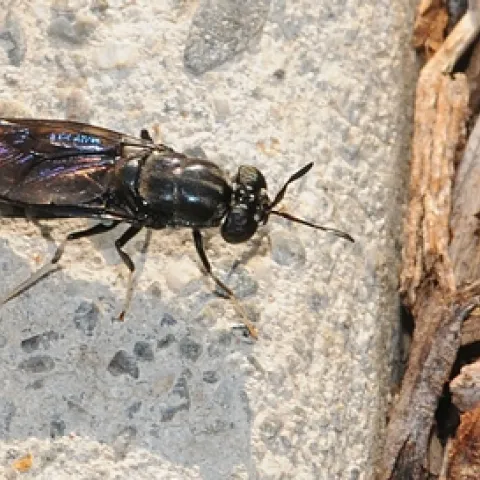
BLACK SOLDIER FLY or Hermetia illucens, about three-fourths of an inch long, heads for bark mulch. (Photo by Kathy Keatley Garvey)

Soldiering Along

September 11, 2009
By Kathy Keatley Garvey
If you're into composting, chances are you've seen this one. Common name: black soldier fly (BSF). Scientific name: Hermetia illucens. Before you say "yecch"--wait! This is considered a beneficial insect because its larvae are quite desirable in compost piles.
View Article