Bug Squad Logo

Bug Squad

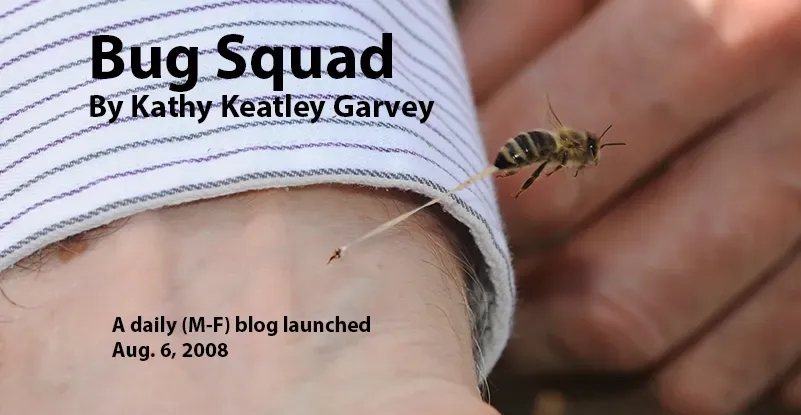
Bug Squad blog image depicts a honey bee sting in action.

Welcome to the Bug Squad blog! The Bug Squad blog was launched Aug. 6, 2008 and is a daily blog (Monday through Friday). It showcases entomologists and the work they do.  The blog focuses on scientists in the UC Davis Department of Entomology and Nematology, the Bohart Museum of Entomology, Harry H. Laidlaw Jr. Honey Bee Research Facility, the UC Davis Bee Haven, and assorted campuswide events, including UC Davis Picnic Day, UC Davis Biodiversity Museum Day, and Bohart Museum open houses. The blog spotlights insects, including bees, butterflies, dragonflies, and praying mantises, as well as arachnids such as jumping spiders and crab spiders. Author and photographer is Kathy Keatley Garvey, communications specialist, UC Davis Department of Entomology and Nematology, and a longtime journalist and community scientist with two degrees from Washington State University.  She is a member of the Entomological Society of America (ESA) and the Association for Communication Excellence (ACE). Her blog posts and images have won international awards from ACE and ESA and appeared on journal and magazine covers. She shoots primarily with a Nikon Z-8 mirrorless camera, a Nikon D500 and Nikon 800, with assorted macro lenses. Feedspot lists it as one of the top entomology blogs on the Internet. 

Primary Image
SYRPHID LARVA, on a rose leaf, is feeding on aphids. Soon it will become a flower fly or hover fly, like the one below. (Photo by Kathy Keatley Garvey)

To Sir (Syrphid), With Love

April 28, 2009
By Kathy Keatley Garvey
If you see a caterpillar near a cluster of aphids, don't squash it. It could very well be the larva of a syrphid or hover fly (family Syrphidae) and it's eating aphids.
View Article
Primary Image
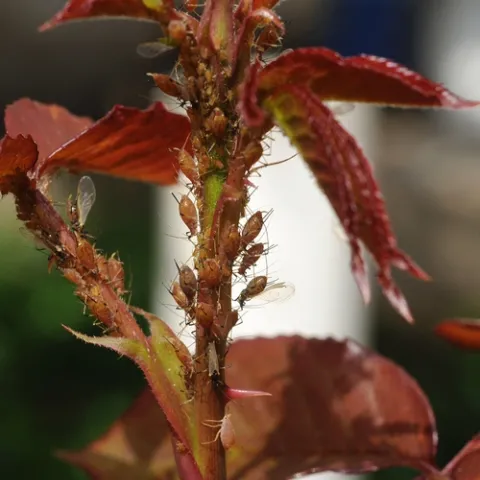
BEFORE the soldier beetles came to visit, aphids clustered on the rose bushes to suck out plant juices. (Photo by Kathy Keatley Garvey)

Look Ma, No Aphids!

April 27, 2009
By Kathy Keatley Garvey
Got aphids? The important work that soldier beetles (family Cantharidae) do is never more exemplified than in the "before" and "after" photos. When the aphids landed on our rose bushes, a few ladybugs came to dine, but the insects that really stopped the aphid onslaught were the soldier beetles.
View Article
Primary Image
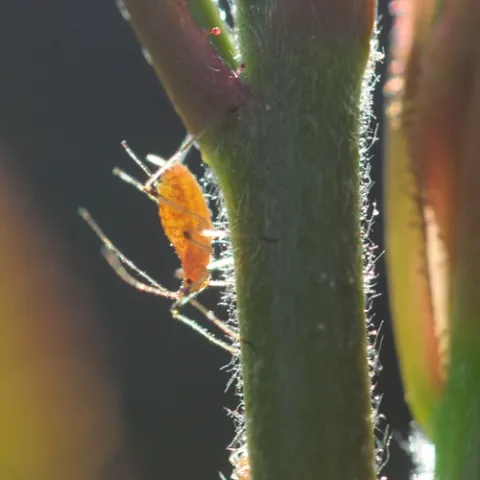
EARLY MORNING SUN warms an aphid. (Photo by Kathy Keatley Garvey)

Ready for the Day

April 24, 2009
By Kathy Keatley Garvey
Insects are cold-blooded so their temperature coincides with their environment. Before the sun rises, they lie ever so still. As the sun warms them, they stir ever so slowly. At 6 a.m.
View Article
Primary Image
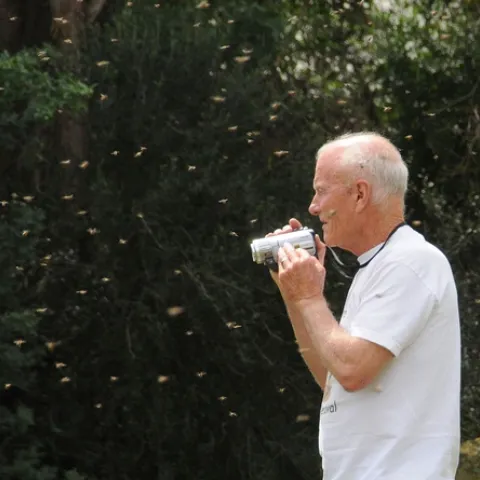
VETERAN VENTURA beekeeper Bill Weinerth films the bee swarm Thursday, April 23 at the Harry H. Laidlaw Jr. Honey Bee Research Facility. He was at the UC Davis facility for an advanced bee insemination course taught by bee breeder-geneticist Susan Cobey. (Photo by Kathy Keatley Garvey)

Perfect Planning

April 23, 2009
By Kathy Keatley Garvey
Perfect planning. Except it wasnt planned. On the last day of a two-day advanced workshop on "The Technique of Instrumental Insemination, taught by bee breeder-geneticist Susan Cobey at the Harry H. Laidlaw Jr. Honey Bee Research Facility. UC Davis, bees from one of the hives began to swarm.
View Article
Primary Image
THREE'S COMPANY--Three soldier beetles search for aphids on a rose bush. (Photo by Kathy Keatley Garvey)

Good Soldiers

April 22, 2009
By Kathy Keatley Garvey
They're good soldiers, those soldier beetles. Members of the family Cantharidae, they are beneficial insects that eat other insects, especially aphids and caterpillars--but just about any soft-bodied insect will do. If no insects are available, you'll see them dining on nectar and pollen.
View Article