Bug Squad Logo

Bug Squad

Bug Squad blog image depicts a honey bee sting in action.

Welcome to the Bug Squad blog! The Bug Squad blog was launched Aug. 6, 2008 and is a daily blog (Monday through Friday). It showcases entomologists and the work they do.  The blog focuses on scientists in the UC Davis Department of Entomology and Nematology, the Bohart Museum of Entomology, Harry H. Laidlaw Jr. Honey Bee Research Facility, the UC Davis Bee Haven, and assorted campuswide events, including UC Davis Picnic Day, UC Davis Biodiversity Museum Day, and Bohart Museum open houses. The blog spotlights insects, including bees, butterflies, dragonflies, and praying mantises, as well as arachnids such as jumping spiders and crab spiders. Author and photographer is Kathy Keatley Garvey, communications specialist, UC Davis Department of Entomology and Nematology, and a longtime journalist and community scientist with two degrees from Washington State University.  She is a member of the Entomological Society of America (ESA) and the Association for Communication Excellence (ACE). Her blog posts and images have won international awards from ACE and ESA and appeared on journal and magazine covers. She shoots primarily with a Nikon Z-8 mirrorless camera, a Nikon D500 and Nikon 800, with assorted macro lenses. Feedspot lists it as one of the top entomology blogs on the Internet. 
Primary Image
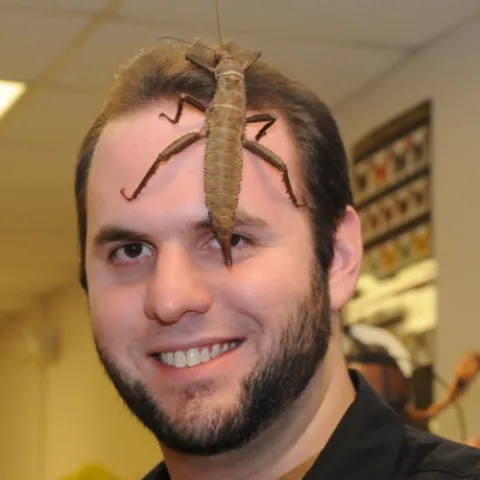
NEW HEADGEAR--Eric San Gregorio, an undergraduate student majoring in entomology at UC Davis, has new headgear: a Giant New Guinea Walking Stick. (Photo by Kathy Keatley Garvey)

New Headgear

October 28, 2008
By Kathy Keatley Garvey
Lynn Kimsey, director of the Bohart Museum of Entomology and chair of the UC Davis Department of Entomology, said it best. "Headgear." The "headgear" was actually a Giant New Guinea Walking Stick crawling up the face of Eric San Gregorio, an undergraduate student majoring in entomology at UC Davis.
View Article
Primary Image
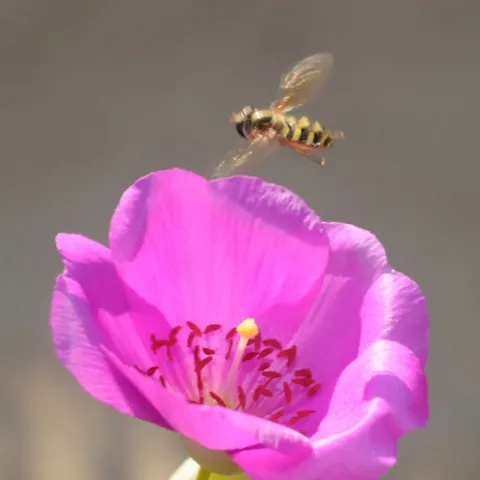
HOVERING--A hover fly hovers over a rock purslane (Calandrinia grandiflora). Photo by Kathy Keatley Garvey)

Hovering

October 27, 2008
By Kathy Keatley Garvey
Hover flies do know how to hover. Like a helicopter with spinning blades, the hover fly lingers seemingly motionless in mid-air over a flower before zeroing down to feed on the nectar. Sometimes theyre called flower flies. Sometimes syprhids.
View Article
Primary Image
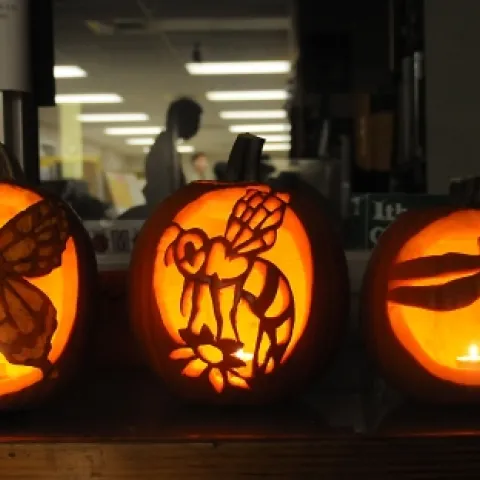
SOMETHING BUGGY HERE: These jack o'lanterns cast an eerie glow: a butterfly, honey bee and a dragonfly. (Photo by Kathy Keatley Garvey)

Light My Fire

October 24, 2008
By Kathy Keatley Garvey
There they sat, a row of jack o'lanterns ready for a light. Undergraduate students at the University of California, Davis, created them for the "Happy Halloween" open house, held Oct. 23 at the Bohart Museum of Entomology, 1124 Academic Surge, UC Davis.
View Article
Primary Image
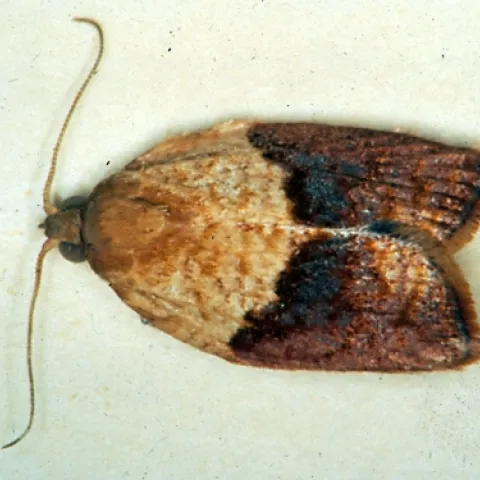
THE BAD--This is the light brown apple moth, a male. The CDFA's William Roltsch will discuss "Biocontrol of Light Brown Apple Moth, a Quarantine Pest in California” at the Northern California Entomology Society meeting on Nov. 6 in Concord. (Photo courtesy of David Williams, principal scientist, Perennial Horticulture, Department of Primary Industries, Victoria, Australia.)

The Good, The Bad and the Ugly

October 23, 2008
By Kathy Keatley Garvey
If you're interested in insects--the good, the bad and the ugly--don't miss the Northern California Entomology Society meeting on Thursday, Nov. 6 in Contra Costa County. You don't have to be a member.
View Article
Primary Image
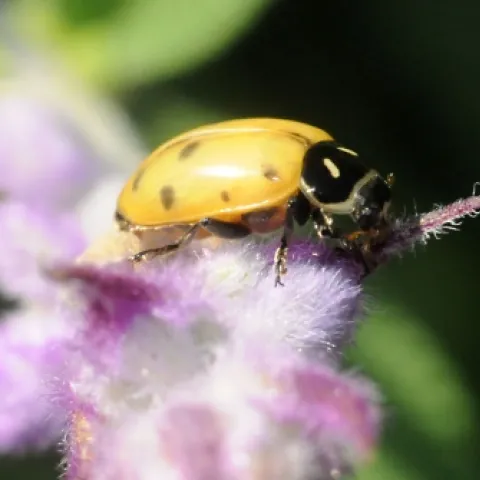
A yellow ladybug on sage. The ladybug (ladybird beetle) is a beneficial insect. (Photo by Kathy Keatley Garvey)

Seeing Spots

October 22, 2008
By Kathy Keatley Garvey
If it looks like a duck, swims like a duck and quacks like a duck, then it probably is a duck. That inductive reasoning (known as "the duck test") doesn't hold true for yellow bugs with black spots. A yellow ladybug (ladybird beetle) and a cucumber beetle look a little alike--at first glance.
View Article