
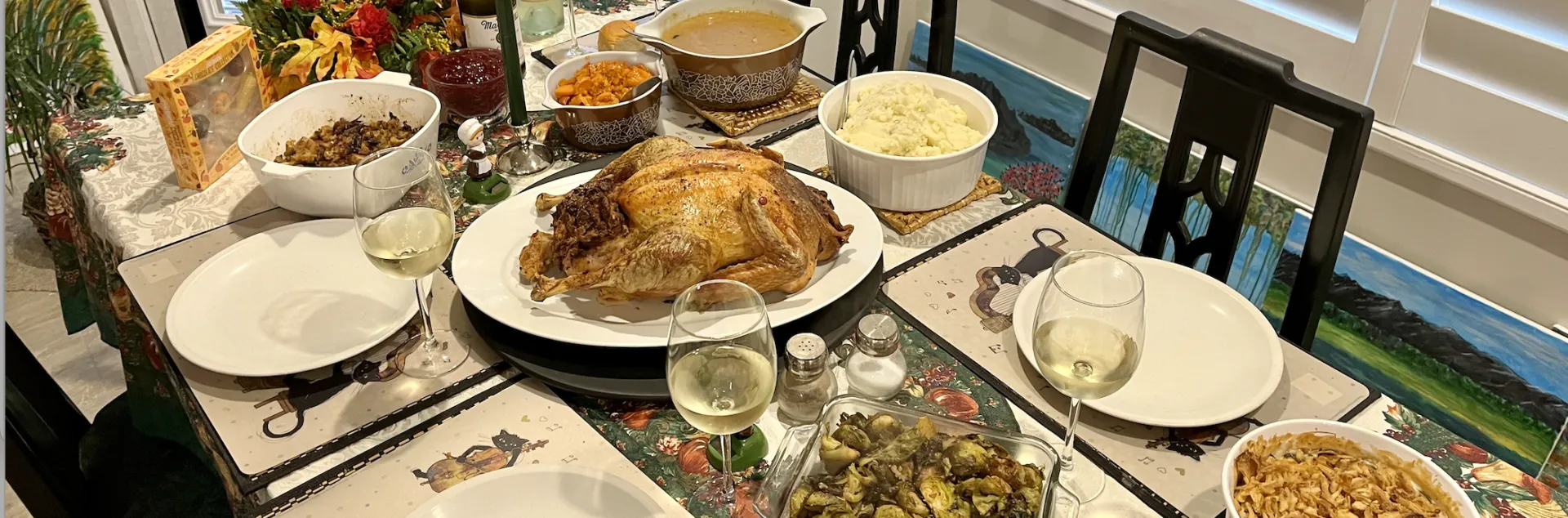

UCCE advisor offers tips for reducing food waste from holiday feasts
‘Tis the season for celebrating with food. Lots of food. Enough food to feed the whole neighborhood.
And that often leads to leftovers and food waste.
The average US household wastes nearly 32% of the food it purchases. By throwing away less food, a family of four could save $2,913 per year, according to the U.S. Environmental Protection Agency. That’s $56 per week.
Yu Meng, UC Cooperative Extension youth, family and communities advisor in Riverside County, studies household food waste reduction.
“Food waste occurs everywhere along the food chain, and 48% of food waste occurs in the home,” Meng said.
Saving food not only saves money but also saves all the resources required – such as land, water, labor and gas – to grow and bring food to your table.
Whether you’re motivated to reduce food waste to save money, minimize methane emissions from landfills or just set a good example, there are several ways to adopt this sustainable practice.
To reduce food waste at home, Meng recommends starting with meal planning and making a shopping list so you buy only what you need.
“It is important you stick to your shopping list,” Meng said. “Don’t shop when you are hungry because you likely will purchase more than you wanted to, and oftentimes those are unhealthy options.”
According to Meng’s study, people tend to make more food than they need, especially when they are hosting – which of course happens quite a bit during the holiday season.

“By planning meals, you can cook the right amount for the number of people you expect to feed,” Meng said. “If you have leftovers, store or freeze them, repurpose them for other meals, share with neighbors or feed them to your pets.”
Although feeding “people food” to pets is a common practice, take a moment and ensure there are no ingredients that can harm your pet.
If you have packaged products, such as canned goods you won’t use, donate them to food banks and other charitable organizations.
For food that can’t be eaten, Meng recommends putting it in compost bins or green bins rather than in the trash bin.
To learn how to safely preserve food by canning, freezing or drying to eat later, the UC Master Food Preserver Program offers classes and resources at https://ucanr.edu/program/uc-master-food-preserver-program.