
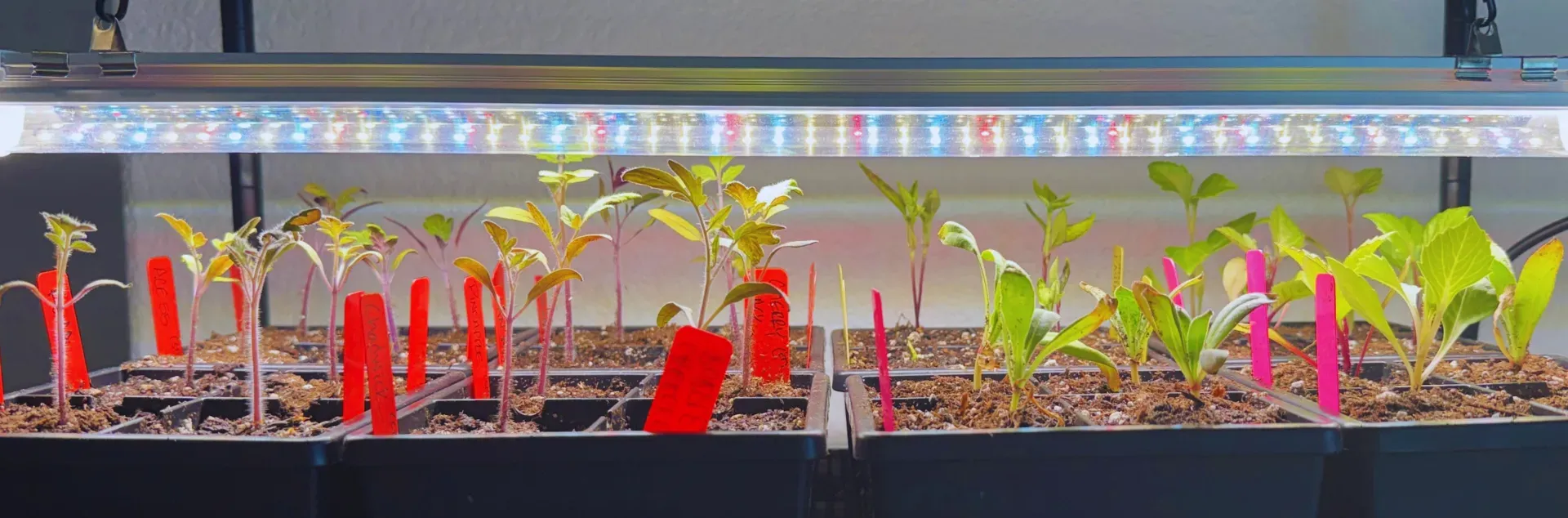

For many people, starting seeds indoors feels like the true beginning of gardening season. Tiny green sprouts on a windowsill promise tomatoes, peppers and flowers in the months ahead.
But growing plants from seed is also where many beginners get discouraged.
If your young plants have ever looked tall and floppy, stopped growing or suddenly fallen over and died, you are not alone. Here are five common mistakes — and simple ways to avoid them.
1. Starting seeds too early
It is exciting to open a seed packet and get started right away. But planting too early is a common mistake.
When you start seeds indoors, they grow quickly. If they are ready before the weather outside is warm enough to plant them in the ground, they must stay in their small containers longer than they should. During that extra time, they can become weak or crowded in their pots.
Some plants, like lettuce and broccoli, handle cooler weather and can be planted outside earlier. Others, like tomatoes and peppers, need warm temperatures and should not go outside until the risk of frost has passed.
The fix: Check the information on the back of your seed packet. It will tell you when to start seeds indoors and when they can safely be planted outside in your area. Strong plants planted at the right time will do better than plants that have been waiting too long indoors.
2. Using the wrong soil
It may seem easier to scoop soil from your yard and put it into a tray. But outdoor soil is usually too heavy for starting seeds.
“Heavy” soil means soil that is dense and packed tightly together. When soil is too dense, water does not drain well, and air cannot reach the roots. Seeds need both moisture and air to grow.
Young plants are also vulnerable to a common problem where they suddenly fall over at the base of the stem. This is caused by fungi — tiny living organisms in soil — that grow in overly wet conditions.
The fix: Use a bagged seed-starting mix from a garden center. These mixes are light and fluffy so water can drain and roots can breathe. They are also made from clean materials that reduce disease problems.
3. Watering too much or too little
Seeds need moisture to sprout. “Moisture” means the soil should feel evenly damp — not dry and not soaking wet.
If the soil dries out completely, seeds may not sprout. If it stays too wet, roots can rot, which means they decay and stop working properly.
Containers should have holes in the bottom so extra water can drain out. Without drainage holes, water collects at the bottom and can damage roots.
The fix: Check the soil daily. Touch it with your finger. It should feel like a wrung-out sponge — damp but not dripping. Water gently so you do not wash seeds away.
4. Not enough light
Light is one of the biggest challenges when growing seeds indoors.
A sunny window may look bright, but it often does not provide enough light for young vegetable plants. When plants do not get enough light, they stretch toward it. This makes the stems long, thin, and weak. Gardeners often call this “leggy” growth, which simply means the plant is tall and spindly instead of short and sturdy.
Vegetable seedlings need many hours of strong light every day.
The fix: Place seedlings in the brightest location possible. Many gardeners use simple grow lights placed just a few inches above the plants. As the plants grow taller, move the lights up so they stay close to the leaves.
5. Ignoring temperature and air movement
Temperature matters when seeds are sprouting. Most vegetables grow best when the soil is warm. If the soil is too cold, seeds may sprout slowly — or not at all.
After plants come up, they also benefit from gentle air movement. Moving air helps stems grow stronger and reduces disease problems. This does not mean placing them in a cold draft. It simply means light air circulation.
The fix: Keep seed trays in a warm room while seeds are sprouting. Heated seed mats placed under trays can help warm the soil and improve germination, especially for warm-season crops like tomatoes and peppers. Once plants are growing, a small fan set on low — not blowing directly and forcefully at them — can help strengthen stems.
Learning is part of the process
Growing plants from seed takes practice. Even experienced gardeners lose a tray from time to time. Small adjustments — better timing, lighter soil, steady moisture, strong light and proper temperature — can make a big difference.
Gardening is not about perfection. It is about learning each season.
Want help with planting dates or have specific gardening questions? Connect with your local UC Master Gardener Program to find research-based information tailored to your area. Find a program near you and learn more at mg.ucanr.edu.
Learn more
If you would like step-by-step guidance, these short videos can help you get started:
- UC Master Gardener - Gardening Resources
- How to Start Growing Fruits and Vegetables from Seeds
- Preventing Pest Problems at Seeding
This article was first published in the UC Master Gardner Program Statewide Blog. AI tools were used in the preparation of this article to assist with organizing content and reviewing grammar, clarity, and sentence structure in alignment with UC guidelines. All content was reviewed, verified, and approved by the author prior to publication.