
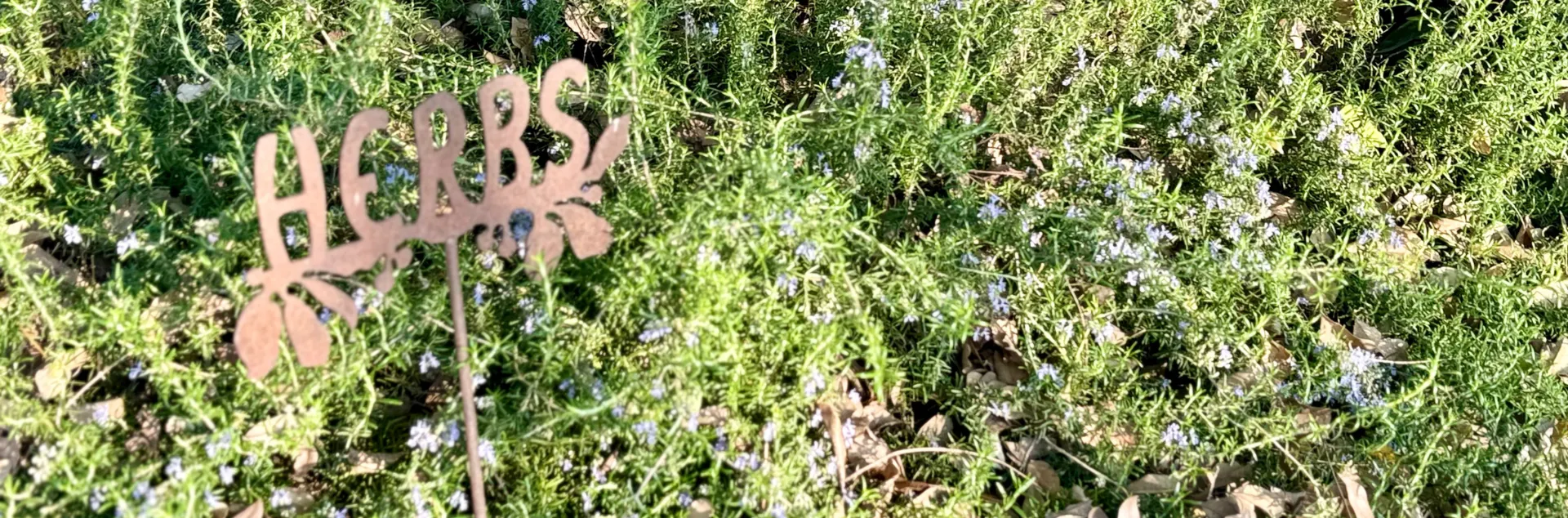

Herbs, both culinary and ornamental, are generally well-suited to our hot, arid climate and they have become a major component of xeriscape and drought- and heat-tolerant landscapes here in the Central Valley. The northern portion of the Central San Joaquin Valley is classified as 'hot Mediterranean,' averaging over 18 inches of annual rainfall in the Sacramento area. As temperatures have risen and annual rainfall amounts have decreased, the climate in the southern portion of the Central San Joaquin Valley, which was formerly classified as ‘savannah’ with above 10 inches of seasonal rainfall, can be reclassified as 'desert.' Annual rainfall amounts in recent years have often been below 10 inches, resulting in a drop in the long-term average rainfall amount for the Fresno/Madera area. With care, herbs can tolerate the warming climate.
Lavenders are grown for their flowers and their seeds. Most of the best-known perennial culinary Mediterranean herbs are grown for their fragrant leaves not their seeds or flowers. Sage, oregano, thyme, rosemary, marjoram and the mints have thicker leaves that are saturated with flavorful volatile oils. Their thick leaves, with slower evapotranspiration rates, makes them more adaptable to rising temperatures and less rainfall. Although these herbs can better survive the extreme heat spikes that have become common in summer in the Central Valley, they will need additional irrigation and afternoon shade when temperatures are above 95 degrees for more than two to three days.
Mints do best in more shady conditions. Monarda or bee balm is native to eastern North America. It does not tolerate high summer temperatures well. Monardella is a California native that does better in the Central Valley heat.
Herbs with thinner leaves – including the annuals basil, borage and tarragon and biennuals cilantro and parsley – are less able to tolerate longer periods of high temperatures. Growth is stunted during heat spikes; leaves scorch and fall off. Cilantro and parsley will bolt or flower and set seed during the first heat spike of the summer. Put in new plants of dill, cilantro and parsley in the fall and let them bolt or set flowers in spring before pulling them out. Their umbrella-shaped flowers are very attractive to bees and other beneficial insects.
Tarragon, which often overwinters well, dies in high summer heat. Replant tarragon every fall as well. Plan on hand watering thin-leaved herbs twice a day and providing shade during heat spikes.
Ornamental herbs that are not used in cooking include the perennial salvias (a huge group), the yarrows and artemisia. These ornamental herbs seem to be less affected by high heat. Some can get huge in our climate. If space is a concern look for varieties that will remain smaller. All produce flowers that are important food and nectar sources for pollinators. Artemisia is also a host plant for lady beetle larvae.
Herbs do need regular attention to maintain size and vigor. Some have invasive roots (artemisia, mint, oregano, marjoram and some rosemary varieties) and are best grown in pots or edged planting beds. Lavenders get woody with age and need replacing every few years. Cut back and dry the leaves of thymes, sage, rosemary, oregano and marjoram every spring.
________________________
Written by UC Master Gardener Elinor Teague