

Irrigation
Welcome to March! If you didn’t do this last month, it is time to check your irrigation. Make repairs if it is not working correctly. My garden is strictly on drip. Yes, I did go through every emitter to make sure it was an adequate size and working, and cleaned out the valves to make sure they were free from sediment. It is worth the time.
I like using drip as I don’t have water spraying on my rose leaves, which can cause fungal diseases, such as powdery mildew and rust. Drip irrigation directs the water to the roots of the plant, not the leaves or canes.
If your watering system is sprinklers, run them in the morning (only on days that we can water) before the day warms up. This will avoid moisture evaporating or collecting on leaves which can (during the warmer months) result in sunburn or (during the cooler months) make it favorable for fungal diseases to develop on your roses. Avoid watering in the evening or at night. This will prevent excessive ground moisture at night. Soil that is too wet can lead to unhappy roots and/or fungal diseases. Avoid watering when it is windy, so the water doesn’t evaporate into the air instead of watering your roses.
Managing pests and diseases
Hey Rosie, what about spraying for fungal diseases? If you are thinking you might want to use fungicide to prevent fungal diseases from happening, I would encourage you to wait and see if they develop. Only spray if you see fungal diseases or pests that can’t be managed by any other means.
If you believe you must spray, no matter what, here are some do’s and don’ts. Don’t spray on a windy day. Don’t spray during the late morning, afternoon or evening hours. Don’t spray when bees are out (even organic sprays). Don’t spray when it is over 80 F as it can burn your plants. Don’t spray on a rainy day or if it is going to rain the next day. Don’t spray if your pets (or your neighbor’s pets) are in the yard. Don’t spray if your children/grandchildren/neighbors are in the yard. I cannot stress enough that spraying is serious. You must take precautions.
If you choose to spray, you can use a lime sulfur spray or a horticultural oil mixed with a dormant spray for fungal diseases. You need to wear an appropriate face mask (N95), gloves, closed-toe shoes (no sandals or slippers), and disposable coveralls or a safety suit.
Yes, anytime you spray your roses for insects or diseases, it is serious business. You can hurt yourself or others. That includes organic sprays as well, such as neem oil, BT, etc. Just because something is labeled organic, doesn’t mean it can’t hurt you, your neighbors, pets, birds, bees, etc. Shower, including washing your hair, after spraying.
Those chemicals (yes, even organic ones) need to be stored appropriately. Don’t mix chemicals because you think that it will be better for the plants. Follow directions on the label. Leftover sprays and their containers need to be disposed of appropriately. If all of this sounds like a lot of work, it is. There are alternatives!
I practice Integrated Pest Management (IPM). I rarely, if ever, spray for anything, be it diseases or insects. I will tolerate a fair amount of “damage” to my roses from diseases and insects. I hand pick off the insects (yes, I still have a bit of an eeeuuuwwww response, but I get over it — I use gloves!). I can also spray bugs such as aphids and spider mites with water (good strong blast) and that will remove them, without the chemicals. Make sure you spray the underside of the leaves. Repeated application of chemicals on insects can cause resistance to the product. A strong water spray every couple of days works fine and you don’t hurt the plant nor the environment.
I remove leaves that have powdery mildew, rust, etc., if I get it. New ones will grow in. Mostly, I don’t get fungal diseases. That is because I try to choose disease-resistant varieties for my yard (and we generally have low humidity). I also practice shovel pruning. If the rose is a disease-ridden mess, out it goes. I grow roses for my own enjoyment and their beauty. I don’t have time to baby them. Some roses do better than others in our climate. I want the ones that will do well in my yard.
Again, clean up debris from your roses and place it in the green bin. It does not go in my compost pile. Keep a good 3-4 inches of organic mulch around your roses to stop weeds in their tracks. This will also keep the roots cool in summer and warm in winter. It also helps to keep the soil moist and you will use less water. The mulch will eventually break down and will help improve the soil, another plus!
Attract beneficial insects
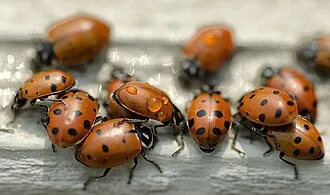
I attract the “good bugs” such as lady bird beetles, lacewings, etc., by planting pollinator plants in my garden. Flowering native plants such as Yarrow (Achillea), California buckwheat (Eriogonum), Seaside daisy (Erigeron), Sticky monkey-flowers (Mimulus), Tidy tips (Layia platyglossa), etc., attract the “good bugs” that will eat the “bad bugs.” Native plants are great choices. They are beautiful and they are drought tolerant. These plants also attract birds. They too will eat the “bad bugs” and they are quite amusing to watch.
Fertilize
When the new growth on your roses is about 2 to 3 inches long, you can start fertilizing. I recommend a good organic rose fertilizer. It will contain micro-elements that will help to improve your soil and your plant. Synthetic fertilizers do not. In reality, as I have written before, your plant doesn’t care what you buy, organic or inorganic. However, organic fertilizers won’t burn your plants, and they don't add salts to your soil. Organic fertilizer will help to build your soil over time. As your soil improves, you will be able to use less fertilizer but have the same result.
When you apply fertilizer, make sure the soil is moist. Water before and after your application. You can also spray your roses with seaweed (kelp) fertilizer. Roses love it. It may smell for a day or two but I have smelled much worse when it comes to fertilizers.
Again, test your soil before you fertilize. Don’t fertilize just to fertilize. You are wasting your hard-earned money (which you could be spending on plants!). More is not better! I have had great results with just compost and a good layer of organic mulch (not rubber mulch).
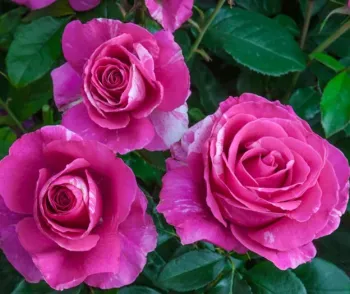
Next month we should be seeing some beautiful spring blooms! If you can, take some time to enjoy all of the new and beautiful spring growth in your yard.
Until next time, “Friends are the roses of life … pick them carefully and avoid the thorns!” – Author unknown
___________________________________
Written by UC Master Gardener Rosie D.