
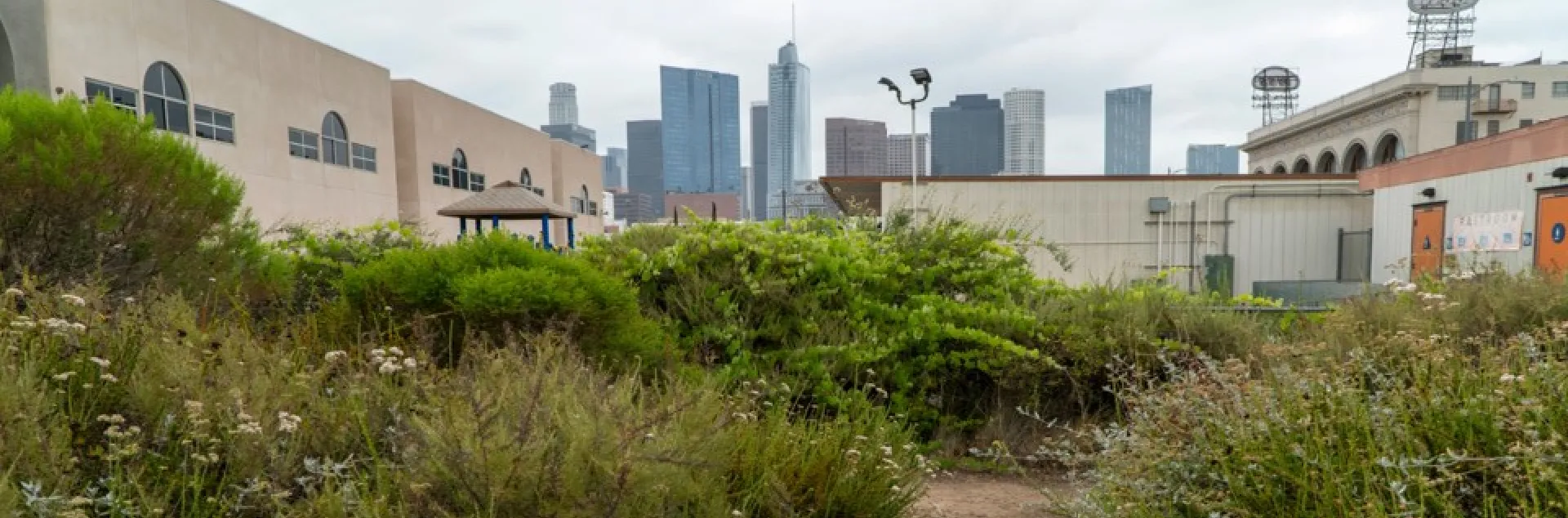

UCCE specialist Monica Palta, UC Irvine colleagues to study value of small-scale green spaces
If you see someone scrutinizing the trash at your local park, it could be urban ecologist Monica Palta. Fear not, you're just witnessing science in action.
“It's basically trash archeology in a way,” Palta said.
A discarded burger wrapper can be a clue to understanding the ways people engage with their neighborhood nature. Is this a place where people have picnics? Maybe birthday parties?
“Not all uses are going to leave remnants behind, but it's a broader way of trying to figure out what's happening in the park,” she said.
Studying people’s relationship with their local environment is Palta’s job as a UC Cooperative Extension specialist of urban water quality, health and justice with UC Agriculture and Natural Resources. By cataloguing uses and benefits of neighborhood green space, her research helps urban planners design parks that best serve their surrounding community.
This year, Palta and a team of researchers at UC Irvine received funding from the UCI Climate Collaboration to study slivers of nature on the smallest scale, including pocket parks and community gardens.
Cities in California are increasingly favoring a “distributed” approach to urban greening. That means developing opportunistic, smaller-scale projects on individual properties, like giving new life to a vacant lot by turning it into a native plant garden.
In addition to Palta, the research team includes UC Irvine professors Doug Houston, Jessica Debats Garrison and Jason Douglas, as well as postdoctoral scholar Vivianna Goh. Together, they will evaluate 15 of these mini-parks across Irvine, Santa Ana and southeast Los Angeles.
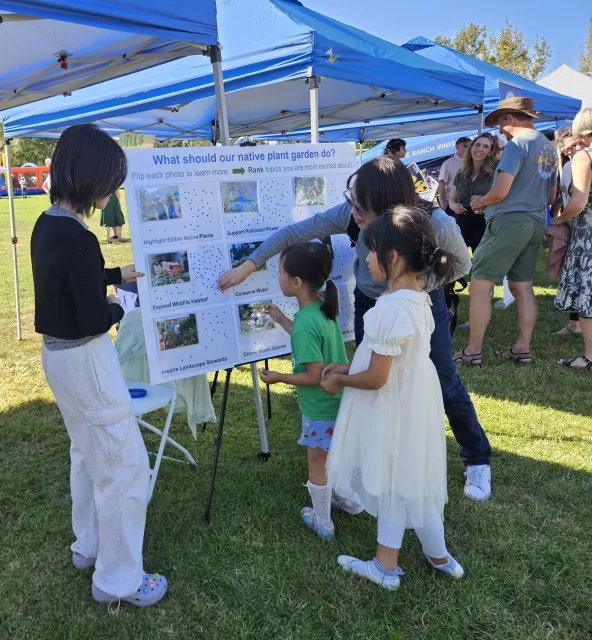
The team wants to understand the environmental and social value of pocket parks, as more pop up across the region, and develop tools that increase community engagement in their design and stewardship.
“If this is what the future of greening looks like, I think it's an important type of environment to study,” Palta said.
Besides providing public access to outdoor space for recreation, small-scale parks may offer environmental resilience as the climate changes. With extreme weather causing more flooding and heatwaves, low-income areas with predominantly concrete landscaping and a limited tree canopy are especially vulnerable. Green spaces can help soak up rainwater to mitigate flooding, while trees cast much-needed shade.
The research team will gauge how well pocket parks are meeting those goals by measuring a variety of environmental outcomes. Using thermal cameras, they’ll record study sites’ surface temperature, in addition to collecting data on air quality, carbon sequestration and rainwater infiltration.
They’ll also use social science methods to help grasp the intangible benefits of these spaces. Beyond inspecting litter for clues about park usage, Palta will also conduct impromptu interviews with park-goers about their design and activity preferences, a practice she calls “sidewalk science.”
“It’s like a very low-stress focus group,” Palta said.
Palta’s usual engagement strategy is two-fold. She’ll present people with photos of park features and ask them to select favorites. In exchange, she offers mini science lessons on their selections, helping people recognize “ecosystem services” they benefit from.
“Like maybe it hadn't occurred to them before that a native plant garden can conserve water,” Palta said.
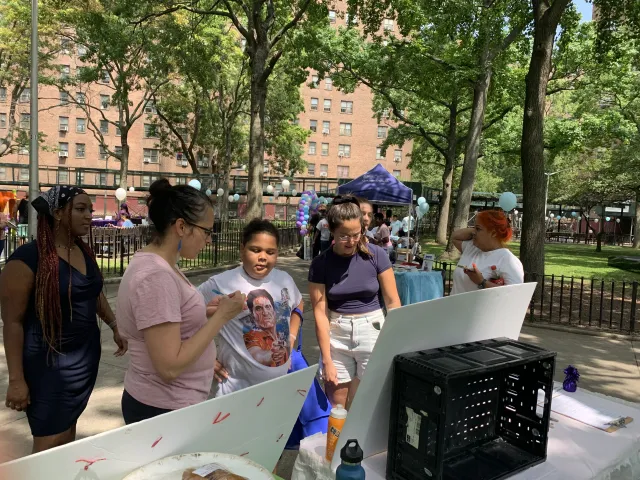
This kind of friendly and straightforward information exchange is what it means to be an extension specialist with UC ANR, Palta said. Her knack for community engagement and partnership building led to her involvement on this grant project.
Along with mapping and monitoring study sites, the research team will evaluate the planning process for creating new parks. Palta wants to see how community input typically gets incorporated into designs and programming. If she finds that blueprints for new parks deviate from what the public envisioned, she can provide city planners with tools to better align themselves.
Based on the success of this project, Palta may expand the research’s scope statewide.
The specific parks to be studied are still being selected with the help of grant partners, the City of Santa Ana Parks and Recreation and the Los Angeles Neighborhood Land Trust.
If you’d like the research team to include your neighborhood pocket park or community garden in their mapping efforts or nominate it as a potential study site, send an email to Doug Houston (houston@uci.edu) or Monica Palta (mpalta@uci.edu). You can also follow and/or contact Monica Palta on Instagram (@urbanwaterca).