

Volunteers provide vision to transform neglected Atascadero site into pollinator garden
Crystal Crimbchin has seen firsthand the staggering collapse of monarch butterflies in San Luis Obispo County. As volunteer co-coordinator for the Xerces Society in the area, she helps organize over 100 community members to count the butterflies at various sites.
“Monarch numbers have completely plummeted from millions and millions to just thousands,” said Crimbchin, zoo supervisor at the Central Coast Zoo in Atascadero and a certified University of California Master Gardener.
She said scientists believe one of the main reasons these temperature-sensitive insects are struggling is because their habitat has been diminished by climate volatility and changing weather. In addition, the monarchs are subsisting on non-native plants that are not supposed to be available in the region – thus disrupting their life cycle and future generations.
“Some monarchs are learning not to migrate because they have food that wouldn't naturally be there for them,” Crimbchin explained. “If you're planting a flower that is blooming in the wrong season, the butterflies don’t get the message to move on and look for their next food source.”
Creating an oasis for monarch butterflies – and providing learning opportunities on planting appropriate native plants – are both goals of a newly created garden in Atascadero, slated for a ribbon-cutting in the coming weeks.
The city’s connections with the UC Master Gardeners, a program of UC Agriculture and Natural Resources, helped make it happen.

Fenced-off parcel of land finds beautiful new purpose
In 2024, a crew of about 30 UC Master Gardeners began working at the Central Coast Zoo to improve the landscaping in the animal enclosures and present practical advice on replacing backyard lawns with native plants.
Seeing the value of educating people on pollinator-friendly gardens, City of Atascadero staff wondered if those outreach efforts could be expanded to a larger site. They immediately thought about a neglected wedge of city property between a U.S. 101 offramp and a gas station.
Although it’s a high-visibility site that welcomes people into Atascadero as they take the Morro Road/state Highway 41 exit, the parcel fell into disrepair in recent years. After homeless people began camping there, the city fenced off the area, and it was soon overtaken by trash and unruly vegetation.
“Our city manager, Jim Lewis, who came from Pismo Beach and was familiar with the plight of the monarch butterfly, saw a win-win in cleaning up the site and creating habitat and awareness for butterflies,” said Terrie Banish, director of community services and promotions for Atascadero. “It would also tie in as a rest stop for our monarchs and pollinators since it is between Monterey and Pismo Beach.”
Banish brought a couple of UC Master Gardeners, Christine Maness and Olwyn Kingery, to the site. And their imaginations began firing immediately.
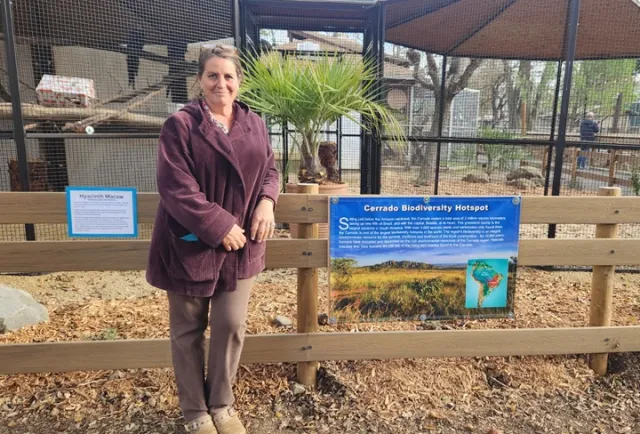
“The city opened up the cyclone fence, and Olwyn and I looked at each other and said, ‘Monarch Corridor Pollinator Garden Extraordinaire!’, and we just started spewing ideas,” Maness recalled.
Kingery, a landscape architect by trade, provided to the city – at no cost – a design concept for what is now called the Monarch and Pollinator Native Garden Corridor. She highlighted a variety of butterfly-friendly features.
“Large flat rocks are situated in the sun so the butterflies can warm their wings on cold mornings, and swales and depressions hold water after rains,” Kingery explained. “And we maintained the original native trees, which some of the butterfly species can rest on.”
Community support helps create native plant corridor
Work on the approximately half-acre site began in October of last year. As a major sponsor of the project, Madrone Landscapes cleaned up the area, cut back the overgrowth and planted about 200 native shrubs and pollinator-friendly plants. Coyote brush, coyote mint, California aster, seaside daisies, native sages and a variety of milkweeds are now among the plants dotting the landscape palette.
The company’s crew also added an irrigation system, ground netting, ornamental fencing, mulch and large rocks. A rope fence protects the habitat while allowing visitors an unobstructed view of the site.
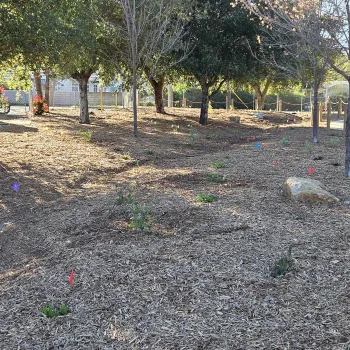
“They’ve transformed a completely unused space into the most amazing-looking garden that is vital to native bees, monarchs and other pollinators,” Maness said.
Local high schoolers representing the art and welding departments will help design and craft a wrought-iron feature as a distinctive, decorative element. That’s part of a larger effort to incorporate art into the cityscape, promote environmental sustainability and create more pleasant transit corridors.
“This is just one more extension of what we’re doing throughout the city to make things safer, improve walkability and provide a warm and friendly type of environment, which is what Atascadero is,” Banish said.
Newly planted site to provide platform for garden education
With UC Master Gardener volunteers focused on projects at the zoo, Madrone Landscapes will handle most of the maintenance of the new monarch corridor for the next five years. But the UC Master Gardeners will use the site as a teaching space right away.
Interpretive signage will highlight the native plants and offer guidance and resources on how community members can grow their own pollinator-friendly, drought-tolerant gardens.
UC Master Gardeners will also conduct programs and tours at the new habitat area to share their science-based information and advice on planting region-appropriate plants.
“With this being a major thoroughfare, just having a link to the UC Master Gardeners site on the signage is going to provide great exposure, promotion and opportunities for education,” Maness said. “The visibility of that monarch corridor is massive – it’s going to open the eyes of a lot of people to the UC Master Gardener program.”
Habitat corridor highlights monarch life cycle, conservation efforts
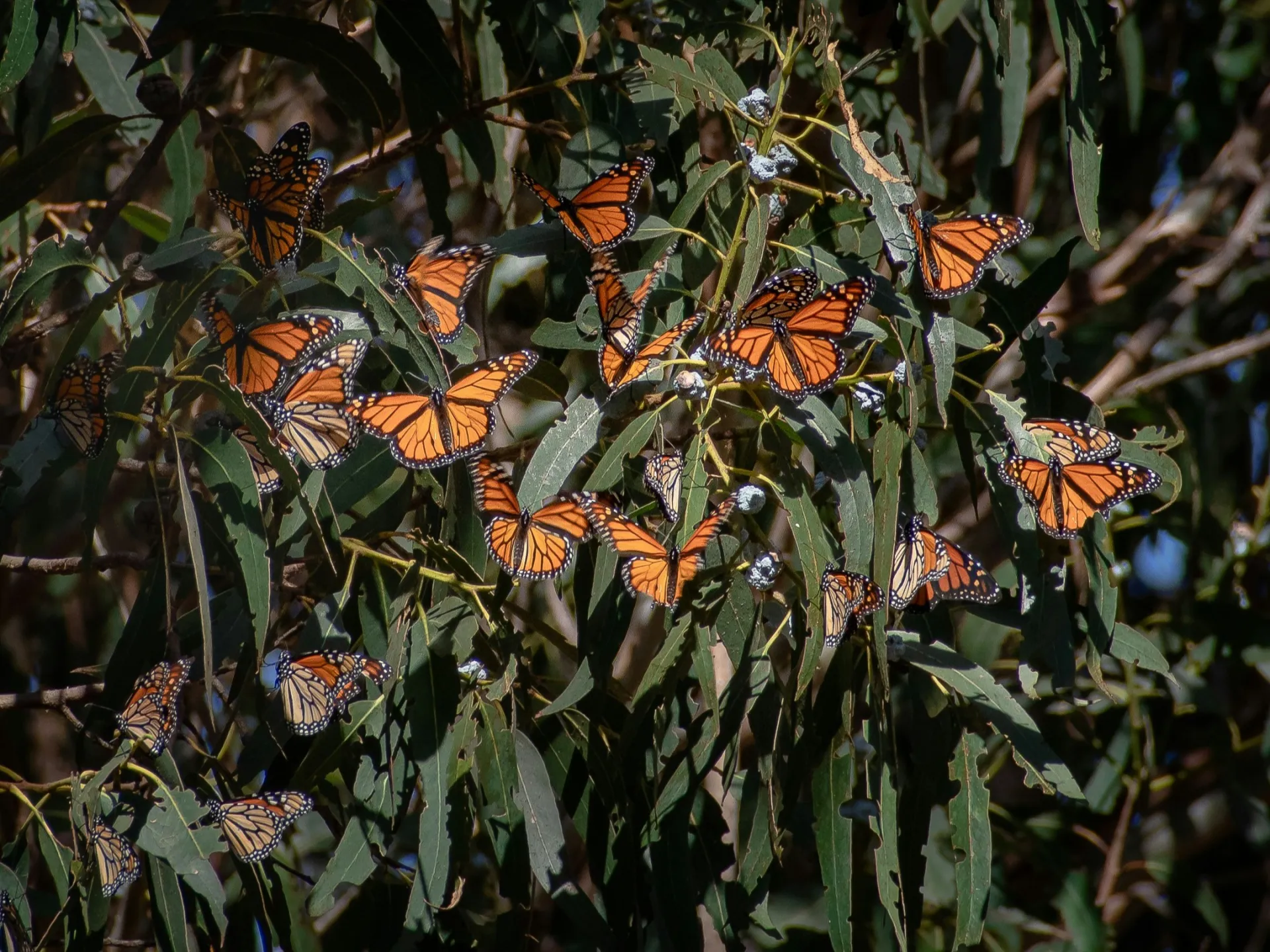
Naturally, the new habitat corridor will also raise awareness about the plight of the monarch. The planners envisioned it as a “rest area” for the butterflies on their migratory journeys of hundreds of miles.
After overwintering in groves along the Pacific Coast, these monarchs fly inland in spring to Nevada and Utah, where they cycle through three or four short-lived generations. And then, come fall, the great-great-grandchildren of the spring travelers make the long return flight back to the coastal groves of their ancestors.
Newly emerged caterpillars feed exclusively on milkweed plants, while winged adults sip the nectar of a variety of flowers. The new monarch and pollinator garden is a place for the insects to refuel – and for community members to see how they can play a role in the conservation of this iconic butterfly.
“Our hope is that we can flip over a milkweed leaf and look at the actual eggs – because that will leave the biggest impact on the person that we’re talking to,” said Crimbchin, the zoo supervisor. “If we can show them and have them see that, they’ll feel like, ‘Yes, I can do something just by planting the right plants; I can make an impact on monarchs across the country.’”