
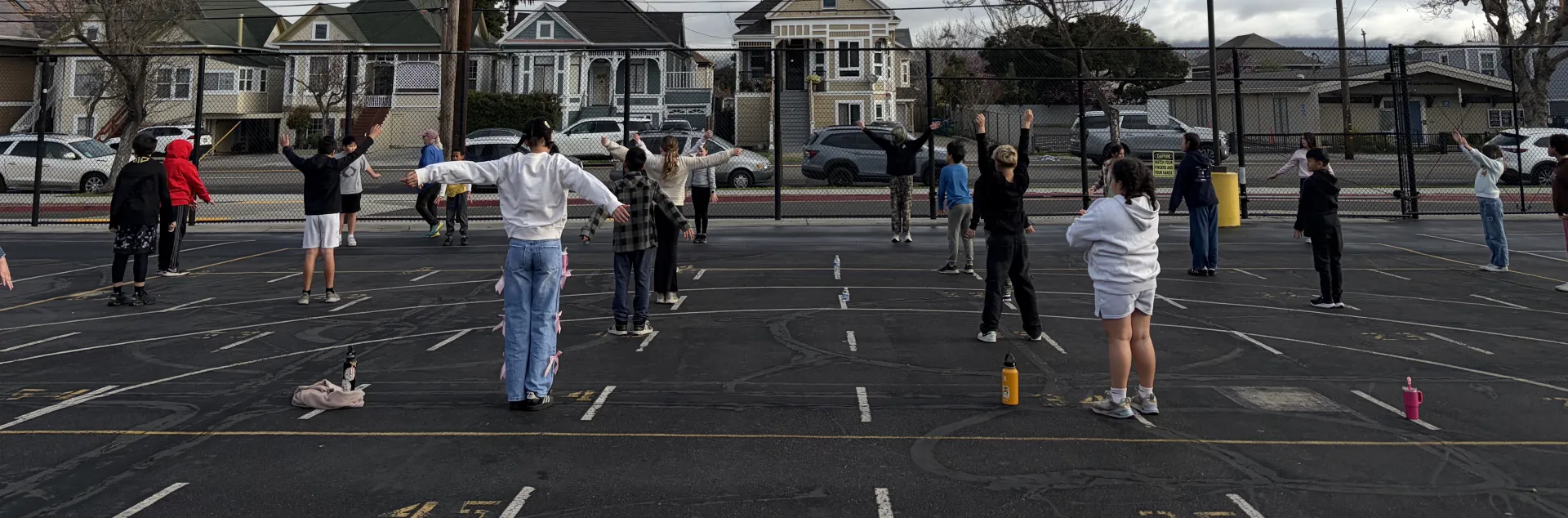

Playworks, a national nonprofit organization that promotes structured, inclusive recess in low-income elementary schools, has been shown to improve student engagement, physical activity, and school climate. However, little is known about whether programs like Playworks—where trained adults lead games that build students’ conflict-resolution, teamwork, and leadership skills while promoting positive play and strong, trust-based relationships—can help reduce chronic absenteeism, particularly among underserved student populations.
A recent study aimed to assess whether student participation in Playworks recess programs was associated with lower chronic absenteeism in low-income California elementary schools. Researchers analyzed absenteeism rates from over 4,300 schools from 2022–2024, comparing rates between schools with and without Playworks. Schools with Playworks had slightly lower chronic absenteeism than schools without. . These effects were most pronounced in schools with trained adults brought in by Playworks to lead recess activities compared to schools where teachers were trained to implement Playworks strategies, and also among Hispanic students.
However, recess-based programs like Playworks are not a standalone solution. Study researchers suggest that schools integrate structured recess into broader, multi-tiered attendance strategies, ensure consistent program delivery, and pair it with support systems that address systemic barriers like health, transportation, and housing.
The study was published in the Journal of School Health. It was conducted by Natalia A. Msami from the University of California, Berkeley, Jennette Claassen from Playworks, Michael A. Gottfried from the University of Pennsylvania, and Richard Pulvera and Hannah Thompson from the UC Agriculture and Natural Resources, Nutrition Policy Institute. The study was funded by Playworks Education Energized.