
Ana M. Pastrana1, Robert L. Gilbertson2, Tomás A. Melgarejo2, William M. Wintermantel3
1Plant Pathology Advisor, UCCE Imperial, Riverside, and San Diego; ampastrana@ucanr.edu; 2Department of Plant Pathology, UC Davis; 3USDA-ARS, Salinas
Over the past few seasons, we have seen significant changes in the virus complex affecting melons, watermelons, and other cucurbits in the low desert region. This update summarizes the latest research findings and provides practical guidance on virus management.
Current Virus Landscape in the Region
The low desert production region (Imperial, Riverside, and Yuma) has experienced the continuing emergence of new whitefly-transmitted viruses over the past two decades:
CuLCrV (Cucurbit leaf crumple virus) – First detected in the Imperial Valley in 1999-2000, and occurs widely in low desert areas of CA, AZ, and Mexico (Baja California). Notably more severe in pumpkin and squash, with melon and watermelon undergoing recovery. In 2006, CuLCrV was detected in Florida and has since spread across the southwest US, causing losses in squash and snap beans (Hagen et al., 2008).
CYSDV (Cucurbit yellow stunting disorder virus) - 2006 – established and widely prevalent, resistance available in some varieties.
CCYV (Cucurbit chlorotic yellows virus) - 2014 - most prevalent virus in spring, responsible for much of the spring late-season yellowing, but also present in fall.
SqVYV (Squash vein yellowing virus) - 2014 - present in the region; not known to cause economic losses in melon and has not caused vine decline in watermelon in the desert region.
WmCSV (Watermelon chlorotic stunt virus) - 2023 - most recent emerging virus, now as widely prevalent as CYSDV and CCYV.
SLCuV (Squash leaf curl virus) - Re-emerged in 2025 in co-infection with WmCSV and other whitefly-transmitted viruses after being absent since the 1990s.
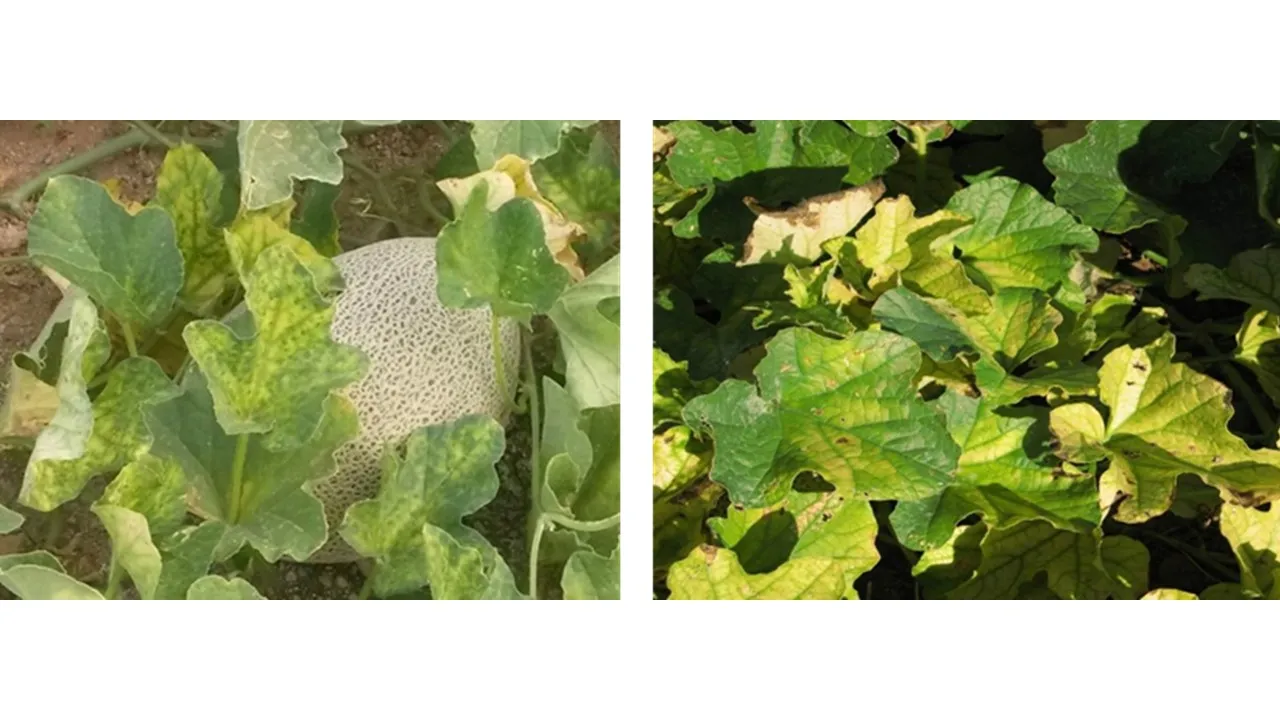
Figure 1. Cucurbit yellow stunting disorder virus (CYSDV) symptoms in melon. Picture credit: William M. Wintermantel, USDA-ARS, (ecucurbitviruses.org).
Watermelon Chlorotic Stunt Virus (WmCSV) - Primary Concern
What We Know
Origin: First detected in East Africa and the Middle East in the late 1990s; identified in Mexico (Sonora) around 2012, and in California/Arizona in 2023
Current prevalence: Dominant in fall infections (93% of plants sampled in 2024-2025), frequently found in mixed infections with CYSDV and CCYV
Host range: 26 plant species from 10 families can be infected, including alfalfa (Medicago sativa), tumble amaranth (Amaranthus albus), sowthistle (Sonchus oleraceus), puncture vine (Tribulus terrestris), saltbush (Atriplex spp.), purslane (Portulaca oleracea), nettleleaf goosefoot (Chenopodium murale), and London rocket (Sisymbrium irio). Most infected weeds and non-cucurbit hosts are symptomless.
Preferred hosts: According to authors’ findings in Imperial Valley (2025), WmCSV showed a strong preference for watermelon and melon, while squash and pumpkin were less susceptible.
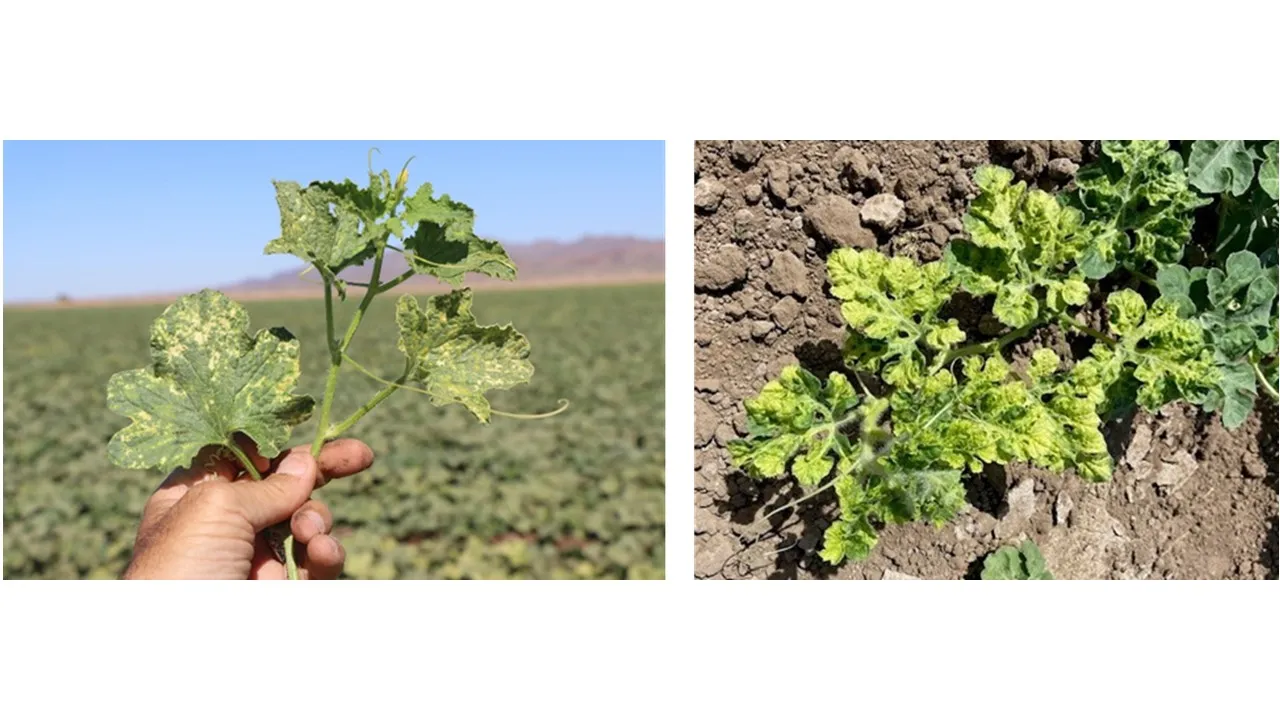
Figure 2. Watermelon Chlorotic Stunt Virus (WmCSV) symptoms in melon (left) and watermelon (right). Picture credit: John Palumbo, University of Arizona (left) and Suraj Gurung, Sakata (right), (ecucurbitviruses.org).
Squash Leaf Curl Virus (SLCuV) - New Concern
Re-emergence in 2025: In fall 2025, SLCuV was detected in Imperial, CA, after being absent since the 1990s.
Findings in Imperial Valley (October-November 2025)
All SLCuV-infected cucurbit plants were also infected with WmCSV. Many were also infected by either CYSDV or CCYV. Because mixed infections are common and result in variable symptoms, symptoms alone cannot be used to identify a virus. Molecular testing is necessary for diagnosis.
Squash: severe symptoms included stunting, upward curling, cupping, and yellowing of leaves typical of SLCuV infection (squash 3/3 very strong positives for SLCuV)
Pumpkin: severe symptoms included yellowing, crumpling, and distortion of leaves (3/5 very strong positives for SLCuV)
Watermelon: moderate symptoms included yellowing, curling, and distortion of leaves, accompanied by yellow mosaic symptoms typical of WmCSV (1/3 positive for SLCuV)
Melon: plants exhibited substantial stunting, yellowing, upward curling, and crumpling of leaves (0/3 positive or weak signals)
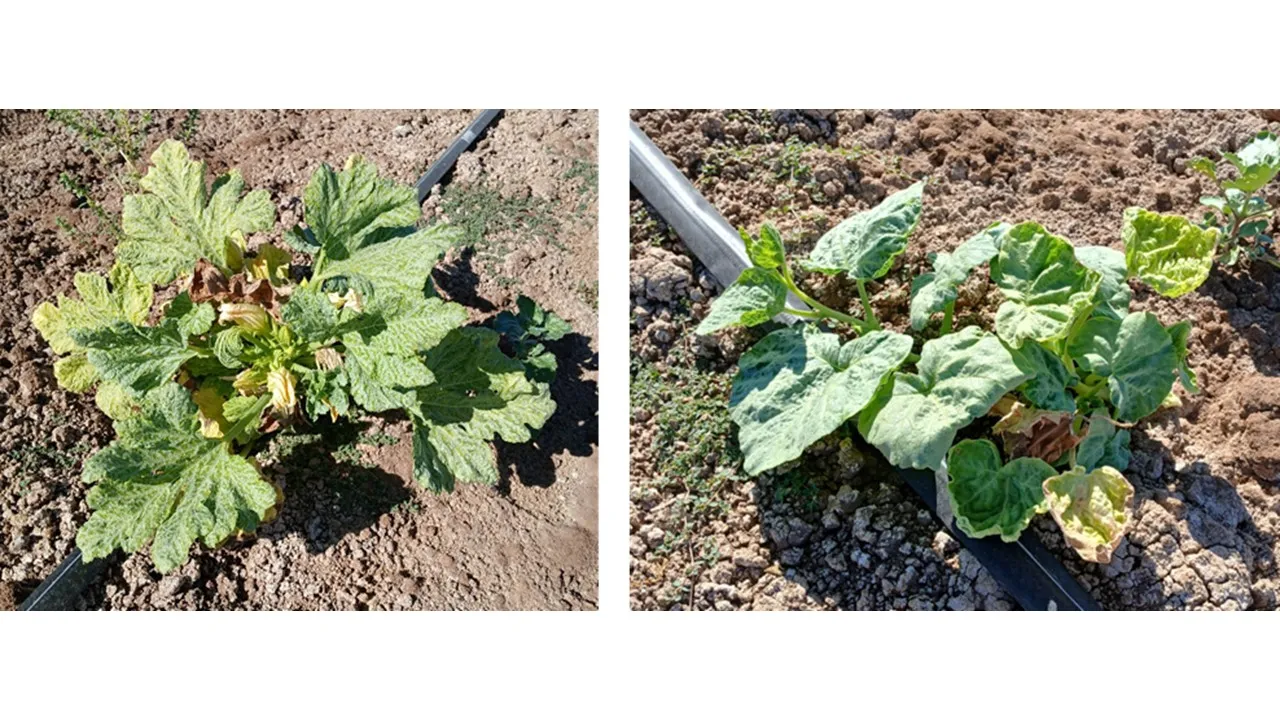
Critical Concern: Potential Synergistic Virus Interactions
The co-occurrence of WmCSV and SLCuV in the California and Arizona desert production region raises serious concerns based on research conducted in Israel, where both viruses are present following the introduction of SqLCV (squash leaf curl virus) in the early 2000s. Studies by Sufrin-Ringwald and Lapidot (2011) demonstrated that mixed infections with WmCSV and SLCuV resulted in synergistic interactions, reducing melon yields by 21-54% compared to single infections. Field surveys in Imperial Valley in Fall 2025 have already documented some plants with mixed infections of both viruses, often in combination with criniviruses. The potential for similar synergistic yield losses in California production systems necessitates careful monitoring of symptom appearance, severity, and consideration of this interaction in disease management planning.
Other Emerging Viruses
Watermelon crinkle leaf-associated virus, which exists in two forms (WCLaV-1 and WCLaV-2), was recently reported from the Yuma area (Murcia Bermudez et al., 2025). Whereas the economic impact of these viruses on melon and watermelon production remains unclear, a recent publication suggests that both of these viruses can be transmitted through seeds (Kauffmann et al., 2024), which may explain the rapid spread worldwide since their initial characterization of these viruses in China in 2017. The seed-transmission potential represents a distinct epidemiological pattern from that of whitefly-transmitted viruses and warrants further study to determine risk.
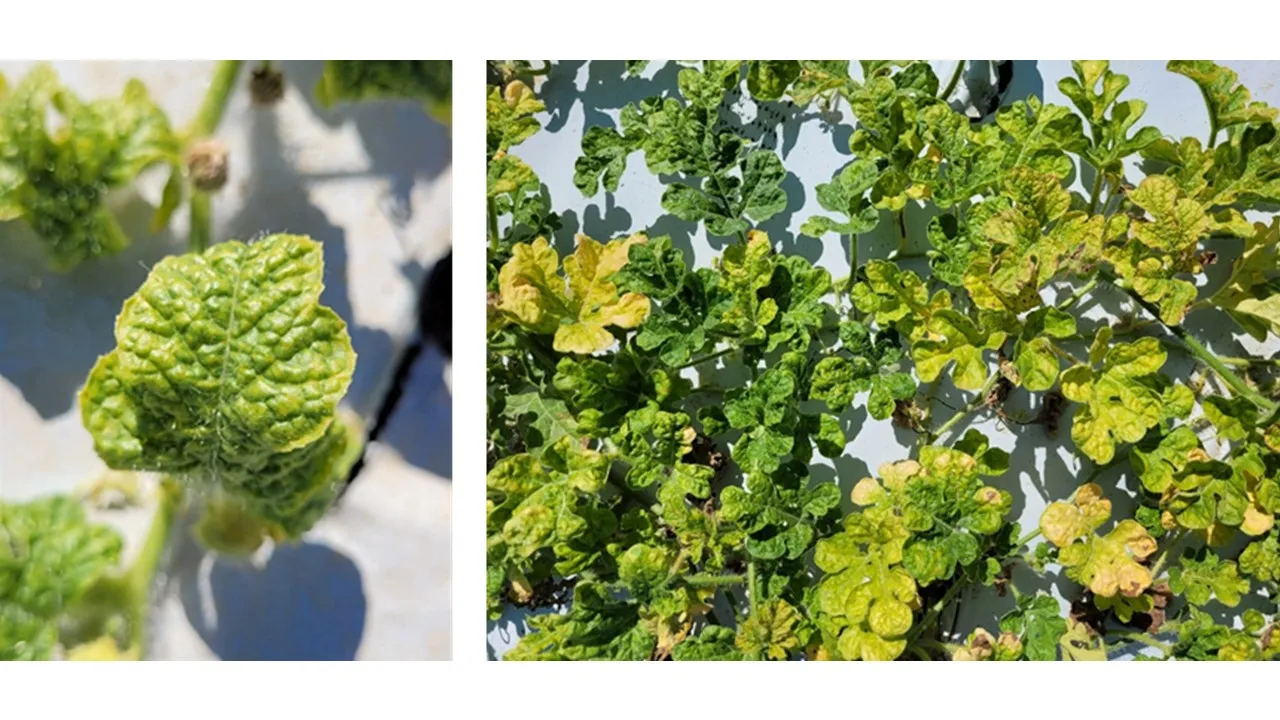
Figure 4. Watermelon Crinkle Leaf-associated Virus (WCLaV) in watermelon. Picture credit: Sudeep Bag, University of Georgia, (ecucurbitviruses.org).
Recommendations for Growers
Monitoring:
Be alert to symptoms of yellowing, crumpling, curling, stunting, and leaf distortion
Note if symptoms are more severe than in previous years (possible indicator of WmCSV + SLCuV synergism)
Report unusual symptoms to your UC Extension Plant Pathology advisor
Whitefly Management:
Whitefly management is CRITICAL - these viruses are all transmitted by whitefly (Bemisia tabaci MEAM1/Biotype B) à Early intervention is critical to keep populations low
Implement regular monitoring of whitefly populations: https://ucanr.edu/county/cooperative-extension-imperial-county/imperial-valley-areawide-pest-monitoring
Weed Control:
Eliminate weed hosts within and around fields, especially:
tumble amaranth (Amaranthus albus)
sowthistle (Sonchus oleraceus)
puncture vine (Tribulus terrestris)
saltbush (Atriplex spp.)
purslane (Portulaca oleracea)
nettleleaf goosefoot (Chenopodium murale)
London rocket (Sisymbrium irio).
Note: Many of these weeds show no symptoms but can serve as virus reservoirs from which viruses can be acquired.
Varietal Resistance:
Varieties with CYSDV resistance are beginning to become available for evaluation
IMPORTANT: CYSDV resistance is not effective for control of CCYV
Melon and watermelon germplasm is being evaluated for resistance to WmCSV
Planting Season:
Avoid very late fall plantings when whitefly populations are high
In spring, CCYV has traditionally been the most prevalent virus and is largely responsible for much of the yellowing in late spring melons, although since the emergence of WmCSV the prevalence of CYSDV and WmCSV in spring has increased.
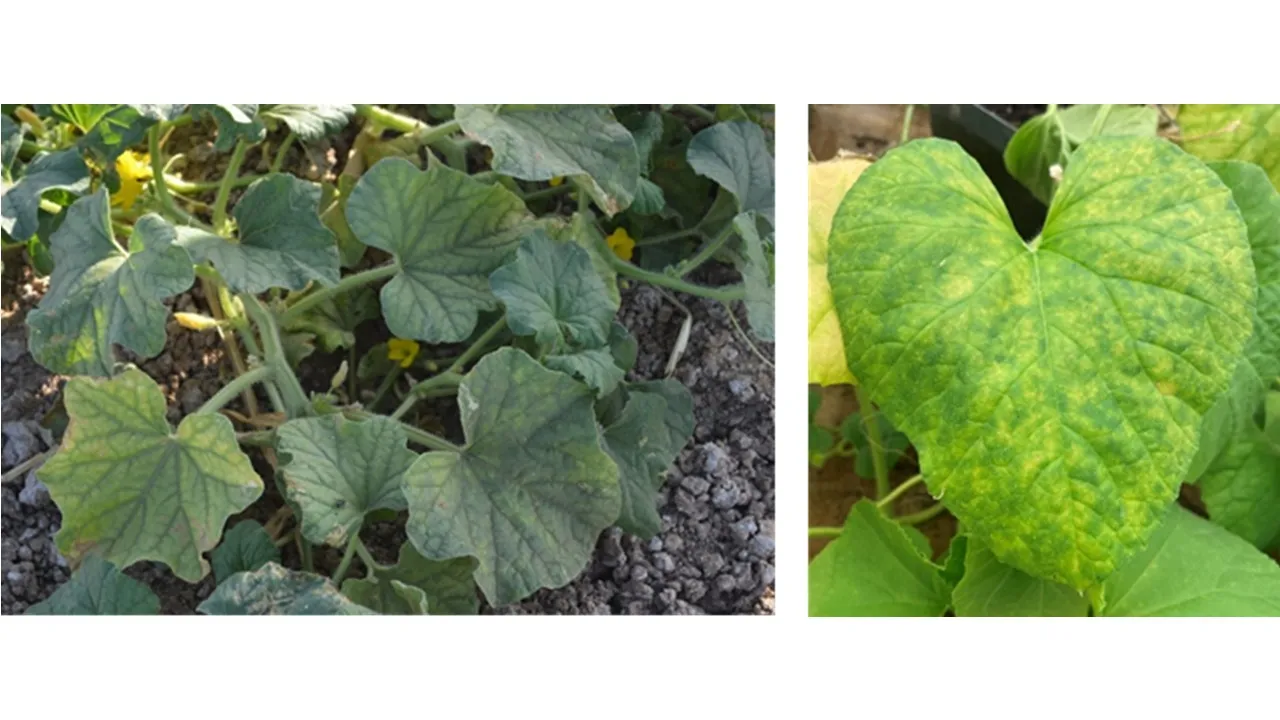
Figure 5. Cucurbit chlorotic yellows virus (CCYV) symptoms in melon. Picture credit: William M. Wintermantel, USDA-ARS, (ecucurbitviruses.org).
Ongoing Research
Researchers at USDA-ARS, UC Davis, UC Riverside, and UC Cooperative Extension continue working on:
- Development of multiplex detection methods to detect the whitefly-transmitted viruses simultaneously in a single test
- Characterization of the new SLCuV isolate
- Evaluation of melon lines for resistance to WmCSV
- Studies of virus interactions (Does WmCSV reduce CCYV competitiveness? Does it enhance CYSDV prevalence?)
- Identification of host plants that serve as reservoirs for whitefly transmission in the desert southwest area of the US
- Continued monitoring of virus incidence and prevalence in commercial crops and weed
If you observe symptoms consistent with these viruses in your cucurbit crops, please feel free to contact me at ampastranaleon@ucanr.edu or 442-977-5391. I would be glad to assist with sample collection and virus monitoring efforts.
References
Hagen, C., Rojas, M. R., Sudarshana, M. R., Xoconostle-Cazares, B., Natwick, E. T., Turini, T. A., & Gilbertson, R. L. (2008). Biology and molecular characterization of Cucurbit leaf crumple virus, an emergent cucurbit-infecting begomovirus in the Imperial Valley of California. Plant Disease 92(5):0781.
Kauffmann, C.M., Vendramini, M., Batista, A.M.V., Mota, H.B.S., Andrade, I.A., Cárdenas, S.B.S., Queiroz, P.S., Silva, B.A., Correa, J.R., and Nagata, T. (2024). Specific antibody production using recombinant proteins to elucidate seed transmission and nuclear localization of Coguvirus citrulli and Coguvirus henanense in radicles of watermelon crop. Journal of Virological Methods 325:114886.
Murcia Bermudez, J.M., Porchas, M., Gonzalez-Bello, D.A., Soto-Robles, R., and Poudel-Ward, B. (2025). First Report of Watermelon Crinkle Leaf-Associated Virus 1 (WCLaV-1) and (WCLaV-2) Infecting Citrullus lanatus in Arizona, U.S.A. Plant Disease 109(11):2448.
Sufrin-Ringwald, T., and Lapidot, M. (2011). Characterization of a synergistic interaction between two cucurbit-infecting begomoviruses: Squash leaf curl virus and Watermelon chlorotic stunt virus. Phytopathology 101(2):281-289.
Web Resource: https://ecucurbitviruses.org/