By Barbara Ott.
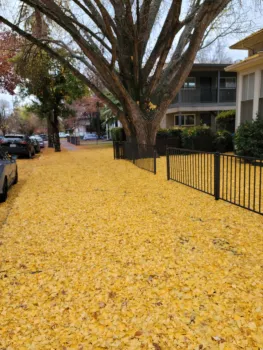
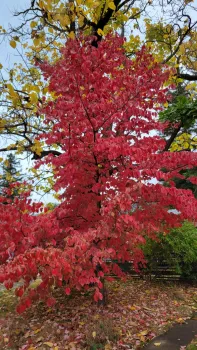
For many of us in the North State, Autumn is our favorite time of year. The heat of summer is past, and deciduous trees put on a spectacular show of deep reds, yellows, and oranges. The intensity of this show, however, is not consistently the same each year. What makes the colors of autumn leaves vary in depth of color from year to year?
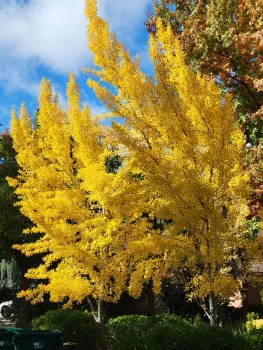
During the long days of summer sunlight, trees cast shade created by leaves that use sunlight to convert water and carbon dioxide into sugar. This is the process of photosynthesis, which feeds the tree and its leaves. Chlorophyll, responsible for the green color we see in leaves, is an important pigment that absorbs the light energy used in photosynthesis. As days grow shorter and temperatures begin to cool, trees respond by producing less chlorophyll, and photosynthesis slows and eventually comes to a stop. When that happens, pigments of yellow, orange and brown in the leaves (called carotenoids) begin to show through. Some trees produce pigments called anthocyanins in their leaves during the fall, creating red leaves.
A severe drought can delay the arrival of fall color by a few weeks. A dry fall with plenty of warm sunny days and cool nights contributes to vibrant late fall foliage.
Deciduous trees begin to release their leaves when cool temperatures trigger a hormone that sends a chemical message to the leaves to “let go.” Located where the leaf stem meets the branch is a thin bumpy line of microscopic cells called Abscission cells. These cells “cut” the leaf away from the stem when they receive that message. When the air moves them, these dangling leaves fall away. If the abscission cells do not develop, wind will not blow the leaves off. This is why some trees keep their brightly-colored fall foliage long after most other trees have dropped their leaves.
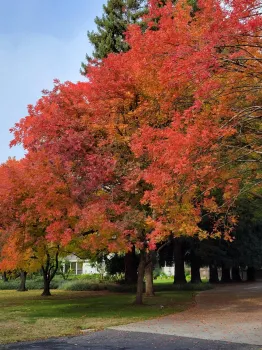
If deciduous trees keep their leaves permanently they don't have to grow new ones, but when winter weather has a warm streak, these leaves will start the photosynthesis process of making food and bringing water into the leaves. Then, when the cold weather returns, these leaves are caught with water in their veins, causing them to freeze and die. This can damage the tree.
The yellow, orange and brown carotenoid colors in leaves remain fairly constant from year to year. Carotenoid is always present under the chlorophyll and does not change in response to weather. But when a series of warm autumn days and cool non-freezing nights occurs, it's a good year for red fall foliage. The warmth allows the leaves to produce sugar through photosynthesis, but the cool nights prevent the sap from flowing through the leaf into the branches and trunk.
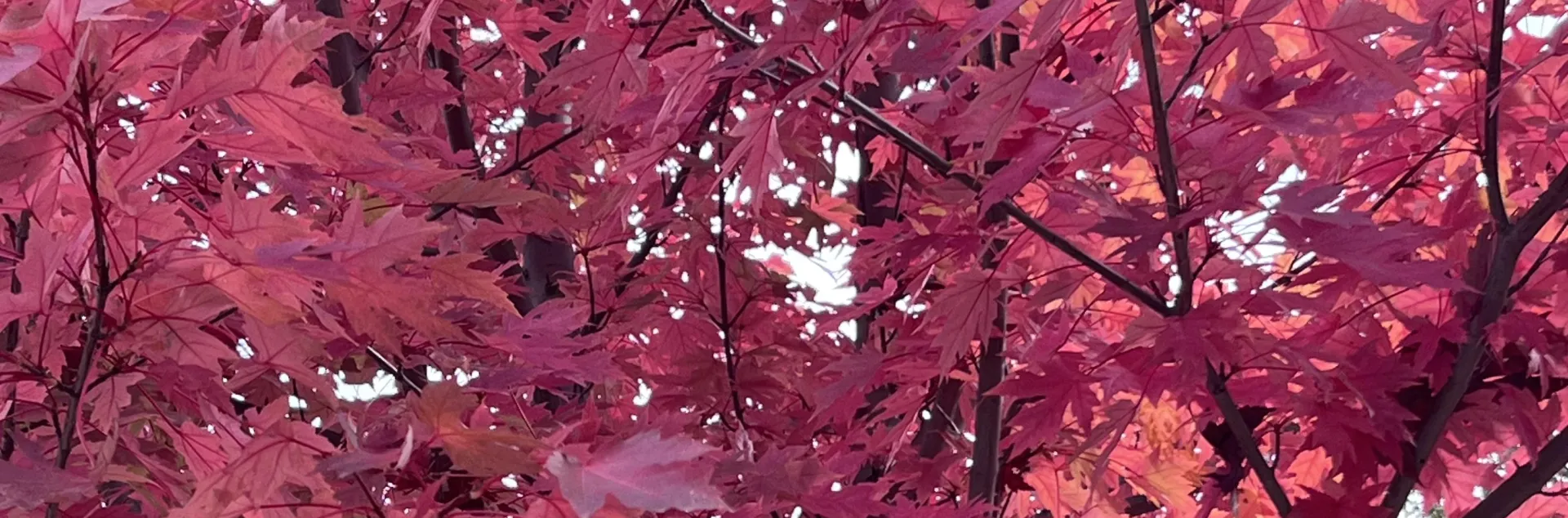
Scientists offer several reasons for why some trees produce the anthocyanin that leads to bright reds. Primarily, it seems that anthocyanins protect leaves from excess sunlight and enable trees to recover remaining nutrients. This helps trees prepare for the next growing season. Anthocyanins give leaves their bright shades of red and purple. So, thanks to the warm days and cool nights we had in the early weeks of October this year, we are enjoying a pretty good show of vibrant leaf color right now.
If you haven’t attended one of our Fall Workshops yet, it’s not too late! There are still spaces available for our workshop on Irrigation (November 17). For full descriptions of these upcoming workshops, and to register, visit our website. All workshops are free, but registration is required.
UC Master Gardeners of Butte County are part of the University of California Cooperative Extension (UCCE) system. To learn more about us and our upcoming events, and for help with gardening in our area visit our website. If you have a gardening question or problem, email the Hotline at mgbutte@ucanr.edu or leave a phone message on our Hotline at 530-552-5812. To speak to a Master Gardener about a gardening issue, or to drop by the MG office during Hotline hours, see the most current information on our Ask Us section of our website.