
By Kim Schwind.
It’s cold outside! But it’s not too soon to start thinking about the vegetable garden you’d like to have this summer, especially if you plan to start at least some of your edibles from seed. And chances are pretty good that your plans include tomatoes (which of course are technically fruits, but never mind that). If in the past you have tended to stick with tried-and-true varieties (like Big Boy, Better Boy, and Beefsteak), this might be a good year to branch out and try growing one or more heirloom varieties.
Heirloom tomatoes are open-pollinated varieties which were either introduced commercially before 1940, or grown from seeds that have been passed down at least 50 years through several generations of a family, religious, ethnic, or tribal group, without the plants crossing with another variety of the same species.
Seeds from an open-pollinated variety produce offspring that are identical to the parent plant. As long as cross-pollination can be prevented, seeds that are saved will produce identical tomatoes year after year. Seed saved from a hybrid tomato plant or from cross-pollinated plants will not generally grow true to type.
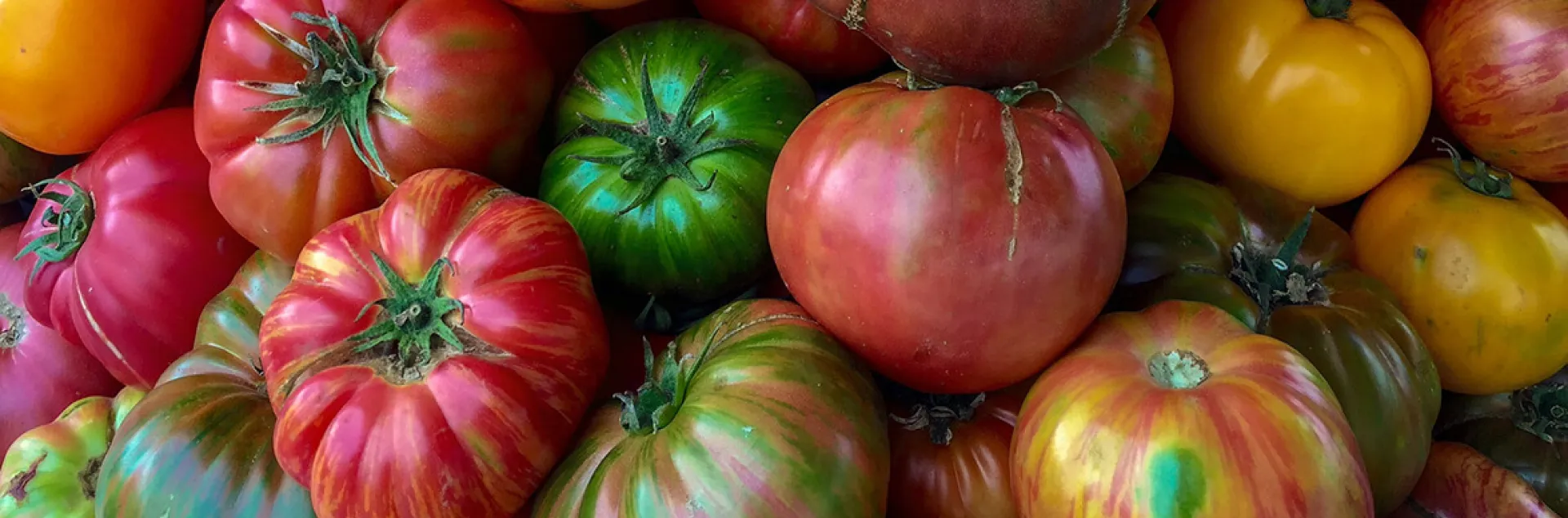
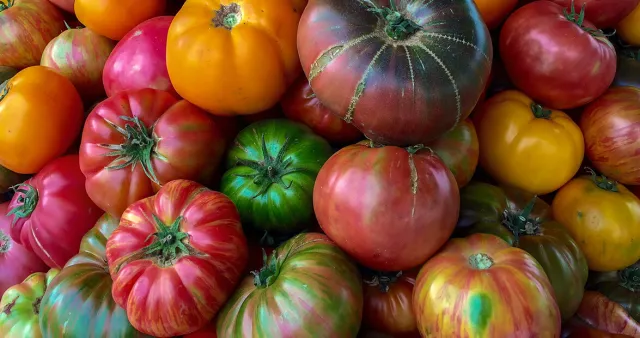
Heirloom tomatoes come in a multitude of sizes, shapes, colors, and flavors. In addition to red, they can be purple, yellow, green, orange, or pink, and they can even be striped or marbled. They also vary in shape (pear, oblong, round, oval) and size (from small grape-sized fruit to giant two-pounders). And heirlooms can have a long harvest season, producing fruit into fall if conditions are right.
Heirlooms have often been named along the way with quirky monikers like “Black Krim,” “Cherokee Purple,” “Missouri Pink Love Apple,” or “Hillbilly Potato Leaf.” If the seeds have been passed down within a family there is usually a written history about the variety. They may be mentioned in an old seed catalog, a state agricultural report, or a garden book or journal.
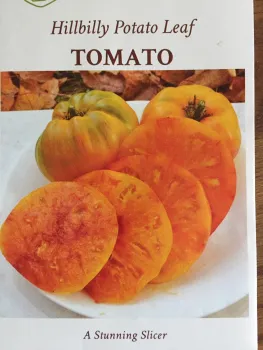
We grow them for their wonderful flavor, texture, and taste, but it is interesting to learn the stories that go along with each tomato. The person from the past that created a certain variety over 50 or 100 years ago reaches down, through time, to deliver the same tomato seed that we can plant from year to year in our own gardens. These unique stories are usually included along with the tomato’s description in seed catalogs or the back of seed packets.
For example the Dester Tomato is described in the Seed Savers Exchange catalog as “having been donated by Missouri farmer Larry Pierce, who received his seeds from an Amish woman in Seymour, Missouri. She originally got her seeds from a doctor she worked for whose family had brought the seeds with them from Germany.”
There are both determinate and indeterminate varieties of heirloom tomatoes. Determinate varieties are sometimes smaller plants that work well in containers. The fruit ripens all at once so they are good for batch projects like making tomato sauce for canning or freezing. Indeterminate tomatoes bloom and ripen at different intervals throughout the season and bear fruit for a longer period of time.
The Back Story
The tomato is a New World fruit, native to Mexico and Central America, where the Aztecs and Incas cultivated it as early as 700 AD. During the Age of Exploration in the 1500s it was introduced to Spain, Portugal, and Italy. In the mid 1800’s the tomato became a staple in kitchen gardens in the United States.
Over the next 100 years tomatoes were grown by home gardeners or by farmers for local markets. These tomatoes were fragile and did not travel well. Hybridization began commercially, in order to breed a tomato that could travel long distances. Hybrid tomatoes were developed for uniform shape and size and thicker skin. They were not bred for flavor. Hybrid tomatoes remain a major commercial crop; they are the tomatoes generally found in grocery stores today. They are picked greener for shipping and are often lacking in the best flavor and texture.
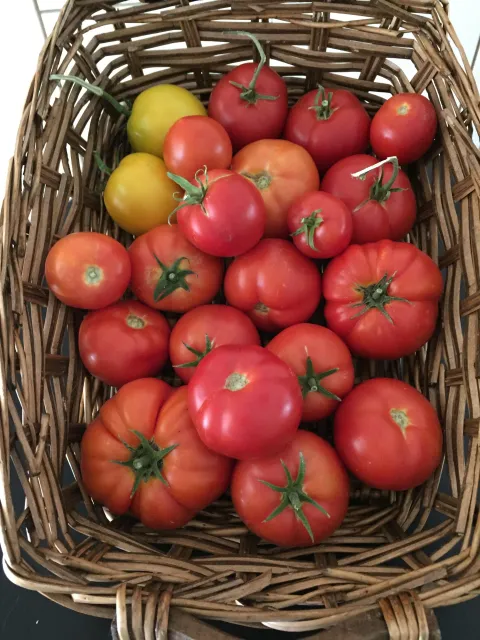
Consumers are starting to show interest in some of the old heirloom varieties that are full of flavor. During the summer months, heirloom tomatoes can be found in local farmers markets and in some grocery stores. They can also be planted in backyard vegetable gardens.
Cultivating Heirloom Tomatoes
There are some challenges with growing heirlooms. They can be less reliable than hybrids from year to year, and may produce less fruit. Their fruit can develop cracks in the heat, or be less disease resistant. They might produce well in one climate zone and not in another one.
Every heirloom variety is genetically unique and with this uniqueness is an evolved resistance to pests and diseases as an adaptation to specific growing climates and conditions.
Experiment and find what works well in your area.
You can find heirloom tomato starts in some local nurseries in the spring; popular varieties include “Brandywine,” “Jubilee,” and “Big Rainbow.” Or you can start your own plants from seed: heirloom tomato seed can be found in most seed catalogs or at your local seed saving exchange. The seed can be started indoors, in a sunny window, about six to eight weeks before the last frost (in Chico, a minimal chance of a last frost occurring is April 24th). Follow the directions on the seed packet. All tomatoes are a warm season crop. Transplant the seedlings deep into the ground when nighttime temperatures are consistently 50 degrees. The plants (especially indeterminate varieties) can get quite large, so it is recommended that the vines have some sort of support for their growth). Tomato cages, trellises, and stakes can provide good support.
Want to learn more about starting tomatoes from seed? Attend our upcoming workshop on Seed Starting (February 3), part of the Master Gardeners Spring Workshop Series. For more information on this workshop and the others in the Series, visit our website. All workshops are free, but registration if required.
UC Master Gardeners of Butte County are part of the University of California Cooperative Extension (UCCE) system. To learn more about us and our upcoming events, and for help with gardening in our area visit our website. If you have a gardening question or problem, email the Hotline at mgbutte@ucanr.edu or leave a phone message on our Hotline at 530-552-5812. To speak to a Master Gardener about a gardening issue, or to drop by the MG office during Hotline hours, see the most current information on our Ask Us section of our website.