
Article and photos by Peg Smith -
We wish you Happy Gardening in 2026!
We often set New Year’s resolutions in our lives at this time, some we achieve, some we move the needle on, and some fall by the wayside. In thinking of garden resolutions, we would encourage: to think ahead; plan; take small bites at large projects; preserve your energy and health; and most of all, take the time to sit or wander through the garden and enjoy its beauties, large and small. As gardeners, we often head out with great determination to achieve and get things done. We come back inside without taking that moment to relish our handiwork and appreciate that the microcosm we create benefits the earth, us, and all the creatures that make it their home, whether it is a few pots that brighten a balcony or acres.
Water
As I write this in late December after three weeks of dripping foggy days where temperatures changed little from highs to lows, hovering in the mid-forties, we are entering into a rainy forecast. Redwoods in the county would be happy with these foggy conditions as they collect up to forty percent of their water needs from the foggy moisture condensing and dripping from their branches. As the climate continues to change, trees and plants such as redwoods will struggle with the heat. As you plan additions to the garden, considering the water needs and heat tolerance are important considerations.
Check that your automatic watering system is set to manual operation or turned off. Dormant plants still need damp soil; if we enter an extended dry period, they may need a deep soak. Check pots to make sure they are watered regularly if sheltered by eaves. If they are waterlogged from dense rainfall, move to a more sheltered position.
In the rainy season, it is important to walk as little as possible in the garden, as well as soaked soil will compact with each step, reducing the air circulation in the soil and making root penetration harder for plants. A piece of board laid on the soil to walk on can be moved wherever needed; it will distribute weight more evenly while allowing access to the garden.
Winter Preparations
Be ready to protect frost-sensitive plants. Plastic, clear or black, is not recommended as a plant cover for frost protection as it cannot breathe and traps moisture. Old sheets and towels work well. Commercial frost-protecting materials are available. Make sure plants are well watered before a frost. Well-hydrated plants will survive a heavy frost more easily than a plant that is underwatered.
Smaller citrus trees are susceptible to a heavy frost; an old string of holiday lights can provide additional warmth overnight. The newer LED lights do not generate enough heat to be helpful. For more detailed information, see UC ANR’s publication on Frost Protection for Citrus and Other Subtropicals.
Check that the last fall of leaves is not obscuring the crown of plants and remove these. Other fallen leaves will contribute to soil health and provide overwintering shelter for ground bee nests and ladybeetles so limit the ‘cleaning up’ of leaves to where it matters, pathways, gutters, and drains.
Clean unused pots with a solution of bleach, one part bleach to nine parts of water. Turn pots and trays upside down so that water does not accumulate.
Clean up fallen branches, prune broken branches.
Winter is a good time to assess tools; do they need replacing, sharpening, cleaning, or adjusting? One consideration as we gardeners age is when to invest in ergonomically friendly garden tools so that we can continue the pleasure of gardening while preserving physical strength. Adjusting to an hour or two in the garden, breaking tasks into smaller parts with built-in rests will help maintain all the wonderful work invested in a garden without it becoming overwhelming.
Ornamentals and Annuals
January is prime rose pruning season. Here’s a helpful video to show the tools and techniques of pruning roses to get the best from these wonderful plants. How to Prune a Hybrid Tea Rose.
Some common cool-season perennials to plant are cyclamen, hellebores, daphne, and iberis. There are many delightful winter annuals available in varying colors that can be planted.
Common winter annuals – pansies, violas, snapdragons, calendula, and stock flowers.
Easy to seed annuals – love-in-a-mist, larkspur, foxgloves, alyssum, and borage. Nasturtiums can be seeded and do well in containers; trailing varieties are available for hanging baskets. Sweet peas will provide a showing if given a trellis to climb; there are many colors and scents. Many of these annuals will reseed for the coming years.
Hollyhocks are biennial, producing root and foliage in their first year, with flowers on tall spikes in the second year, and are worth the wait.
California annuals – California poppies can be seeded in a bare patch of the garden. Sprinkle the seed and rake very lightly, keep moist through dry periods. Tidy tips, baby-blue-eyes, tarweed (Madia elegans), and clarkia can be seeded into pots and then transplanted.
Many perennials, native and non-native, are available at this time of year. Planted no,w they will spend the rest of the winter developing healthy root systems before the heat of next summer.
The UC Master Gardener-Yolo County Free Garden Pubs & Pest Notes webpage has useful lists of shade plants, water-wise plants, and California Natives and others that will thrive in our region.
Diseases, Pests and Beneficials
Keep an eye out and remove any diseased plants. Before you place them in your compost, check with UCIPM to identify the disease. Home compost temperatures will not be hot enough to kill some disease fungal spores or bacterium.
Bulbs
Consider making 2026 the year of bulbs. There are bulbs, corms, and rhizomes that do well in Yolo County, blooming in summer and fal,l adding color and interest to the garden.
Here’s what you can plant in January:
- Calla (white) blooms in summer and fall, rhizome
- Calla (dwarf) blooms in summer and fall, rhizome
- Freesia blooms in summer, corm
- Hippeastrum, giant amaryllis, blooms in summer, bulb
- Iris – Dutch blooms in summer, bulb
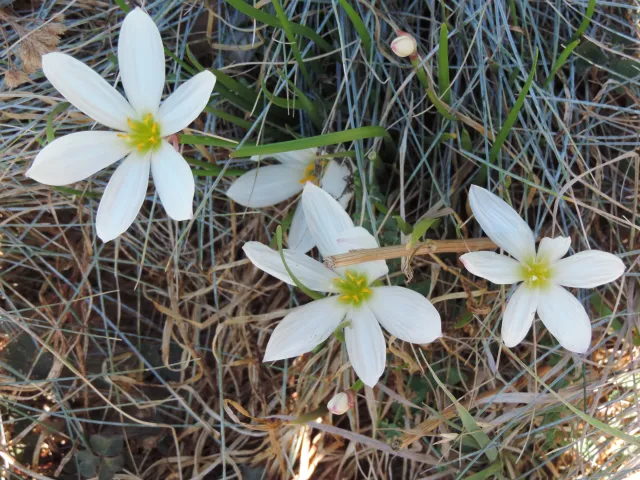
- Zephranthes, Argentine rain lily, blooms in summer and fall, bulb
Selections of bulbs can be found locally or ordered online and shipped at the appropriate time for planting in our area. The Sacramento Bulb Planting Schedule is a handy reference.
Fruits
Now is the time to choose the fruit trees to add; nurseries will have a good selection of varieties and cultivars available. An important consideration for stone fruit selection (peaches, nectarines, etc.) is the number of chill hours needed. Stone fruits require a certain number of chill hours while dormant to produce well. As climate change has affected the overnight temperature to a warmer pattern, a lower number of chill hours is preferable. Chill hour information can be found on the descriptor labels attached to the trees.
Leaves should be about finished on deciduous fruit trees. If you have already given your fruit trees a dormant oil spray (Neem oil), that’s a great start. Schedule a time in January or early February to repeat the spray. If you haven’t had time to dormant spray yet, schedule a dormant spray in January and a repeat dormant spray in early February. Many bacterial, fungal diseases, and pests will be controlled by a program of dormant spraying, usually two to three times over the winter months, once the trees are bare. Watch the weather and spray when the following twenty-four to forty-eight hours are rain-free.
Dormant fruit tree pruning encourages growth in the spring from buds just below pruning cuts. Pruning is an actual injury to the tree that exposes the interior cell structure of a limb to the elements. Several diseases that affect deciduous fruit trees are waterborne. Pruning is best done when the following forty-eight hours will be rain and fog-free so that the ‘injury’ of pruning can heal. It is not recommended to paint pruning cuts.
For more information, see these two publications from UC ANR: Fruit Trees: Training and Pruning Deciduous Trees and Winter Fruit Tree Care.
Citrus fruits (oranges, mandarins, etc.) are bountiful at this time of year. Depending on garden size limitations, it is possible to have a variety of citrus ripening throughout the year, something to consider for the home orchard. UC ANR has a handy chart - Citrus Ripening Time by Month.
Bareroot fruits available are blackberries, loganberries, raspberries, grapes, Kiwi, and rhubarb, which prefers afternoon shade.
Trees
If you are considering adding trees to the landscape, there are resources that can help guide your choices towards a ‘right tree, right place’ decision. Characteristics of a tree and where it is positioned in the landscape can make the difference between enjoying its addition to the garden or eventually finding it a nuisance. Another important aspect of the choice is whether it is ‘climate-ready’ for our region.
The City of Davis and the UC Davis Arboretum & Public Garden worked with CAL FIRE, Tree Davis, UC Agriculture and National Resources, USDA Forest Service, Redwood Barn Nursery, as well as several local tree experts to provide a list of Climate Ready Trees for our area.
The City of Woodland offers a Residential Street Tree Rebate along with an Approved Master Street Tree List.
The City of Winters also provides a Master Tree List.
By referring to these recommended tree lists, the selection of a tree of the height, canopy width, and characteristics to suit both the site and the aesthetic of the garden should give years of pleasure.
Soil Improvement
‘Green manure’ can still be seeded in any garden's bare spots. Vetch and red clover, with their attractive flowers, can be planted separately or mixed. They will replenish nitrogen in the soil through the winter and help prevent erosion. Fava beans are also a good cover crop.
UC ANR’s publication Winter Cover Crops for the Home Garden can give you more details.

January Vegetable Planting Guide
Click the thumbnail image on the right to open a PDF of Peg's January Vegetable Planting Guide. This guide will tell you which Yolo County and Sacramento area vegetables are recommended for planting during the month of January, along with how and when to plant them.