
One of the most common questions for Master Gardeners is ‘What’s wrong with my tomatoes?’
Here’s a general troubleshooting guide for tomatoes:
Weather
Tomatoes can be finicky, too hot or too cold, and fruit setting is delayed. If an extended period of summer heat is forecast, use an old sheet or shade cloth to cover your plants. Other causes of poor fruit set could be not enough sunlight or excess nitrogen (always follow the directions for fertilizer application).
Water
Consistency is the key. Deep soak one to two times a week, depending on the daytime high temperatures. Mulch the soil, a three to four inch layer of mulch helps reduce the evaporation of water from the soil and reduces soil temperature around the roots.
Pests
The tomato hornworm is the most common pest, a voracious feeder that devours both leaves and fruits. Although we may curse the damage done to tomatoes by the hornworm in its life cycle, after pupation and metamorphosis, a beautiful hawkmoth emerges. Check for small black particles of feces (frass) on tomato plants that are damaged by chewing. Examine the leaves closely, stems, and fruit above the frass. Small hornworms can be hard to see, remove and dispose of any found. Bt (Bacillus thuringiensis) is a bacterium that is environmentally safe for humans and animals and is most effective as a foliar spray when caterpillars are small.
PLEASE NOTE: After caterpillars consume Bt, they stop eating; this is true for all caterpillars. Confining any spray to tomatoes and avoiding spraying host plants for other butterfly and moth pollinators you wish to encourage in the garden.
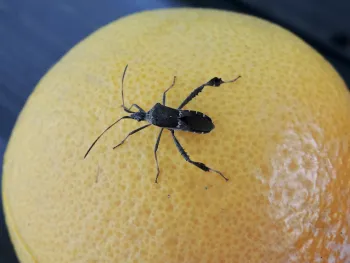
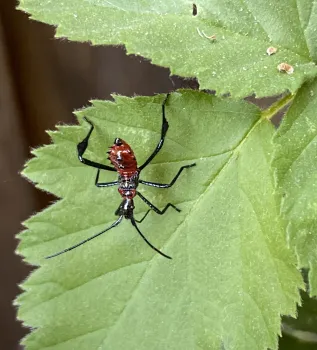
Yellow spots on ripe tomatoes usually indicate damage from the feeding mouth parts of stink bugs or leaf-footed bugs. Damage on green tomatoes appears as dark pinpricks surrounded by a light discolored area. The light discolored area turns yellow as the fruit ripens. Stink bugs and leaf-footed bugs emerge in spring. Clear old wood, ground cover, and weedy areas around vegetable growing areas in early spring to help control populations. The fruit is edible.
Soil-Borne Diseases
Leaves on a branch or stem may become yellow or brown, then wilt and die. This is usually caused by soil fungi that affect the vascular system of the plant, restricting the flow of water. There are two main culprits, Fusarium and Verticillium. When stressed with the heat of summer, plants cannot deliver water from the soil to the foliage and the damage becomes more evident.
Fusarium Wilt: Fusarium thrives in warm soil. Damage is usually noticed on one side or branch and spreads through the plant, which eventually dies.
Verticillium Wilt: Verticillium prefers cooler soil temperatures. Damage begins on older leaves; the yellowing first develops between the main stems of the leaves. With the heat of summer and fruit load, the plant will eventually die.
Both Fusarium and Verticillium are endemic in soils. Growing seeds or transplants that are labeled with V, F, or VF indicates that the variety is resistant to one or both fungi and should be more successful. Soil solarization (UV-resistant clear plastic over the soil, anchored at the edges, for six to eight weeks in summer) can be effective in reducing both Fusarium and Verticillium in the soil. Crop rotation is important; tomatoes, potatoes, peppers, and eggplant should not be grown repeatedly in the same soil. Rotate squash, corn, etc. with these vegetables. Any plants pulled showing signs of wilt should be discarded in the garbage. Because of the reduced foliage, fruits may develop sunscald, and the fruit may need trimming, but it is edible.
Nematodes are microscopic round worms that are present in the soil and feed on the roots of plants. Affected tomato plants may have reduced growth, lack vigor and wilt. Lower leaves will begin to turn yellow and brown. When pulled, the plant roots show small beads or swellings from the nematodes. Plants should be pulled and disposed of in the garbage. Some tomato varieties are nematode-resistant and will be labelled with ‘N’. Soil solarization will reduce the nematode population. Avoid planting nematode-susceptible vegetables such as tomatoes, potatoes, peppers, and eggplant in that area of soil. Brassicas, corn, and squash rotated with a cover crop of either buckwheat in the summer or legumes in the winter can, over time, reduce the nematode problem.
Blossom End Rot
There is a group of diseases called ‘abiotic’, meaning they are caused by conditions, not disease, often too little or too much of something. Blossom end rot begins as a small brown area where the flower has dried and dropped from the tomato. This area enlarges into a region of brown leathery tissue as the fruit ripens. The cause is a low level of calcium in the fruit; a contributing factor is the consistency of water availability during blossom set and fruit development. Our Yolo County soils are predominantly alkaline with plenty of available calcium. Calcium is moved through the plant more evenly and effectively when the soil moisture is consistently replenished. Deep soaking at regular intervals is preferable to a daily light surface watering and will help prevent blossom end rot. Excess fertilizer, especially an ammonia-based fertilizer, will interrupt the soil chemistry and alter the availability of calcium for uptake by the plants. The affected fruit is edible.
Support
Be sure to stake and support tomatoes as they grow. Good airflow and fruit lifted off the ground will reduce disease.
Weeds
Tackle the last of the spring weeds – you won’t regret it. By controlling weeds in spring, the flower heads do not mature and scatter viable seeds to add to the soil seed bank, ready to develop the next spring when conditions are prime.
Water
Now is the time to check drip or sprinkler irrigation systems. Watch for leaks and repair. This time of the year, irrigation needs can change if we have a prolonged warmer spell; adjust watering as needed.
Ornamentals and Annuals
Deadhead roses as they fade. Cut stems at a 45-degree angle ¼” above a grouping of five leaves on the outside of the stem; this promotes continued bloom. To attract pollinators to the garden, plant agastache, alstroemeria, bee balm, cone flower, coral bells, CA native fuchsia, honeysuckle, penstemon, and salvia. Chrysanthemums planted now will give fall color to the garden. It is not too late to plant perennial shrubs, trees, or vines. Water deeply and regularly to keep the soil moist for any first-year plants and they should handle the summer heat. As you walk the garden, cut spent blooms; this should promote continued blossom development.
Diseases and Pests
Keep a close watch for any damage from insects, slugs, or snails. To identify and treat a problem, refer to the UC IPM website, which describes the least environmentally toxic solutions.
Bulbs
As blooms fade on spring bulbs, deadhead (remove blossom stalks and finished blossom heads). Cut back bulb leaves to the ground as they yellow.
Bulbs, Tubers, and Rhizomes to Plant in May
Begonia (tuberous) - Best in containers. Lift tubers in the fall when leaves die back, store in a cool, dry place. Spring and summer bloom.
Dahlia (tuberous root) - Needs care to encourage large blooms, may need support, and can be susceptible to powdery mildew. Summer and fall bloom.
Zephranthes (Argentine lily) - Bulb. Low water, prefers periods of wet and dry. It will multiply to give a good showing of crocus-like flowers. Summer and fall bloom.
Fertilizing, Composting, and Mulching
Most plants will benefit from a spring application of compost or fertilizer. Always check the labels before applying. Excess nitrogen in the soil will stimulate rapid vegetative growth, which can be structurally weak, rather than fruit or bloom. Be sure to use the fertilizer recommended for each plant type. Follow the application and timing directions – more is not better!
To help control weeds and reduce soil moisture evaporation, apply a four-inch layer of mulch around plants and to cover open dirt. Watch for small holes in the dirt; they may be from ground-nesting bees. Wait and mulch that area later to allow the emergence of the next generation of native bees. For more information, refer to the Xerces Society article on Pollinator Conservation In Yards and Gardens.
Fruits
Squirrels may have already contributed their efforts to thinning the fruit on your trees. To thin the fruit load, remove fruit from apple, pear, peach, nectarine, and apricot trees, leaving about six inches between the remaining fruits. Fertilize citrus with a layer of compost or commercial fertilizer.
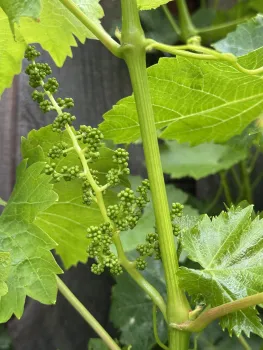
For grapes, May is a month for disease control (powdery mildew), canopy management, and bloom. Grape flower clusters are called ‘inflorescences’ and contain both male and female flower parts, so a single well-cared-for vine can produce an abundance of grapes. These inflorescences develop the previous year, so year-round care of vines is important. In canopy care, a balance is needed between allowing adequate foliage to support this year’s fruit and the replenishment of nutrients for next year’s growth and fruit, without the vine running amok. Removing unwanted shoots in May will help control the growth. Check the spurs on the vine, where two shoots come from the same spur. Keep the shoot with the inflorescence and pinch or prune off the vegetative or weaker shoots. May, with its weather conditions, is ideal for the development of powdery mildew on vines. The UC IPM has detailed information on what products, frequency and coverage to help control powdery mildew.
Vegetables
May is the ideal time to direct seed (about one inch deep) melons, cucumbers, summer squash, and winter squash. The seeds of these plants are large, easy to handle with fast germination and growth. If growing melons or winter squash on the ground, as the fruit develops, rest the fruit on a piece of board or layer of mulch to avoid any rot from direct soil contact. These plants can also be grown vertically on a simple trellis. As melons and winter squash become heavy, a simple sling of an old towel or torn sheet tied to the trellis will give added support. The big advantage of trellising these vines is that it allows more space for growing other vegetable favorites. Follow the golden rule of vegetable growing through our hot summer: deep, consistent watering, and a three-to-four-inch layer of mulch.
Good Growing!
Click the May Vegetable Planting Guide for a list of Yolo County and Sacramento area vegetables recommended for planting during the month of May, along with how and when to plant them.