
Questions About Honey Bees, Almonds, and the Pollination Industry
Article by Greg Wessels -
Small Bees, Big Industry
Last year, I attended the Almond Conference in Sacramento. Immediately upon entering the rather plain-looking double doors, I was struck by the scale of the floor space. Exhibitors represented a wide range of services, from insurance to heavy-duty farm equipment and technologically advanced sorting machines. As I was strolling around, I saw a particularly interesting piece of equipment. It was an AI-assisted robotic bee box designed to monitor and support a hive. It helps the bees warm up in the morning, allowing them to get a head start on the day. It also has a mechanism that can lift frames out of the hive while a camera scans the brood and adult bees to check for parasites. Any issue can be communicated directly to the operator, who can then respond or apply treatments remotely. If a pesticide application is about to commence, the boxes can be closed to limit contact between the bees and those pesticides. And if that's not enough for you, they are solar-powered as well.
Needless to say, I was impressed. I always had this idea in my head that beekeeping was a very traditional business. I imagined people in those netted hats holding a smoke can and puffing smoke around the bees before lifting a frame out and inspecting it in the sun. This really sparked my curiosity about how pollination is managed in modern agriculture. I realized that for equipment like this, even to be developed and deployed, the scale of managed pollination must be significant. I had to know more. So I spoke with various representatives in the pollinator industry, and our conversations raised some questions, the first being: just how large is the managed pollination industry in terms of hive numbers and economic value?
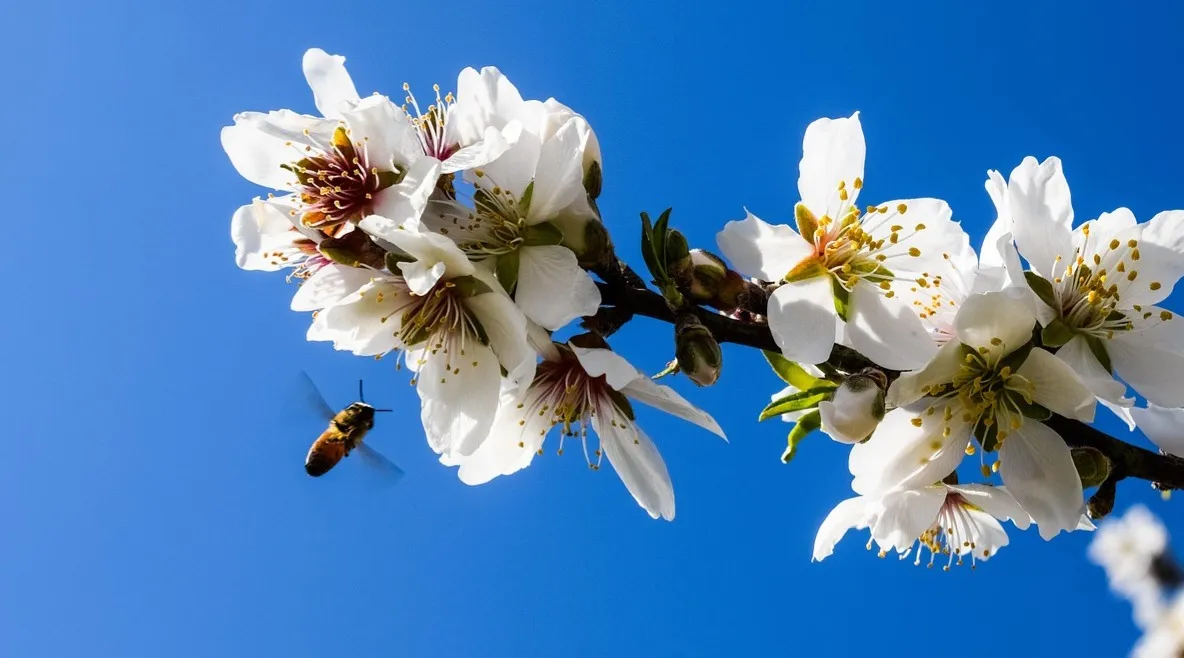
Conversations around the conference suggested that the Almond bloom in California is often described as the largest single agricultural pollination event in the world. That’s a lot of nuts.
Over the Hills and Far Away
Almonds, like many crops, bloom during specific seasonal windows. During this time, colonies of honey bees appear in orchards across California in large numbers. The bees do their work and are then moved to another region where a different crop is beginning to flower. In this way, the bees follow the seasons and the next crop in the blooming queue. Because the United States is such a large country with a wide variety of crops, the distances involved can be considerable. Almonds in California, citrus in Florida, apples in Washington, and sunflowers in the Dakotas all benefit from honey bee pollination. Which leads to another question: how far do bee hives travel?
Transportation distance is one aspect of this migration, but what about the method? Bees, like any other animal, respond to environmental conditions and handling. One can imagine the different conditions encountered when traveling from east to west across such a large country. Beekeepers likely take many steps to minimize losses and keep colonies stable during transport. So how are colonies transported between agricultural regions, and what considerations are involved in moving them safely?
A Buffet for Bees
After a long journey, the beehives have arrived in California. There is an abundance of food for them in the form of almond flowers. Specifically, bees feed on pollen and nectar provided by these blossoms, but the season is short. Once the blooming period ends, the bees will need to acquire food elsewhere.
This raises the next question: what forage resources are available to bees beyond the crop itself? Orchards give way to pastures, wildlands, roadsides, and home gardens, each with a range of flowering plants. How do these plants compare to almond flowers in terms of nutrition for honey bees? It also makes me wonder about the variety of available forage and whether certain combinations of flowering plants might provide different nutritional benefits for a colony.
Mites in the Hive
It is nearing the end of the season, and the bees have been well fed from almond flowers and likely a variety of cover crops like clover or brassicas, and perhaps some wildflowers as well. Unfortunately, honey bees, like any living creature, may encounter pests and diseases that affect colony health. One organism frequently discussed in beekeeping circles is the Varroa mite, a parasite that attaches to honey bees and reproduces within the hive.
These mites can weaken bees by feeding on their fat tissue and may also play a role in the spread of certain viruses within colonies. Because of this, they are often considered an important factor in honey bee health. This leads to another question: how do beekeepers monitor or manage pests such as varroa mites in traveling hives? And do feral honey bee populations experience similar pest pressures?
A System Worth Exploring
Reflecting on my conversations from the conference made me appreciate the complexity of this aspect of modern agriculture. The movement of honey bee colonies involves a series of interconnected factors—logistics, weather, regional ecology, scientific research, and colony health—all playing a role in how managed pollination services operate across a vast landscape.
As a curious gardener and insect enthusiast, I have always admired the humble honey bee. But these conversations have turned that admiration into fascination. It is my hope that these questions will spark your curiosity to look more closely at the systems that connect crops, ecosystems, and the bees that help sustain them.
Image by Dimitris Vetsikas, adapted, from Pixabay