Blog by Nanelle Jones-Sullivan
Horticultural therapy teaches that in the garden, metaphors can bridge nature and human experience. One of my favorite metaphors is used in a theory called “orchids and dandelions.” This theory by W. Thomas Boyce explains that “children fall into two categories: resilient 'dandelions' who thrive in most environments, and sensitive 'orchids' who are highly reactive to their surroundings, experiencing both the worst outcomes in negative settings and the best in supportive ones.”
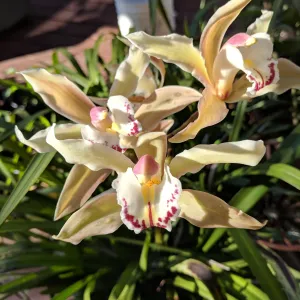
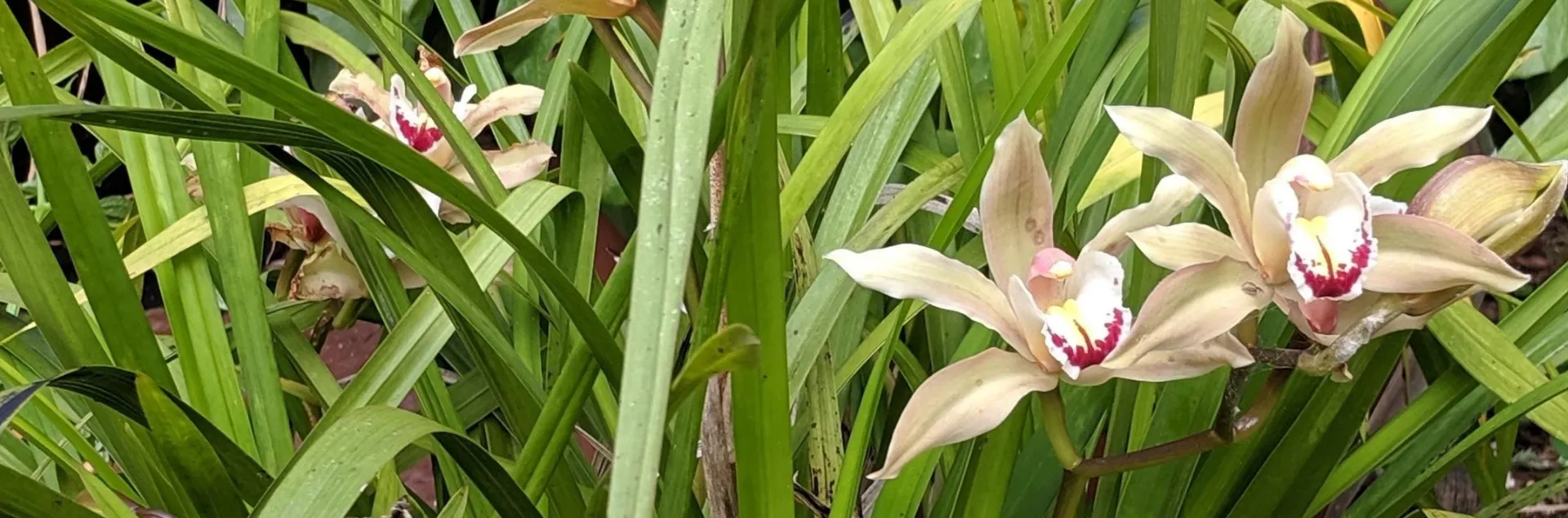
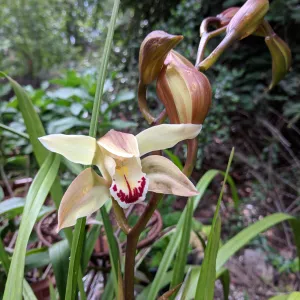
Of course, there are many kinds of kids, and many kinds of orchids. One of the more resilient ones is the Cymbidium or “boat orchids.” They have boat-shaped flowers and strappy leaves and are more cold-tolerant than many of the others. Their basic needs are well served by our Bay Area night and day temperature differences. The American Orchid Society Cymbidium culture sheet says, "To flower well, a temperature difference between night 50F-57F (10C-14C) and day 75F (23.8C) is required starting in the fall and remaining there or cooler through winter and spring”.
In my yard, I found this orchid not “sensitive,” but more of a “right plant, right place” situation. Mine was a “pass along” to me 25 years ago, and over time, I learned that because of our hot summers, it did best under my deciduous flowering plum; shaded from the sun in summer, plenty of sun in the winter. When I divided and moved it after many years of dependable flowers, it stopped blooming. Divided and moved, a few years later, it again found itself in the right place and has bloomed happily ever since. It blooms best when pot-bound and can be propagated by dividing parent (pseudo) bulbs.
A Great Outdoor Orchid for our Coast
Cymbidium: The Easy Orchid | Napa Master Gardener Column