
Blog by Brenda Altman
There are an amazing number of tree species in Vallejo, California. Within 2 miles of my house, there are at least 22 different species, including deciduous, non-deciduous, monocots, dicots, fruit trees, native, and nonnative species. Monocots that grow well here are palms, especially those that can thrive in cooler weather.
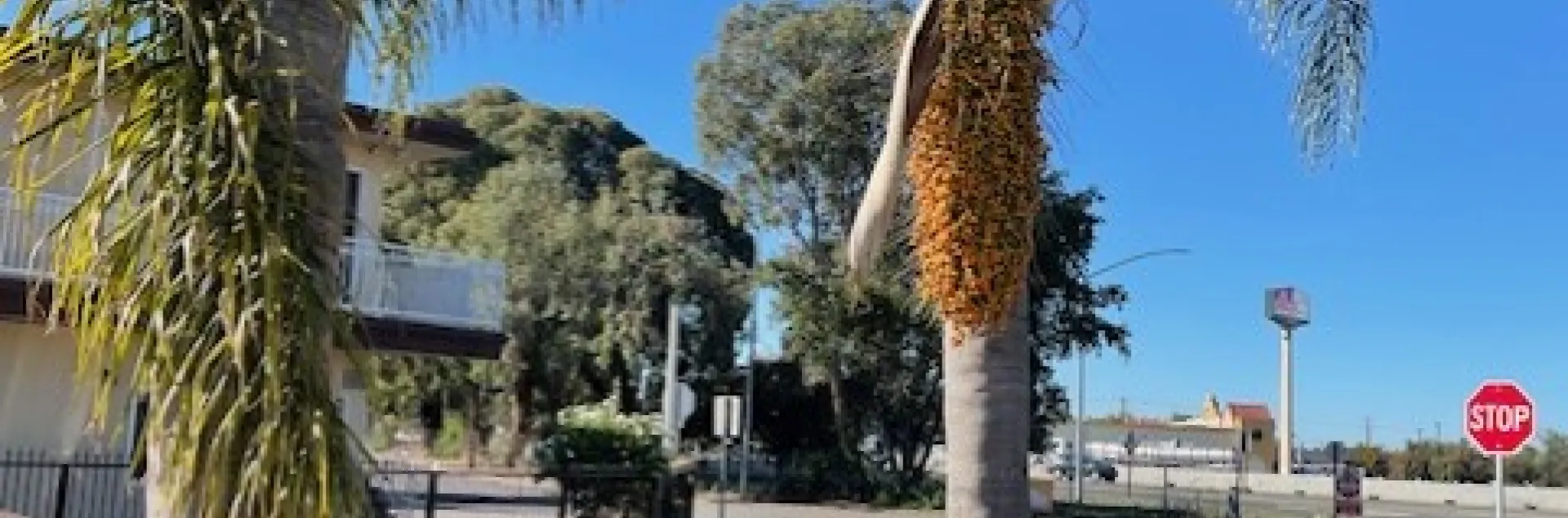
Enter the Jelly Palm, Butia odorata, or Pindo Palm. It is native to South America, hence one of its common names is the South American Jelly Palm. It’s a slow-growing palm that produces edible fruits. I was struck by the orange color and the way these fruits, in a mass of orange color, hung from these trees. It is a perennial with a long life span. Since it is a slow-growing monocot, it doesn’t have branches and needs little maintenance. It can reach a height of 15 to 20 feet. It produces showy white flowers attractive to pollinators such as bees.
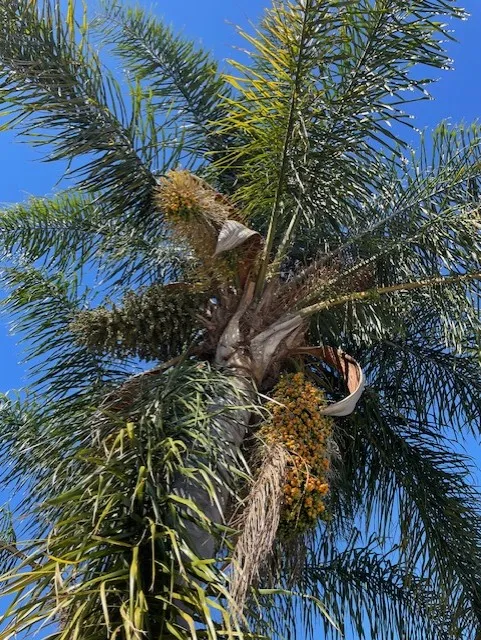
The fruit is edible, and it is rich in Vitamins A and C, and antioxidants. The fruits I’ve been told are mild and sweet and make a great tea. Not everyone eats the fruits. Talking to the owner, he had little knowledge of the tree, and he enjoyed it for its aesthetic beauty. He told me usually just cuts down the fruit. The fruit can make quite a mess. On a well-traveled sidewalk, people could slip and fall, so clean up is a necessity, but it is only once a year. I was tempted to take the fronds and experiment with making tea or jelly, but I should consult the Master Food Preservers to learn of safe preservation methods first.
It is a beautiful tree, and placing it in the right area on the lot will bring aesthetic beauty to your property. A well-maintained Pindo palm can add another $2,000 to $5,000 to your property value. It is considered non-invasive. Plant it well well-drained soil and avoid overwatering. Always consult an expert if your tree develops any problems.
Source
Butia odorata, https://www.plantids.com
Palm Diseases in the Landscape, https://ipm.ucanr.edu