Archive Nut, Prune and Olive Programs

Newsletters


 Newsletter Articles:

May 2025Archived


Field picture submitted by Elizabeth Fichtner

 Links


Publications

Primary Image
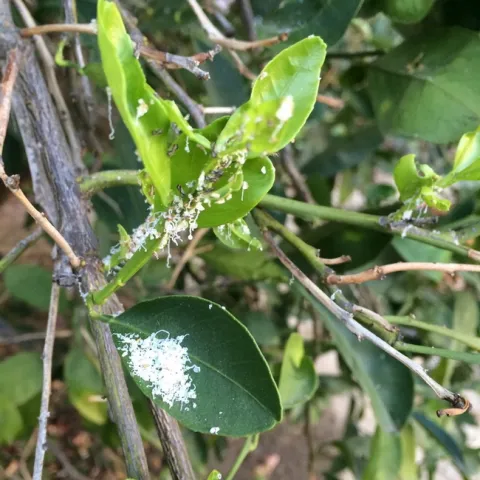
ACP nymph wax
Topics in Subtropics: Article

Area-wide Asian Psyllid Treatments in Ventura

October 27, 2015
By Ben A Faber
On Aug. 30, Ventura County's citrus growers, pest-control advisers (PCAs) and pest-control operators (PCOs) embarked on the most ambitious program of Asian citrus psyllid suppression in commercial groves ever undertaken in California.
View Article
Primary Image
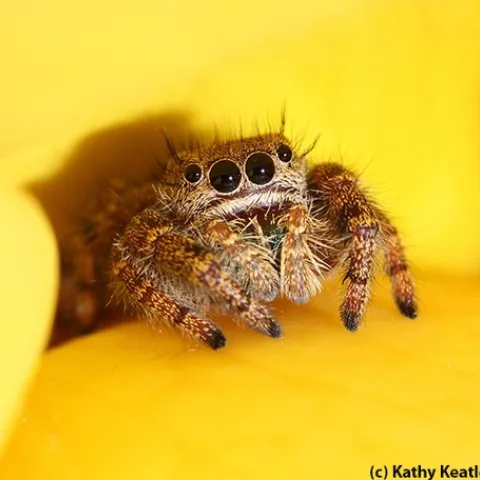
A jumping spider peers out between the petals of a yellow rose. (Photo by Kathy Keatley Garvey)

Stop and Smell the Roses...

October 26, 2015
By Kathy Keatley Garvey
Stop and smell the roses. Yes, we should all do that. We should take time out of our busy schedules to appreciate the beauty of nature, the beauty of roses, the beauty of a single yellow rose. But sometimes there's a bonus in those roses, depending on whether you like jumping spiders or honey bees.
View Article
Primary Image
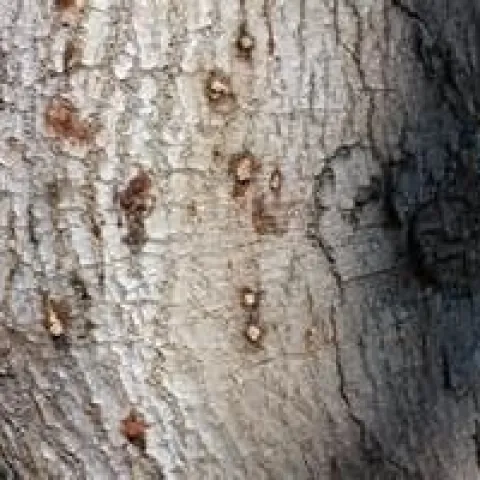
PSHB damage
Topics in Subtropics: Article

Shot Hole Borer on the Move

October 26, 2015
By Ben A Faber
A note from UC Riverside Plant Pathologist, Akif Eskalen Hello, We just confirmed that the riparian forest in the Tijuana river valley in San Diego is infested with Kuroshio Shot Hole Borer.
View Article
Primary Image
A newly released (Oct. 23) male monarch butterfly lands on a ginkgo tree. (Photo by Kathy Keatley Garvey)

The Place to Be Oct. 24: UC Davis Arboretum Plant Sale

October 23, 2015
By Kathy Keatley Garvey
So, you're looking for some host plants to attract butterflies, like monarchs and pipevine swallowtails? You're yearning to see monarch eggs, caterpillars and chrysalids on milkweed. Ditto for the pipevine swallowtails on their host plant, Dutchman's pipe.
View Article

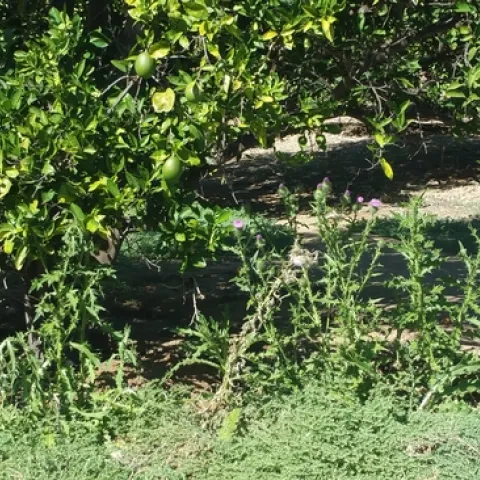
Weed control in subtropical tree crops

October 23, 2015
By Sonia I Rios
Control of weeds has always been a major economic cost in subtropical fruit production because of favorable climate that allows for weed germination and year-round growth.
View Article
Primary Image
20150930 150004
Topics in Subtropics: Article

Weed Control in Subtropical Tree Crops

October 22, 2015
By Sonia I Rios
Control of weeds has always been a major economic cost in subtropical fruit production because of favorable climate that allows for weed germination and year-round growth.
View Article
Primary Image
Two honey bees compete for floral resources as they forage on a Japanese anemone in the Luther Burbank gardens, Santa Rosa. (Photo by Kathy Keatley Garvey)

Share and Share Alike...

October 22, 2015
By Kathy Keatley Garvey
Honey bees were all over the Japanese anemone (Anemone hupehensis) on Monday, Oct. 19 at the Luther Burbank Home and Gardens, Santa Rosa. They just could not get enough of the colorful flower, also known as a windflower or thimbleweed.
View Article
SJC and Delta Field Crops: Article

Rainfed Farming Resources

October 22, 2015
By Michelle M Leinfelder-Miles
California agriculture is successful, in large part, because of the Mediterranean climate and irrigation infrastructure. While irrigating crops is the norm, there are growers who practice dryland, or rainfed, farming. These growers utilize winter rainfall to produce the crop.
View Article
IGIS: Article

GIS Day 2015! Happy 10th Birthday to the GIF

October 21, 2015
By Maggi Kelly
You are all welcome to visit us at the Geospatial Innovation Facility for this years GIS Day Celebration on Wednesday, November 18th. This years event is co-hosted by the GIF and BayGeo (formerly the Bay Area Automated Mapping Association, or BAAMA).
View Article
Primary Image
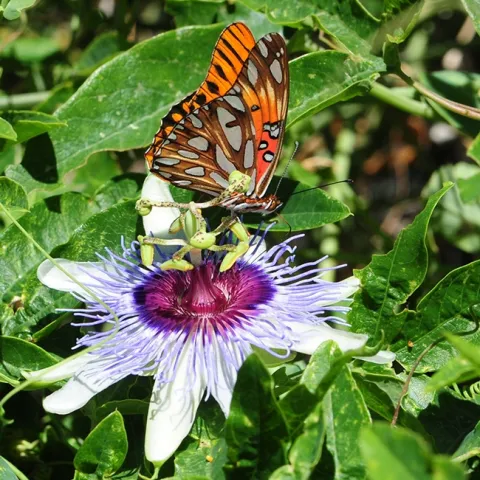
A Gulf Fritillary (Agraulis vanillae) lands on a passioinflower blossom. (Photo by Kathy Keatley Garvey)
Bug Squad: Article

Strange Weather We're Having

October 21, 2015
By Kathy Keatley Garvey
Strange weather we're having here in Central California. After soaring into the 90s, the temperatures pushed again into the 80s today (Oct.21). The Gulf Fritillaries (Agraulis vanillae) are "making the most-est" of their host plant, passionflower vines. Blossoms keep popping up like so much popcorn.
View Article