Archive Nut, Prune and Olive Programs

Newsletters

 Newsletter Articles:

May 2025Archived
Field picture submitted by Elizabeth Fichtner

 Links

Publications

Primary Image
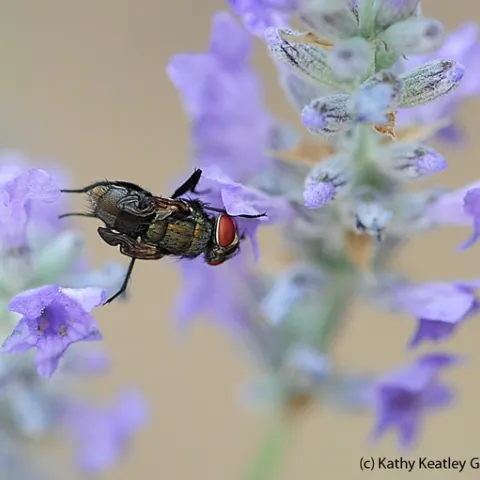
Newly emerged green bottle fly nectaring on lavender. (Photo by Kathy Keatley Garvey)
Bug Squad: Article

A Newly Emerged Green Bottle Fly

June 18, 2013
By Kathy Keatley Garvey
Flies are pollinators, too. It's appropriate during National Pollinator Week to remember that. We spotted this newly emerged green bottle fly (below) nectaring on lavender last week in our yard. It seemed out of place among the honey bees, leafcutter bees and carpenter bees working the blossoms.
View Article
UC Weed Science (weed control, management, ecology, and minutia): Article

Tomatoes, viruses, winds and weeds

June 18, 2013
According to a previous ANR blog post, the 2013 processing tomato crop in California is experiencing worse-than-usual curly top problems, which is caused by a complex of Beet Curly Top Viruses (BCTVs) (Processing tomatoes face critical threat: curly top).
View Article
Primary Image
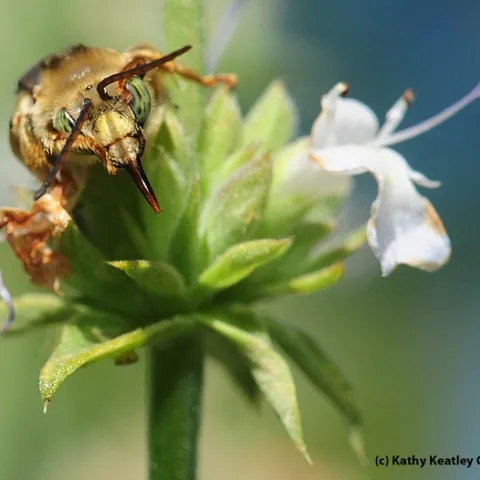
Male long-horned bee, genus Melissodes, probably Melissodes communis, as identified by Robbin Thorp. It is on salvia (sage). (Photo by Kathy Keatley Garvey)
Bug Squad: Article

Long-Horned Bee

June 17, 2013
By Kathy Keatley Garvey
We have long-horned cattle and long-horned grasshoppers.
View Article
Primary Image
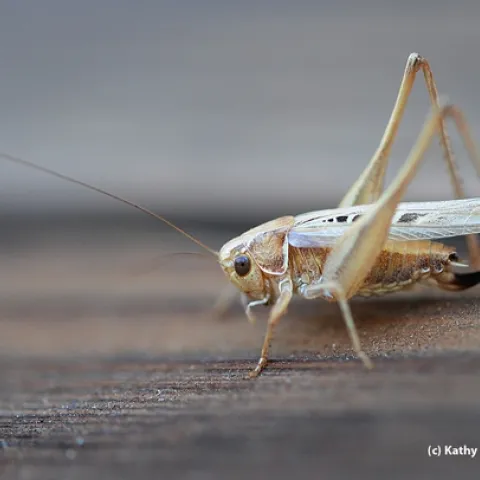
A katydid, or "long-horned grasshopper," from family Tettigonliidae. (Photo by Kathy Keatley Garvey)
Bug Squad: Article

Hop to It!

June 14, 2013
By Kathy Keatley Garvey
What's that hopping on our patio? At first we thought it was a grasshopper.
View Article
UC Weed Science (weed control, management, ecology, and minutia): Article

Poison Hemlock Widespread in California

June 14, 2013
By Cheryl A Reynolds
Poison hemlock, Conium maculatum, was brought from Europe into the U.S. as an ornamental in the 1880s and now occurs throughout North America. In California it is most commonly found at lower elevations and coastal regions but it is continuing to spread into other areas.
View Article
Primary Image
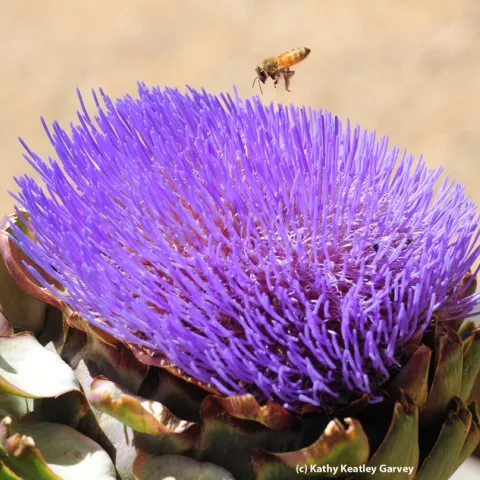
Honey bee heads toward a flowering artichoke. (Photo by Kathy Keatley Garvey)
Bug Squad: Article

Purple Forest

June 13, 2013
By Kathy Keatley Garvey
Flowering artichokes indicate one of two things (1) someone never bothered to harvest them or (2) someone loves bees. We let our artichokes flower. So does the Hagen-Dazs Honey Bee Haven, a half-acre bee friendly garden on Bee Biology Road next to the Harry H. Laidlaw Jr.
View Article
Primary Image
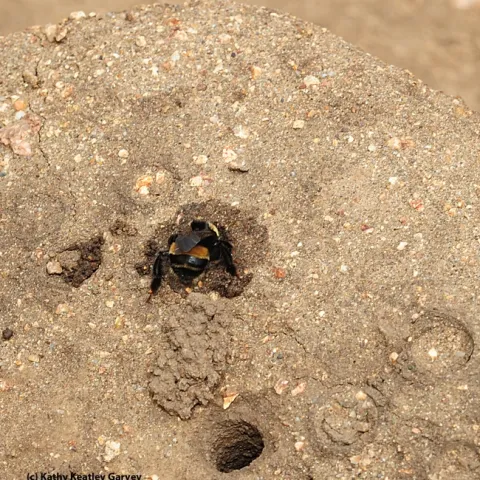
A female digger bee finishes her nest. (Photo by Kathy Keatley Garvey)
Bug Squad: Article

The Overlooked Bees of Bodega Head

June 12, 2013
By Kathy Keatley Garvey
Those who hike the trails of Bodega Head, a small promontory in Sonoma County overlooking the Pacific Ocean, enjoy the colorful wildflowers, the roaring ocean, and a sheltered sandy beach. They picnic. They play. They pose for photos. But there's one thing they don't do.
View Article
Primary Image
chemigation
Topics in Subtropics: Article

Chemigation Injection Devices

June 12, 2013
By Ben A Faber
Chemicals are often injected through irrigation systems, hence the name chemigation. When applied to fertilizers, it is called fertigation.
View Article