Archive Nut, Prune and Olive Programs

Newsletters

 Newsletter Articles:

May 2025Archived
Field picture submitted by Elizabeth Fichtner

 Links

Publications

Primary Image
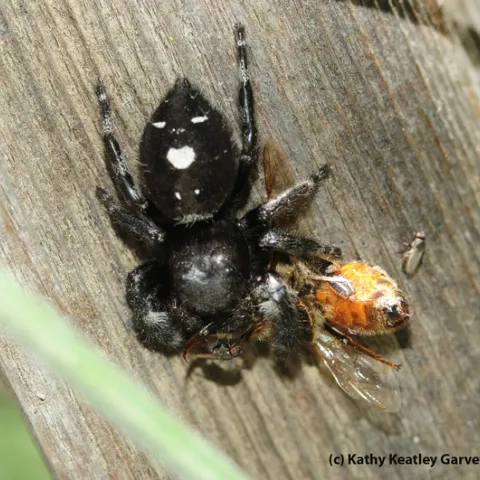
Jumping spider eating a honey bee. (Photo by Kathy Keatley Garvey)
Bug Squad: Article

The Predator

July 6, 2012
By Kathy Keatley Garvey
I know. Jumping spiders have to eat, but do they have to snag the bees? Last weekend as we were checking the lavender patch in our yard, we noticed something partially hidden--and moving--on a post. It was a jumping spider eating a honey bee.
View Article
UC Weed Science (weed control, management, ecology, and minutia): Article

Last day to receive a DISCOUNT on Weed Day 2012

July 6, 2012
By Gale Perez
If you havent registered for Weed Day 2012, today is the LAST DAY to receive the early-bird DISCOUNT on the registration fee. To register, click HERE.
View Article
Primary Image
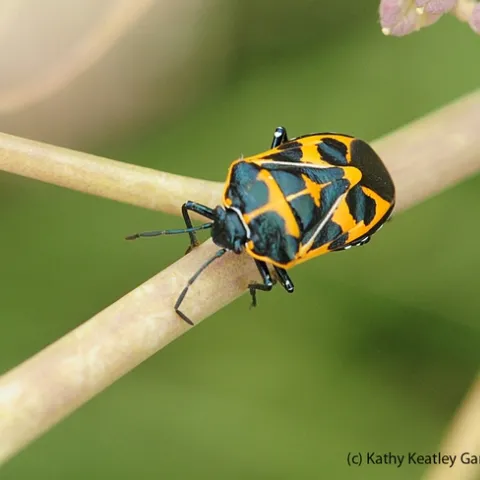
Harlequin bug, Murgantia histronica, on weeds at the Benicia Marina. (Photo by Kathy Keatley Garvey)
Bug Squad: Article

This Bug Is Not Welcome

July 5, 2012
By Kathy Keatley Garvey
It boasts striking colors, but you don't want this bug anywhere near your garden. It sucks. Literally. This is a harlequin bug, Murgantia histronica, as identified by Lynn Kimsey, director of the Bohart Museum of Entomology and professor of entomology at the University of California, Davis.
View Article
Primary Image
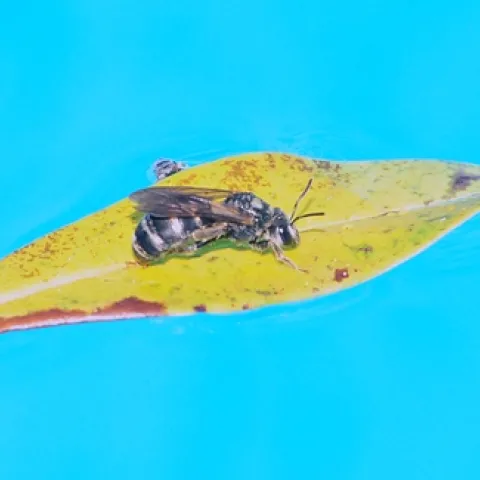
Summertime...and the living is easy...A female sweat bee, genus Halictus, floats on a leaf in a swimming pool. (Photo by Kathy Keatley Garvey)
Bug Squad: Article

Summertime...and the Livin' Is Easy

July 4, 2012
By Kathy Keatley Garvey
Today's the Fourth of July and folks are splashing in their pools. So, what happens when a bee falls in? Sometimes they get lucky--if there's a human around to rescue them. And sometimes their luck extends to a floating leaf. This tiny female sweat bee, genus Halictus (probably H.
View Article
Primary Image
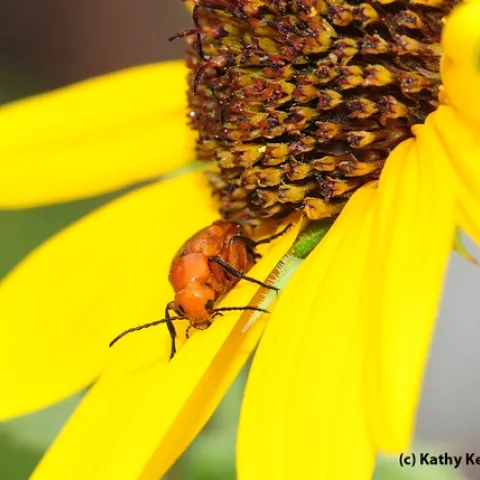
Meloid blister beetle, which produces a toxin known as cantharidin, peers at the camera. (Photo by Kathy Keatley Garvey)
Bug Squad: Article

Caution: Toxic!

July 3, 2012
By Kathy Keatley Garvey
It was a reddish-orange beetle, moving a little but not a lot. We spotted it on a sunflower bordering the Avant Garden in Benicia.
View Article
Primary Image
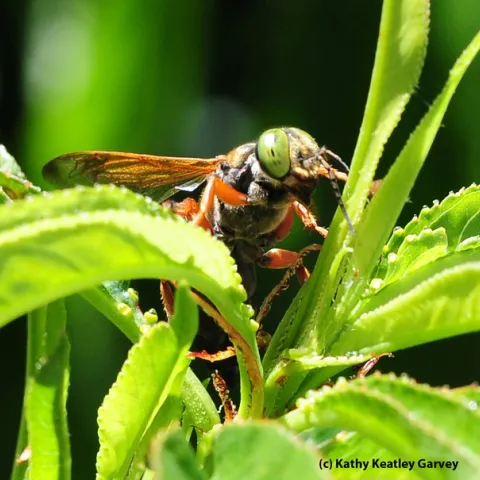
Green-eyed wasp, genus Tachytes, in a nectarine tree. This one is a female, as identified by Lynn Kimsey, director of the Bohart Museum of Entomology. (Photo by Kathy Keatley Garvey)
Bug Squad: Article

Green-Eyed Gal

July 2, 2012
By Kathy Keatley Garvey
We saw her touch down in our nectarine tree last weekend. Big green compound eyes glowed at us. She moved up and down a branch, foraging for food, and then took off. A wasp. The carnivore cousin of the vegetarian honey bee. They belong to the same order, Hymenoptera.
View Article
Cooperative Extension Ventura County: Article

July/August 2012 Clover Lines

July 2, 2012
In this issue... State Field Day Wrap-Up, Cross-Clubbing, Volunteer Opportunity for Adults through 4-H at Hansen Ag Center, Using Facilities, Iron Chef and much more...
View Article
UC Weed Science (weed control, management, ecology, and minutia): Article

WANTED: Cooperative Extension Weed Science Specialist

July 2, 2012
By Gale Perez
University of California, Riverside--Cooperative Extension Weed Science Specialist The Department of Botany and Plant Sciences invites applications for an Assistant Cooperative Extension Weed Specialist (11-month tenure-track, 90% CE, 10% OR).
View Article
Primary Image
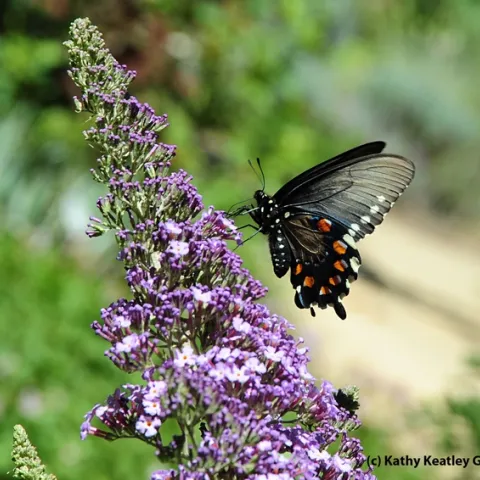
Pipevine swallowtail visiting the Storer Garden, UC Davis. (Photo by Kathy Keatley Garvey)
Bug Squad: Article

Pray Thee Well

June 29, 2012
By Kathy Keatley Garvey
When I last met up with a pipevine swallowtail, it wasn't faring well. In fact, I didn't recognize it as a pipevine swallowtail (Battus philenor), no thanks to it being in the clutches of a hungry praying mantis.
View Article
Primary Image
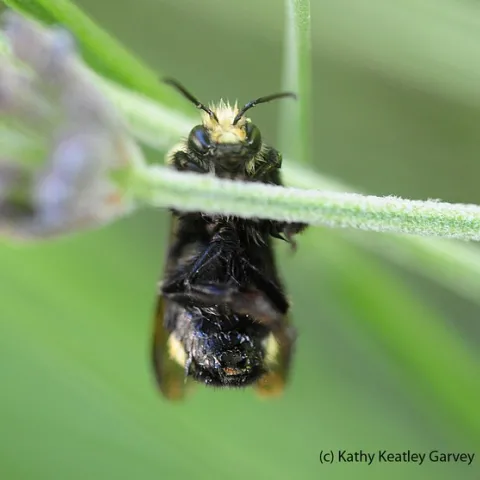
Male yellow-faced bumble bee, Bombus vosnesenskii, appears to be doing a chin up. (Photo by Kathy Keatley Garvey)
Bug Squad: Article

Training for the Olympics?

June 28, 2012
By Kathy Keatley Garvey
Training for the Olympics? If you step into your garden in the early morning, you might see a male bumble bee sleeping on one of your plants. The females return to their nests at night, but the males don't. They stage slumber parties, aka sleepovers, on your plants.
View Article