Archive Nut, Prune and Olive Programs

Newsletters

 Newsletter Articles:

May 2025Archived
Field picture submitted by Elizabeth Fichtner

 Links

Publications

Primary Image
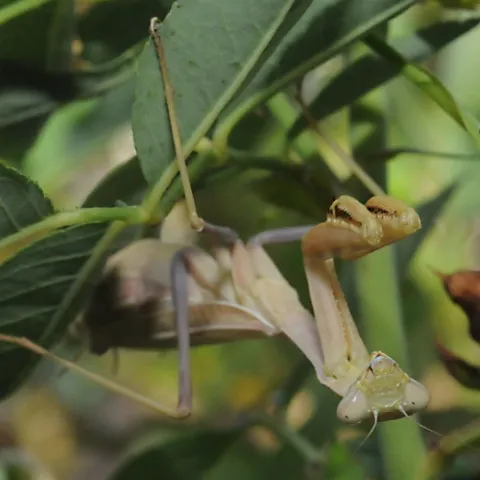
The praying mantis, camouflaged, lies in wait. Hmmm, is that camera edible?(Photo by Kathy Keatley Garvey)

What's for Dinner?

October 6, 2008
By Kathy Keatley Garvey
The praying mantis isn't at all concerned about culinary choices. It doesn't worry about who's coming to dinner, only that dinner will come. This aggressive, predatory insect will eat just about anything it can get its claws on, entomologists agree.
View Article
Primary Image
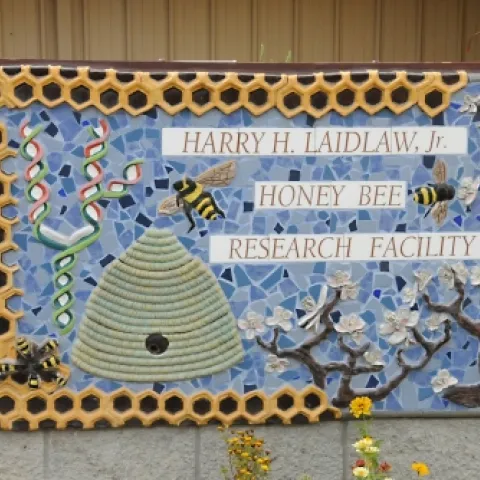
See the ceramic hive on this sign at the Harry H. Laidlaw Jr. Honey Bee Research Facility? The black hole leads to a real hive, located in back of the sign. (Photo by Kathy Keatley Garvey)

The Secret's Out

October 3, 2008
By Kathy Keatley Garvey
The secret's out. Or, rather, the secret's in. Inside. A number of years ago, UC Davis entomologist Diane Ullman created a ceramic sign outside the Harry H. Laidlaw Jr. Honey Bee Research Facility, located on Bee Biology Road, west of the UC Davis campus.
View Article
Primary Image
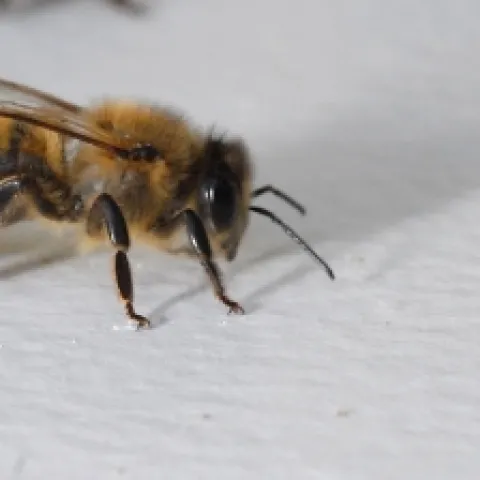
A honey bee checks out a minute black scavenger fly at the Harry H. Laidlaw Jr. Honey Bee Research Facility, UC Davis. (Photo by Kathy Keatley Garvey)

The Bee and the Fly

October 2, 2008
By Kathy Keatley Garvey
UC Davis forensic entomologist Robert Kimsey is a genius, to be sure. Show him a fly and he'll tell you exactly what it is and what it's all about. I shot this photo at the Harry H. Laidlaw Jr. Honey Bee Research Facility at UC Davis. The honey bee looked huge and the fly, tiny.
View Article
Primary Image
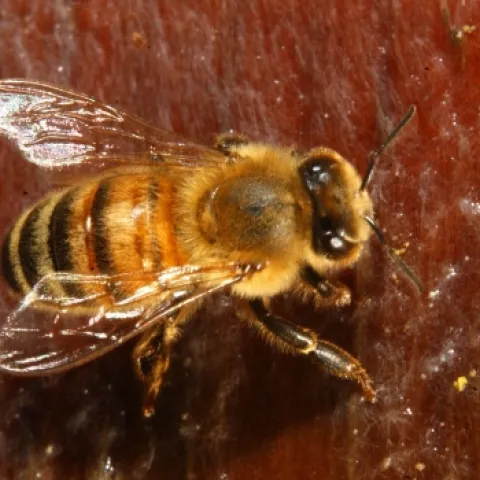
The honey bee, resplendent here with silvery wings, is gold to the global economy. (Photo by Kathy Keatley Garvey)

What Price Pollination?

October 1, 2008
By Kathy Keatley Garvey
What are insect pollinators worth to the global economy? Well, it's a lot less than the Wall Street bailout...er...rescue plan. Recent research published in the journal Ecological Economics reveals just how important insect pollinators are.
View Article
Primary Image
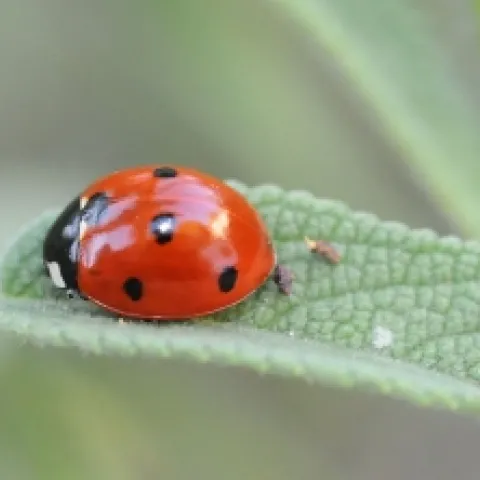
A ladybug crawls along the leaf of a Russian sage. (Photo by Kathy Keatley Garvey)

Seeing Spots

September 30, 2008
By Kathy Keatley Garvey
If you spot a ladybug, don't just start reciting "Ladybug, ladybug, fly away home." Aim, click and shoot. With a camera, that is. Agricultural Research Service scientists and entomologists at Cornell University, Ithaca, N.Y.
View Article
Primary Image
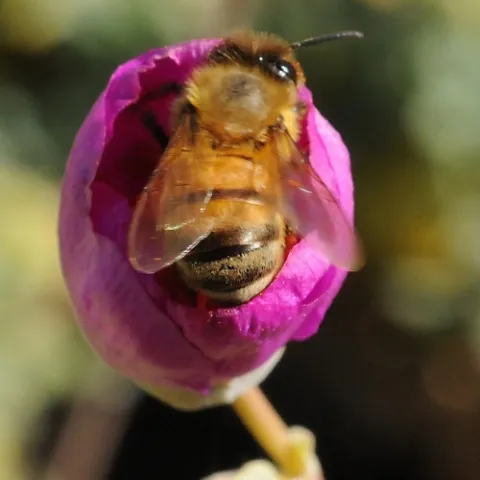
A honey bee can't wait for the Calandrinia grandiflora to open. (Photo by Kathy Keatley Garvey)

Heaven Can Wait

September 29, 2008
By Kathy Keatley Garvey
They danced in it, rolled in it, and bathed in it. The honey bees just couldn't get enough of the rock purslane (Calandrinia grandiflora). Last week when we visited Vacaville's El Rancho Nursery and Landscaping. nursery, owned by Ray and Maria Lopez, it was like a free-for-all at the French Laundry.
View Article

Getting the Red In

September 26, 2008
By Kathy Keatley Garvey
If you love pomegranates, you can thank a honey bee. If you love capturing images of pomegranates, you can thank a honey bee. And, if you love juicing them and making pomegranate jellyas I doyou can thank a honey bee. The honey bee makes it all possible.
View Article
Primary Image
UC Davis mosquito researcher Chris Barker will speak on "Environmental Drivers of Large-Scale Spatial and Temporal Patterns in Mosquito Abundance and Virus Transmission in California” on Nov. 26 from 12:10 to 1 p.m. in 122 Briggs, UC Davis. (Photo by Kathy Keatley Garvey)

From Beetles to Skeeters

September 25, 2008
By Kathy Keatley Garvey
So, you want to become an entomologist... Entomologists, future entomologists and others interested in science are looking forward to the fall seminars sponsored Oct. 1 through Dec. 3 by the Department of Entomology, University of California, Davis.
View Article
Primary Image
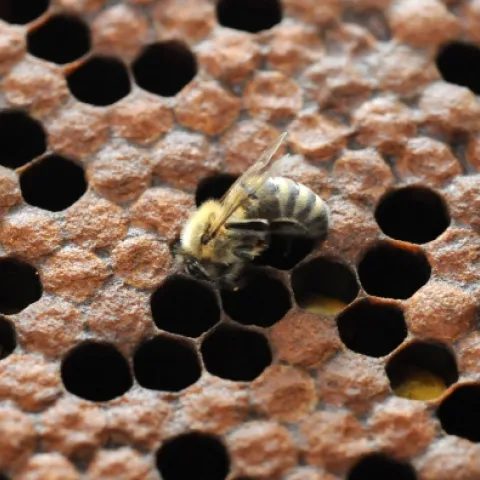
A newly emerged bee at the Harry H. Laidlaw Jr. Honey Bee Research Facility, UC Davis. During the busy season, a worker bee will live only four to six weeks.(Photo by Kathy Keatley Garvey)

It's All About the Bees

September 24, 2008
By Kathy Keatley Garvey
It's all about the bees. When A. G. Kawamura, secretary of the California Department of Food and Agriculture, and the newly selected State Apiary Board meet from 10 a.m. to 4 p.m. on Friday, Oct. 3 at the Harry H. Laidlaw Jr.
View Article
Primary Image
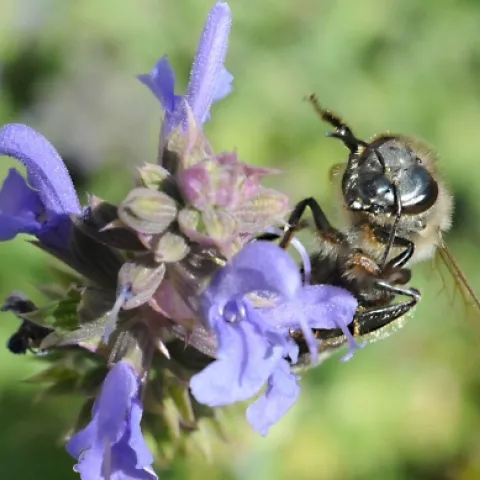
A honey bee on sage. Fossil evidence indicates that the very first insects inhabited this earth 400 million years ago. Honey bees existed at least by 7000 B.C., per a primitive drawing in a cave wall in eastern Spain. (Photo by Kathy Keatley Garvey)

Holy Moly!

September 23, 2008
By Kathy Keatley Garvey
Quick! How long have insects inhabited this earth? If you're taking a biology or an entomology course, you'll be asked that question on an exam. If you're attending the Entomological Society of America conference Nov. 16-20 in Reno, you probably already know that. A good answer: 400 million years.
View Article