UC ANR is committed to providing an accessible and inclusive web experience for all users. If you encounter an accessibility barrier or need content in an alternative or remediated accessible format, please contact anraccessibility@ucanr.edu.
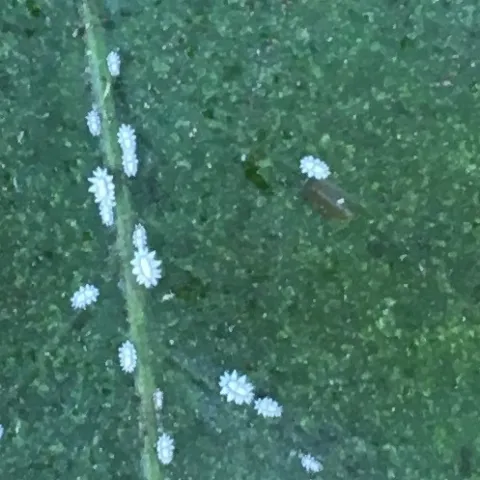
Recently a grower called up with a beautiful scale that the PCA couldn't identify. I could just marvel at the beauty of it and wondered what in the heck it was. It didn't look like any scale I had seen in the area and others who were queried didn't know either.
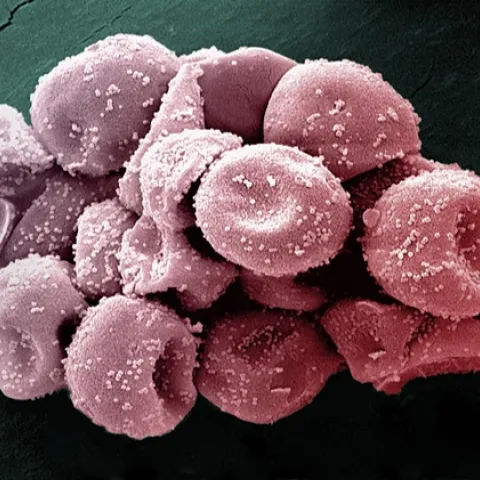
IMAGE: Orbicules or "Ubisch bodies " (300 - 600nm granules), characteristics of Cupressaceae pollen, are visible on the surface of the exine (outer membrane).
You're watching honey bees foraging in a field. They buzz toward a blossom, sip nectar, and then head for another blossom. Typical, right? But there's much more going on than you think. It's not just the nectar that she's scented.
You gotta love those praying mantids! An orchid mantis and a ghost mantis fascinated visitors at the recent open house hosted by the Bohart Museum of Entomology.
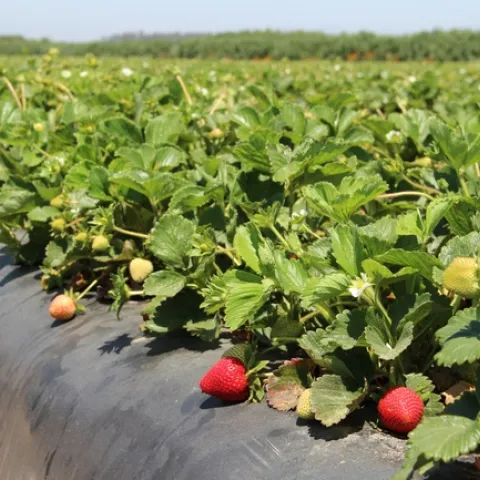
California offers ideal weather conditions for both nursery plant and strawberry fruit production. Variations in weather conditions in three strawberry production regions in California complement fruit production from each other and help avoid market glut.
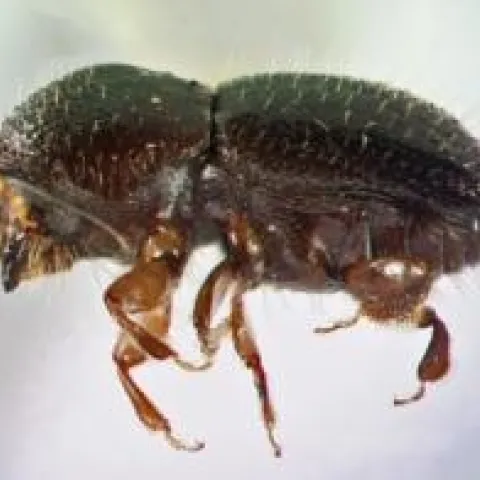
A recent publication from CA Fish and Wildlife has some wonderful photos of trees that have been known to be attacked by either or both of the Shot Hole Borers, Polyphagous or Kuroshio. The publication can be found at: http://www.southcoastsurvey.
To pin a butterfly specimen... Visitors at the UC Davis Bohart Museum of Entomology open house on Sunday, Sept. 24 learned how to pin and spread butterflies and moths from entomologist Jeff Smith, curator of the museum's Lepidoptera collection. The three-hour open house, held from 1 to 4 p.m.