UC ANR is committed to providing an accessible and inclusive web experience for all users. If you encounter an accessibility barrier or need content in an alternative or remediated accessible format, please contact anraccessibility@ucanr.edu.
Everyone's talking about the drones. You know, the unmanned aerial vehicles (UAV). Those flying robots cruising over our heads--some with cameras for journalistic and research purposes and others with "need-to-know" purposes.
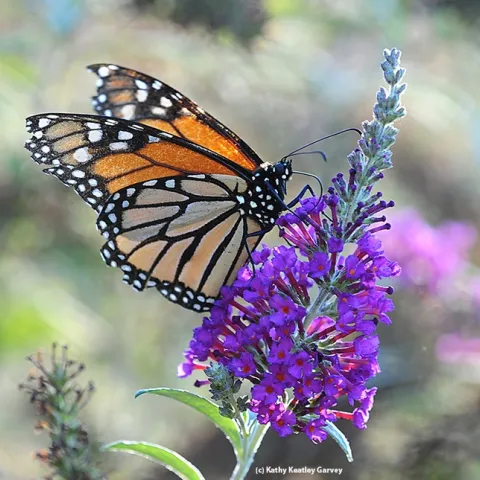
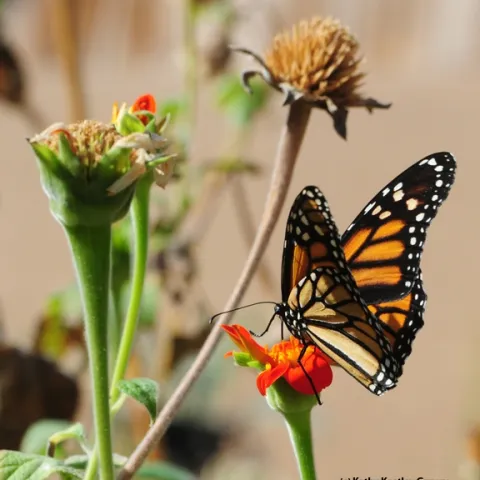
It's been called a "wake-up call." And that it is. It's designed to alert people to a problem that needs fixing. And that's good news for the monarch butterflies. California Gov.
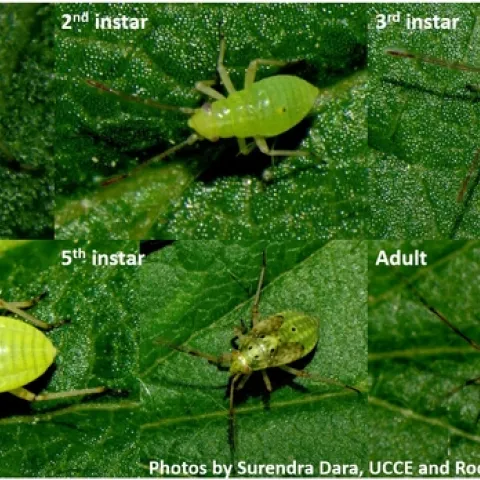
The western tarnished plant bug, Lygus hesperus has a wide host range and is an important pest of many crops. It is commonly referred to as lygus bug and is a major pest of strawberries on the California Central Coast.
Professor Walter Leal of the University of California, Davis, is co-chairing the 2016 International Congress of Entomology (ICE) conference, themed "Entomology Without Borders," to be held Sept. 25-30 in Orlando, Fla. Some 7000 entomologists from all over the world are expected to attend.
It will be a monarch-kind of day. And why not? Monarch enthusiasts are eagerly awaiting the "Welcome Back Monarchs Day" on Sunday, Oct. 11 at the Natural Bridges State Park, 2531 West Cliff Drive, Santa Cruz.
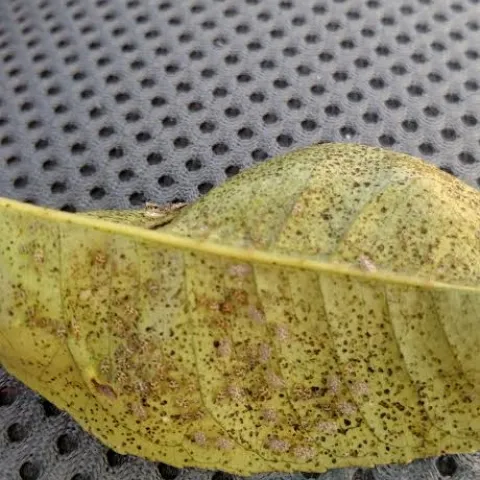
Just when you thought you had seen as much citrus infestation as you were likely to seek, in comes Jane Delahoyde, a Pest Control Advisor in Ventura with some lace bugs on lemons. Lace bugs are pretty specific to a host species.
Entomologist Jeff Smith of Rocklin, an associate at the Bohart Museum of Entomology who has saved the museum some $160,000 over a 27-year period through his volunteer service, received a well deserved "Friend of the College Award of Distinction from the UC Davis College of Agricultural and Environme...
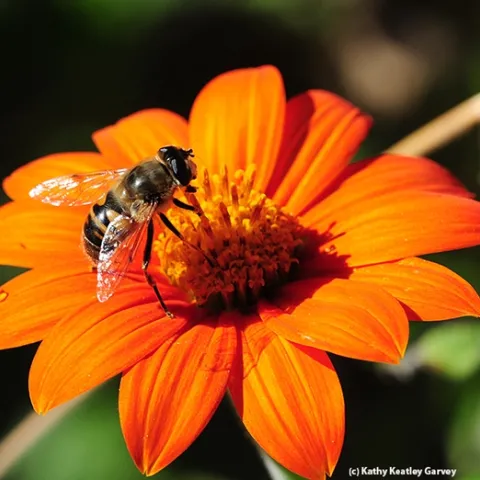
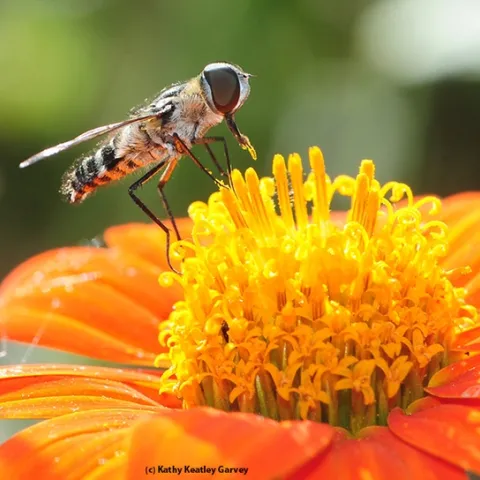
Will all the pollinators please stand up! Or do a fly-by like the Blue Angels or a crawl-by like babies competing in a diaper derby. Bees--there are more than 4000 of them in North America--are the main pollinators, but don't overlook butterflies, beetles, birds, bats and moths. And flies.