UC ANR is committed to providing an accessible and inclusive web experience for all users. If you encounter an accessibility barrier or need content in an alternative or remediated accessible format, please contact anraccessibility@ucanr.edu.
Deep in the jungles of Cambodia, near the temples of Angkor, an unlikely drama takes place. Blue ants of the genus Leptogenys, native to southeast Asia, surround their prey, a massive millipede. It's almost like circling the wagons in a scene from the Wild West. Or "rodeo-style behavior.
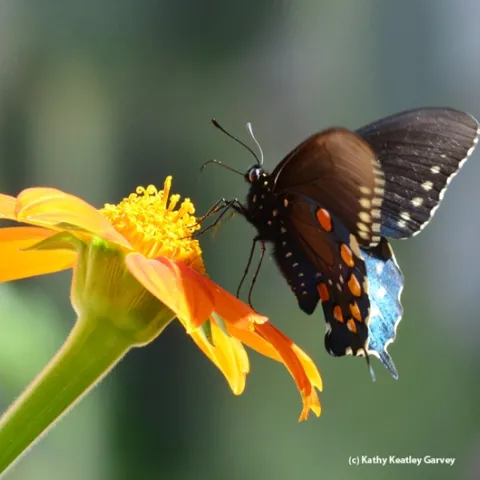
A passion for butterflies coupled with a yearning to protect their habitat is what drives 98-year-old Louise Hallberg, founder of the nine-acre Hallberg Butterfly Gardens in Sebastopol.
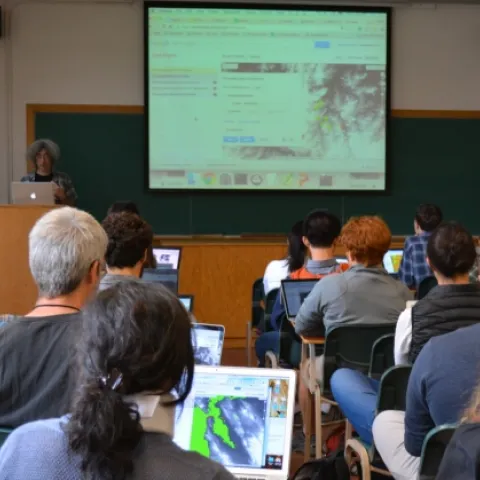
Students, researchers, mappers, and big data enthusiasts took place in an exciting 2 day Google Earth Engine workshop this last week hosted by the GIF and the Google Earth Engine Team.
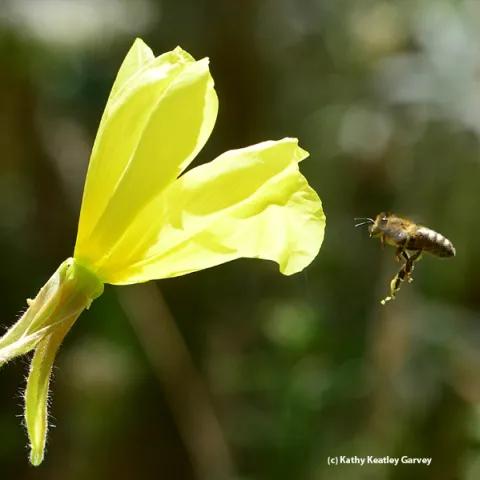
If you've ever seen honey bees foraging on primrose, you may have seen something unusual. What's with the pollen hanging below their hind legs as they buzz from primrose to primrose? There's a reason for that.
So you want to know about bee health? Yes, there's an app for that--and you're welcome to download it for free. Our good neighbor to the north of us, Alberta Agriculture, has just developed Phase 1 of its Bee Health.
Like to learn how to make mead? You know, transform honey into honey wine? The UC Davis Honey and Pollination Center at the Robert Mondavi Institute and the UC Davis Department of Viticulture and Enology are offering a beginners' introduction to mead making on Friday and Saturday, Nov.
RECOGNIZING NATURAL ENEMIES Proper identification of pests, and distinguishing pests from natural enemies, is essential for effective biological control. Carefully observe the mites and insects on your plants to help discern their activity.