UC ANR is committed to providing an accessible and inclusive web experience for all users. If you encounter an accessibility barrier or need content in an alternative or remediated accessible format, please contact anraccessibility@ucanr.edu.
From Sean's IGIS workshops this week. Base Layers State of California Geoportal http://portal.gis.ca.gov/geoportal/catalog/main/home.page National Data Clearinghouse at Data.gov https://catalog.data.
May is a few months away, but already there's strong interest in the line-up of speakers at the UC Davis Bee Symposium, set Saturday, May 9 in the UC Davis Conference Center. The theme? "Keeping Bees Healthy." An excellent topic.
Looks like the water situation this year will be a repeat of last year. Here is a video published last year regarding water use in rice and ways to improve water management.
Pop quiz. Today's post is a) long, b) recycled from another use, c) of high interest due to current weather conditions, or d) all of the above? The correct answer, I think, is "D" all of the above.
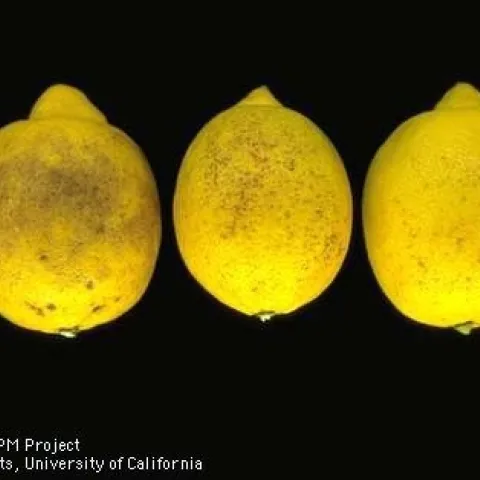
| All citrus pests | All crops | About guidelines | I have had a number of requests to identify fruit spotting on lemons. It turns out to be Septoria fungus which can show up on leaves, stems and fruit.
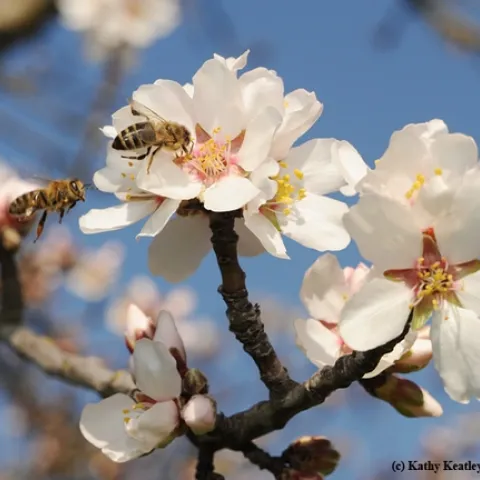
The word is "bees" and "almonds" are their world. Right this very minute there are about 1.7 million colonies of bees pollinating California almonds. Since it takes two colonies to pollinate one acre, and California doesn't have that many bees, beekeepers throughout the nation trucked in some 1.
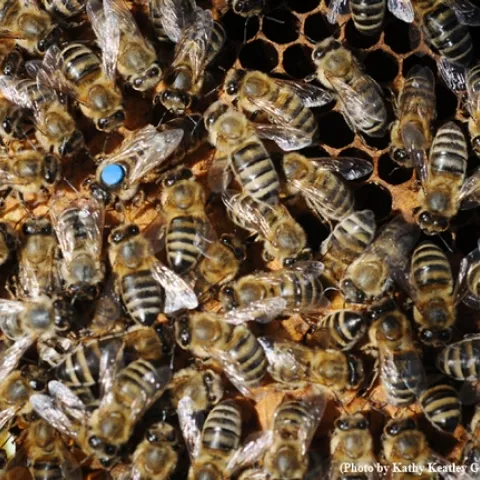
"Bee health" is on the minds of beekeepers, scientists, farmers, growers, gardeners, environmentalists and generally, everyone who cares about bees. Which should be everyone.
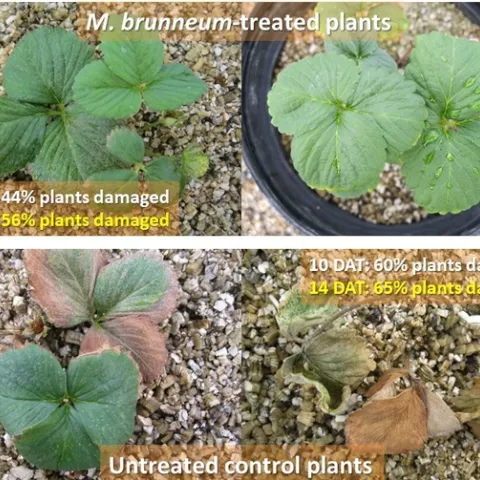
Entomopathogenic fungus Beauveria bassiana is known to endophytically colonize various plants and provide protection against arthropod pests. Information of such endophytic interaction of another entomopathogenic fungus Metarhizium brunneum (=M. anisopliae) is limited.