UC ANR is committed to providing an accessible and inclusive web experience for all users. If you encounter an accessibility barrier or need content in an alternative or remediated accessible format, please contact anraccessibility@ucanr.edu.
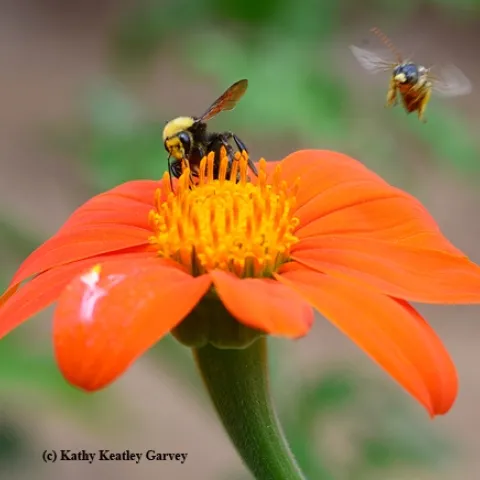
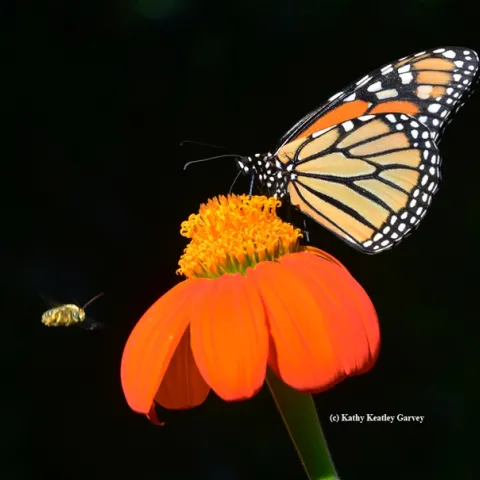
If you have Mexican sunflowers (genus Tithonia) in your garden, you can expect a diversity of insects--and not just honey bees. Lately we've been photographing all the insects that visit the Tithonia in our bee garden.
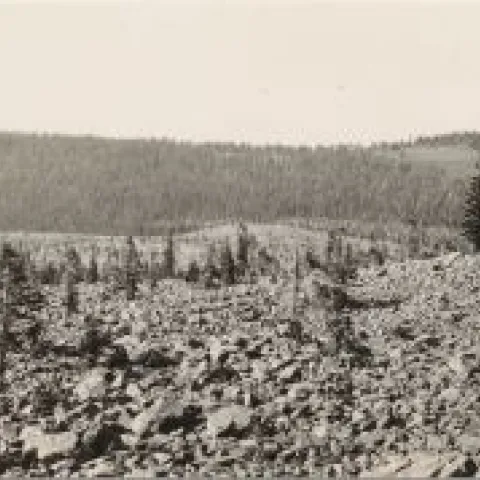
Take a look at this awesome VTM reshoot from the folks over at Geographic Resource Solutions (GRS), photographed during a recent mapping project of Lassen Volcanic National Park. Yet another great example and an incredible testament to lasting power of the VTM dataset.
Who doesn't love a praying mantis? Certainly not a butterfly or a bee. We humans, though, are fascinated by them. First, there's the problem of finding them. Often they're so camouflaged that we don't see them until they rustle the leaves and snatch a moving prey.
Today, I thought I'd share a set of photos from a herbicide symptomology demonstration that I conducted in fall 2013 for our UC Weed Science School (next scheduled for fall 2015) and more recently in spring 2014 for a training session with other UC Cooperative Extension personnel.
This post is a quick reminder that this is the last week for public comment on 123 proposed UC Cooperative Extension positions (closes July 21st). The proposed positions are listed at this website and you can read the 2-page proposal and see any comments by clicking on the position title.
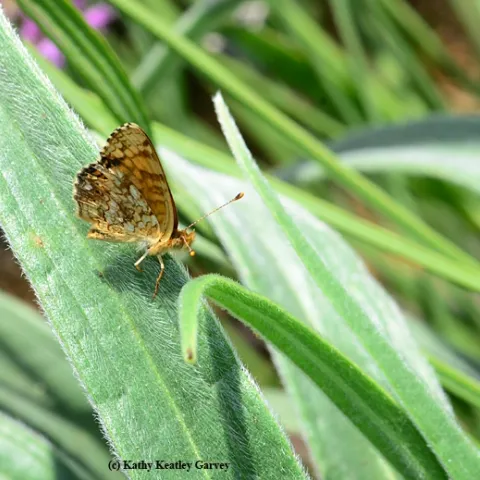
Perhaps it was searching for a thistle. The Mylitta Crescent butterfly (Physiodes mylitta) did not find the thistleat least in our bee garden. What it did find were the leaves of a tower of jewels (Echium wildpretii) where it sunned itself before fluttering off to parts unknown.