UC ANR is committed to providing an accessible and inclusive web experience for all users. If you encounter an accessibility barrier or need content in an alternative or remediated accessible format, please contact anraccessibility@ucanr.edu.
There's been a lot of salt damage to fruit trees after two years of drought using poor quality water and not doing adequate leaching. The situation could be improved by knowing when to irrigate. Here's some guidelines on selecting soil moisture measuring devices.
From Greg Brown. Helsinki, Finland is developing a new city plan for the future (http://www.hel.fi/wps/portal/Kaupunkisuunnitteluvirasto_en). Helsinki becomes possibly the first major world city to use PPGIS to inform its comprehensive city planning process.
From Martin Isenburg, the brain behind LAStools. Using LAStools, ArcGIS, and Photoshop, GRAFCAN has produced a LiDAR-derived digital suface model (DSM) that is seriously doped up: a synthetic map providing an intuitive understanding of the landscape.
Saving Glyphosate Glyphosate, the active ingredient in Roundup, is the most commonly used herbicide in California. Highly effective, safe for the user and the environment, and now inexpensive, glyphosate is a valuable weed management tool.
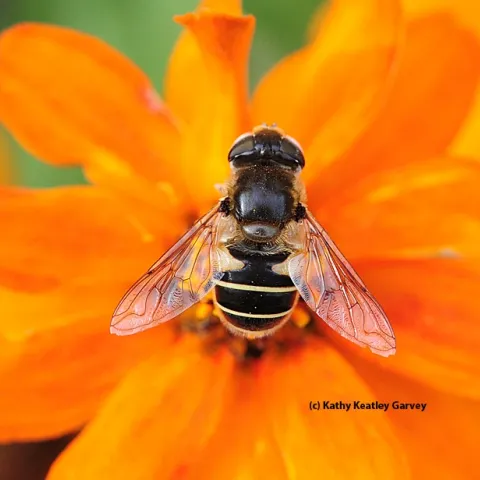
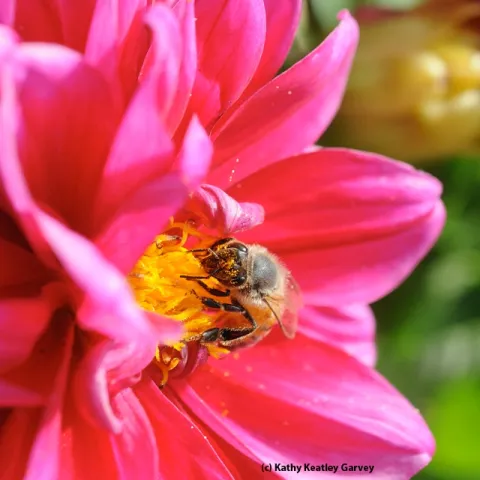
One of the most prominent and distant--as in far away--visitors to the Hagen-Dazs Honey Bee Haven, the half-acre bee friendly garden on Bee Biology Road, UC Davis, was Mark Leech of Launceston, Tasmania, Australia.
This website offers an initial description of post-fire vegetative conditions using the Rapid Assessment of Vegetation Condition after Wildfire (RAVG) process.
After making a bunch of extension presentations, and following our 2012 publication of Preemergent control of medusahead on California annual rangelands with aminopyralid (Rangeland Ecology & Management 65:418-425), Ive talked with quite a few ranchers who have successfully used Milestone preemergen...
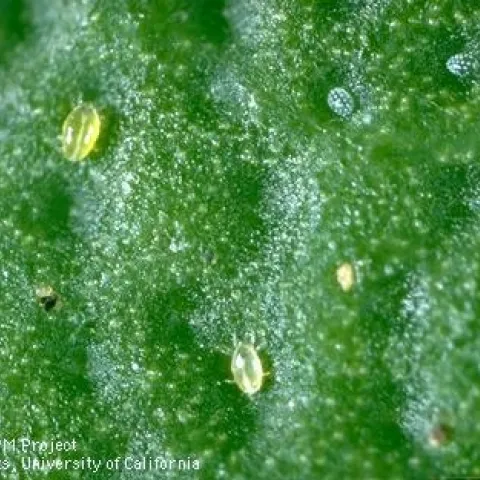
We have recently had an outbreak of citrus broad mite (Polyphagotarsonemus latus) in lemons. Broad mites feed on fruit and leaves, preferring young fruit up to about 1 inch (2.5 cm) in diameter that are located on the inside of the canopy or on the inward facing side of outer fruit.